Glass Manufacturing Safety: Heat, Cut & Silica Dust Hazards

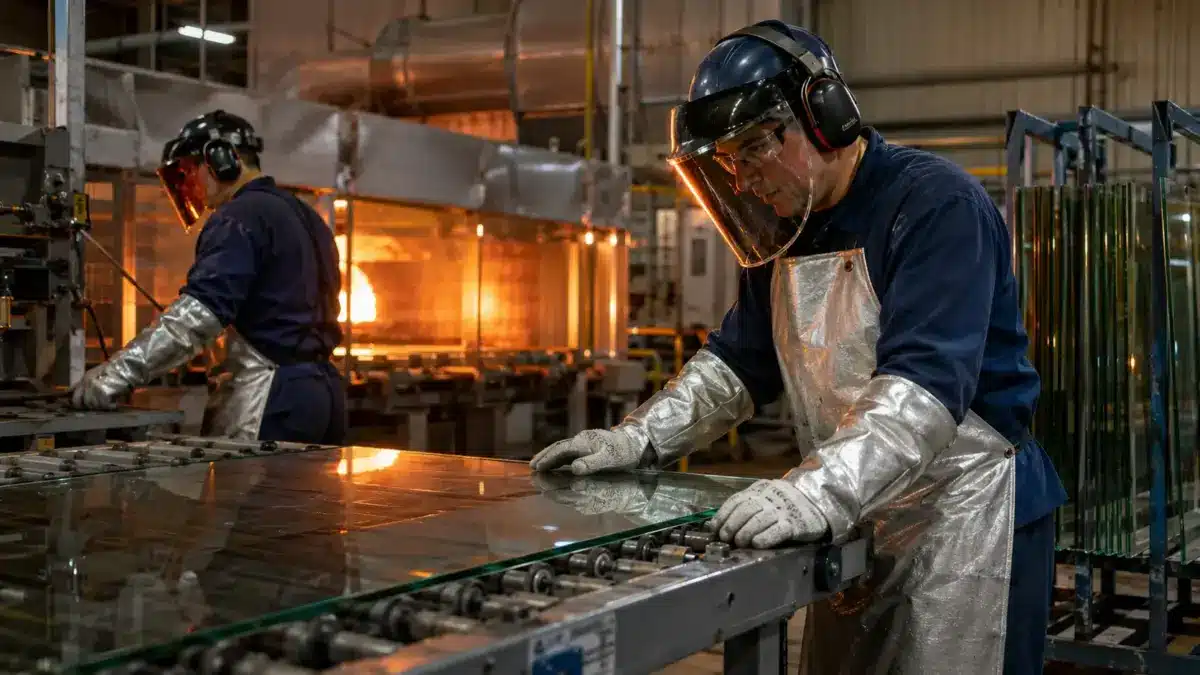
Industrial welders in protective gear work at a metal fabrication facility, with one worker welding a large steel plate while heat and light glow in the background workshop.

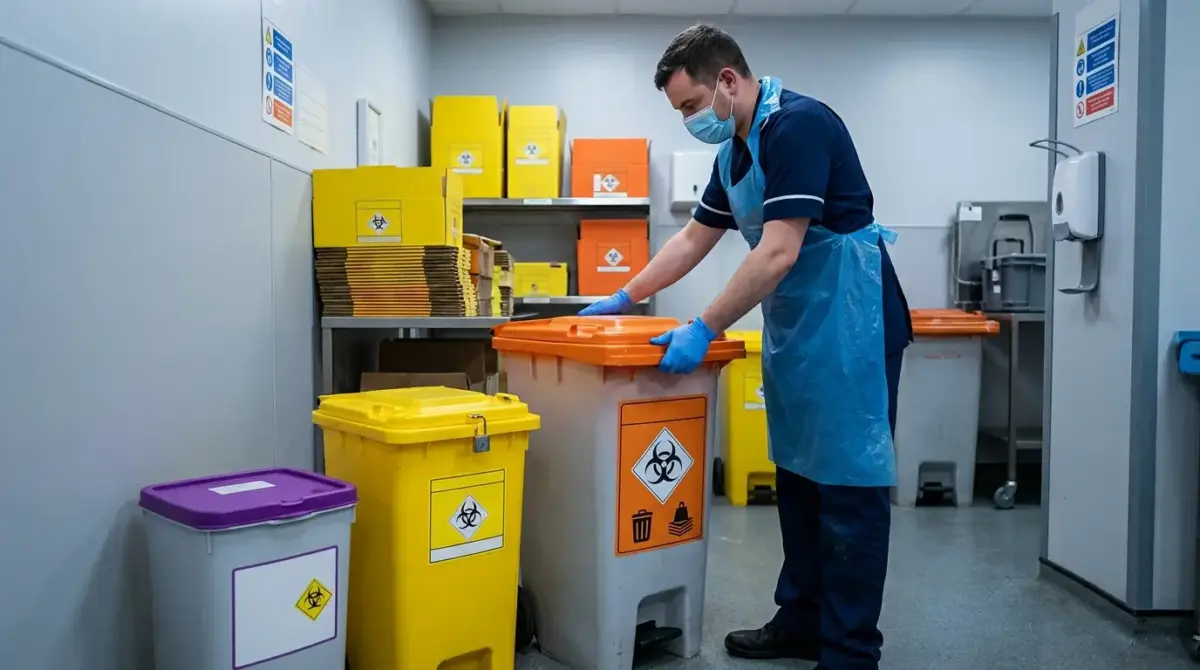
TL;DR What Are the Main Hazards in Glass Manufacturing? Glass manufacturing exposes workers to three hazard families: thermal hazards (burns from molten glass and furnaces, plus heat stress and heat stroke), mechanical hazards (cuts and lacerations from sharp edges and breakage), and respiratory hazards (respirable crystalline silica dust, which causes incurable silicosis). Each demands its … Read more

Working in High Winds: Risk Assessment & Stop-Work Criteria

Construction workers in high-visibility gear operate a mobile elevated work platform at an active job site, with safety barriers and equipment visible under an overcast sky.

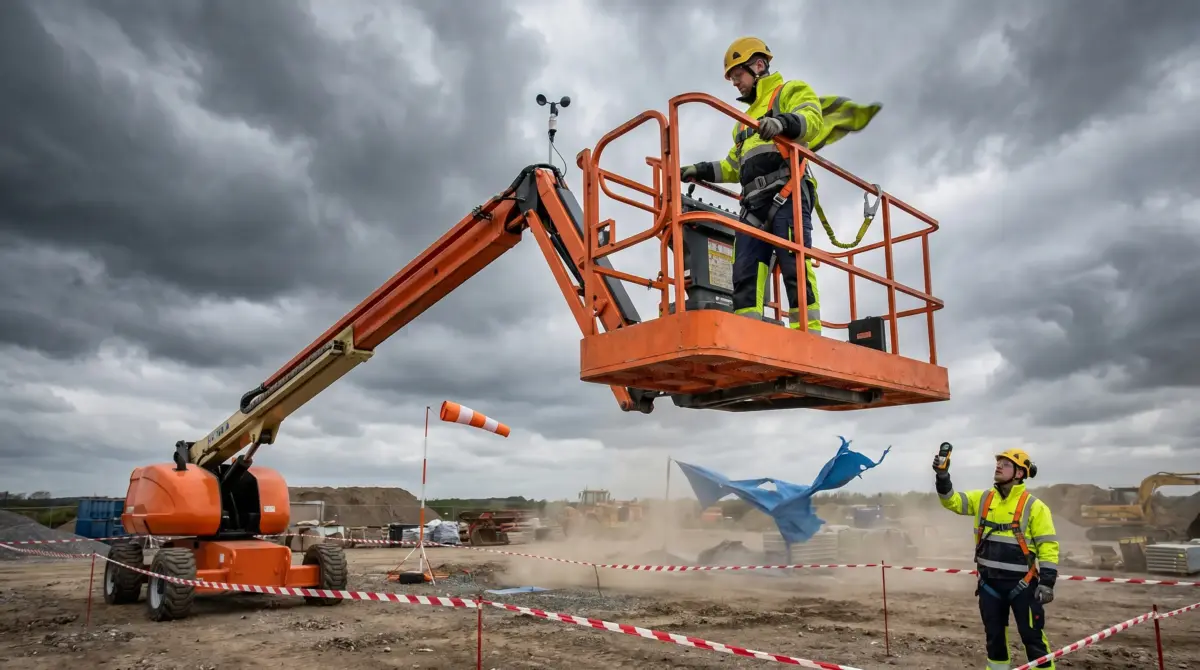
TL;DR — The Numbers That Set the Trigger Direct answer: There is no single wind limit for working at height — it depends on the equipment and the jurisdiction. UK practice generally stops roof and general work near 23 mph (Beaufort Force 5); OSHA requires a qualified-person decision once personnel-lift winds exceed 20 mph; most … Read more

Maritime Safety Hazards and Regulations: A 2026 Practitioner Guide

Workers in hard hats and safety vests conduct inspection and maintenance operations on the deck of a large cargo tanker ship at sea during golden hour.

TL;DR Maritime safety addresses shipboard hazards ranging from slips and falls to enclosed-space fatalities, fire, collision, mooring injuries, and seafarer illness. It is governed primarily by four international instruments — SOLAS, MARPOL, STCW, and MLC 2006 — supported by the ISM, ISPS, COLREG, and IMDG Codes, and enforced through flag-state certification and port state control … Read more

Pneumatic Tool Safety: Hazards, Controls & OSHA Rules

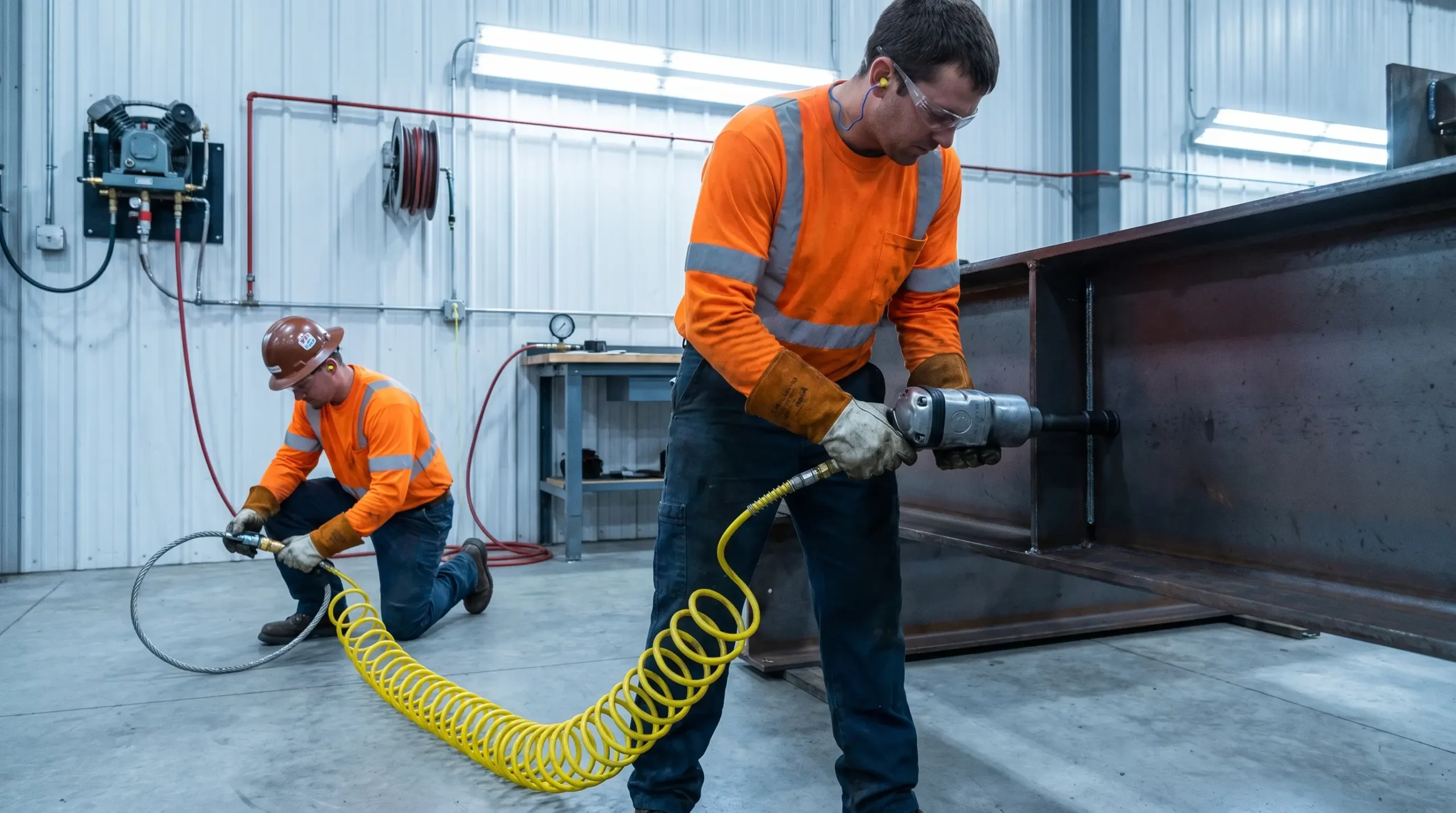
Two workers in safety gear and orange vests connect a yellow coiled air hose in an industrial warehouse setting with metal walls and overhead lighting.

TL;DR: Pneumatic Tool Safety in Numbers Pneumatic tool safety covers four hazard classes — projectile fasteners, hose whip from pressurised connections, noise exposure, and hand-arm vibration — managed through the hierarchy of controls. Substitution (sequential-trigger nail guns, low-vibration models), engineering controls (retainers, whip checks, regulators), administrative controls (pre-use inspection, training), and PPE together close the … Read more

Employer Duties for Workers With Disabilities: Safety Guide

Woman in motorized wheelchair working at desk with computer monitor while colleagues collaborate in modern office with glass partitions and accessibility signage.

TL;DR Employers owe workers with disabilities two parallel duties: protect them from harm under occupational-safety law (the OSH Act in the US; HSWA 1974 in the UK), and protect them from discriminatory exclusion under equality law (the ADA in the US; the Equality Act 2010 in the UK). Discharging both means individualised risk assessment, reasonable … Read more

Recycling Bin Color Codes And Their Meanings

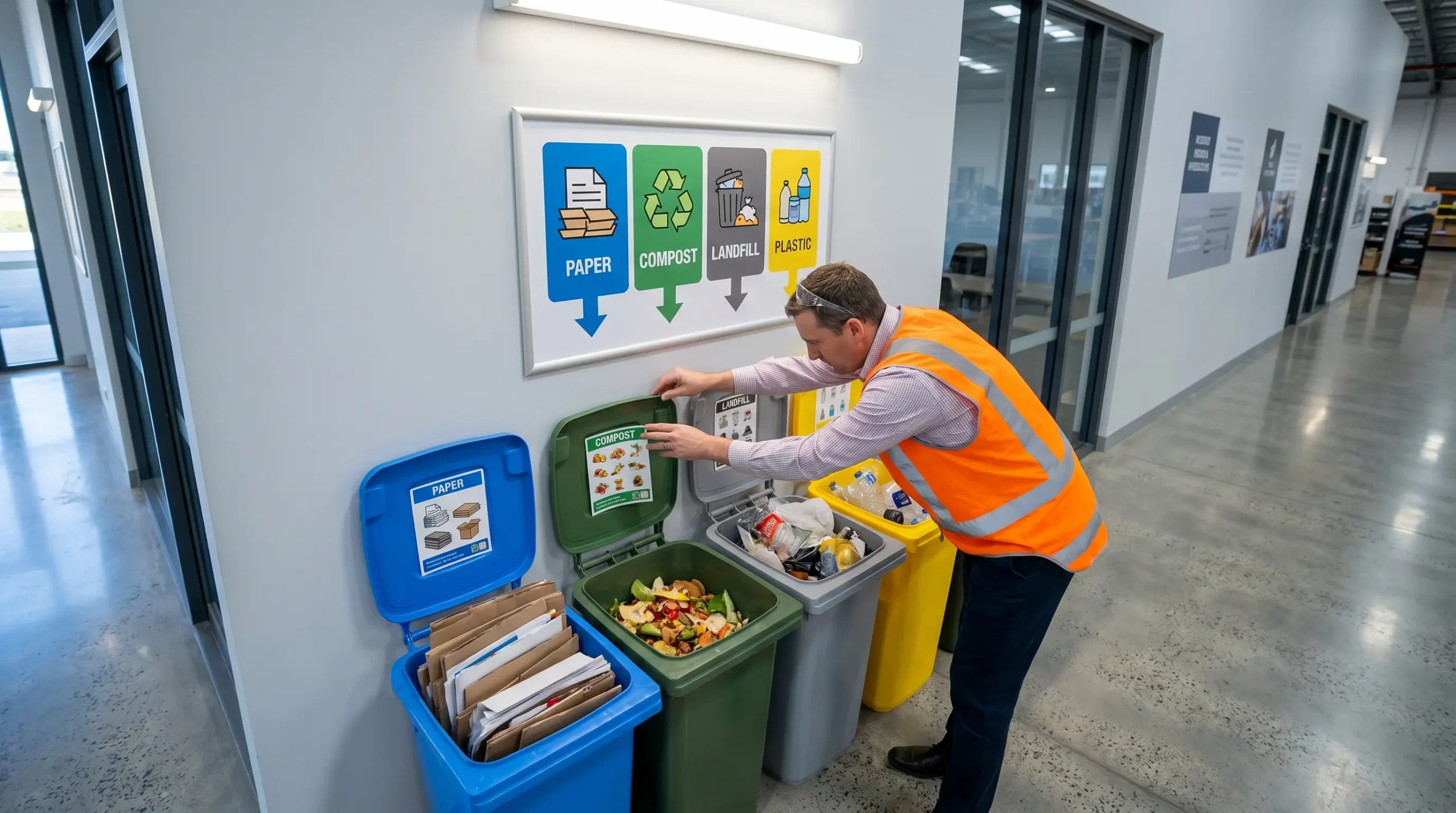
Worker in orange safety vest sorting waste into four color-coded recycling bins labeled paper, compost, landfill, and plastic in a modern office hallway.

TL;DR — Myth vs. Reality Recycling bin colors identify which waste stream each container collects, but no universal global standard governs them. Blue bins typically handle paper and recyclables, green bins collect organic or compostable waste, yellow bins are for plastics and packaging, red bins signal hazardous or biomedical waste in occupational settings, and black … Read more

Lone Working on Night Shifts: Risks and Safety Tips

A man in a dark polo shirt stands at a pharmacy counter reviewing paperwork, with a barcode scanner in hand, shelves of medication boxes visible behind him and a display showing "TIME DELAY ACTIVE.

TL;DR Lone working on night shifts is a compound hazard: fatigue lowers hazard detection, isolation delays rescue, and low-witness conditions amplify violence exposure. Safe operation requires a specific risk assessment, scheduled check-ins, engineered controls such as lighting and CCTV, administrative limits on shift length, and a dedicated lone-worker device as the last line of defence. … Read more

Accidents vs Incidents vs Near Misses: Key Differences

Accidents vs Incidents vs Near Misses Key Differences

TL;DR I was reviewing a contractor’s monthly safety report on a refinery turnaround when I noticed something that stopped me mid-page. The report listed zero accidents, zero incidents, and zero near misses for thirty consecutive days. Thirty days of hot work, confined space entries, scaffold erections, heavy crane lifts, and simultaneous operations — and apparently … Read more

Hierarchy Of Noise Risk Control: The Definitive Guide

Hierarchy Of Noise Risk Control

Noise is an often-overlooked occupational hazard that can seriously affect health and productivity. Whether it’s the constant hum of machinery, the roar of heavy equipment, or high-decibel construction tools, prolonged exposure to excessive noise can lead to hearing loss, tinnitus, stress, and even reduced workplace safety. This underscores the importance of implementing robust noise risk … Read more