
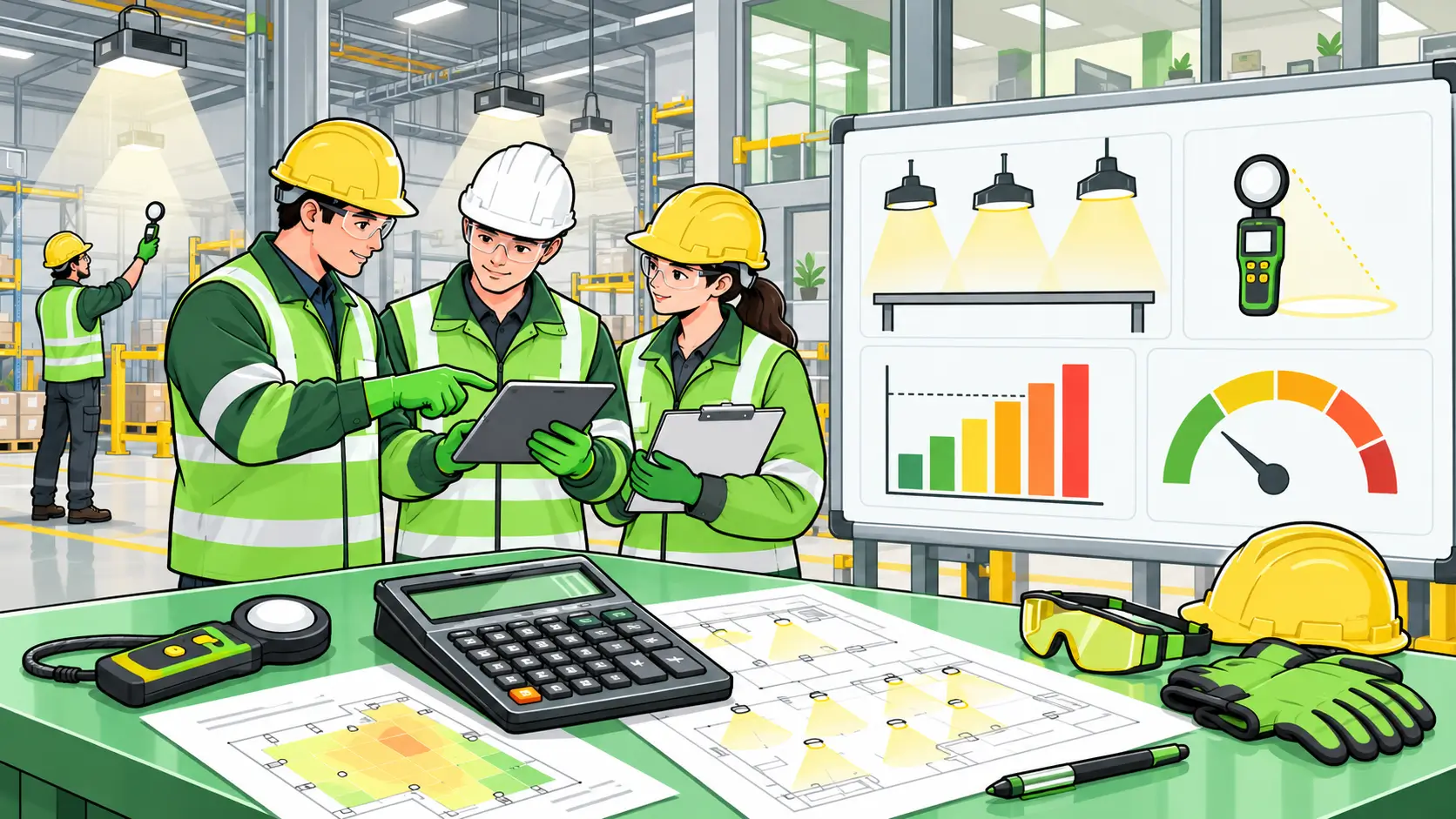
What is workplace lux?
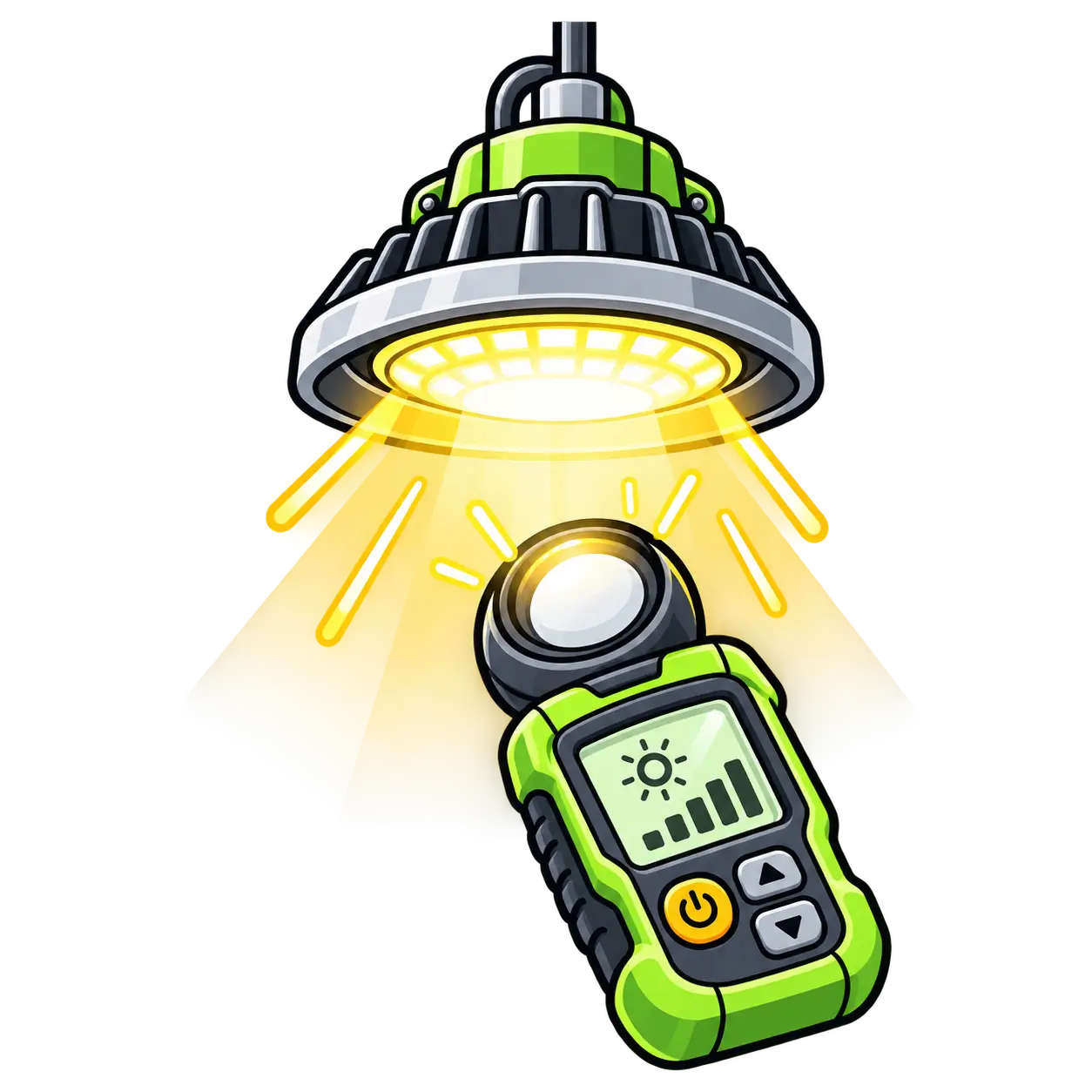
Illuminance (lux) is luminous flux per square metre on a surface. Guidance levels differ by task (offices, workshops, inspection). The lumen method estimates average illuminance or the number of luminaires needed:
N = (E × A) ÷ (Φ × UF × MF) · E = (N × Φ × UF × MF) ÷ A
where E is target lux, A is area, Φ is lumens per luminaire, UF utilisation factor, and MF maintenance factor.
Lux / Illuminance Calculator
Lux · lumen method
Estimate how many luminaires you need for a target lux level, or average illuminance from an installed count.
Formula: N = (E × A) ÷ (Φ × UF × MF) · E = (N × Φ × UF × MF) ÷ A
- Match UF to room index and luminaire data; MF to cleaning/age assumptions.
- Emergency escape lux follows fire codes separately.
- Use delivered product lumens, not nominal watts alone.
Frequently asked questions
What UF and MF should I use?
From the luminaire photometric data and room index (UF), and dirt/age assumptions (MF, often 0.7–0.9). When unsure, use manufacturer software for design.
Is average lux enough?
No for detailed design — check uniformity, glare, and task lighting. This tool is a quick average estimate.
Emergency lighting?
Escape-route lux levels follow fire and building codes separately — not general workplace task lux.
LED vs fluorescent lumens?
Use the delivered lumens for the installed product. Nominal catalogue watts are not a substitute for Φ.