
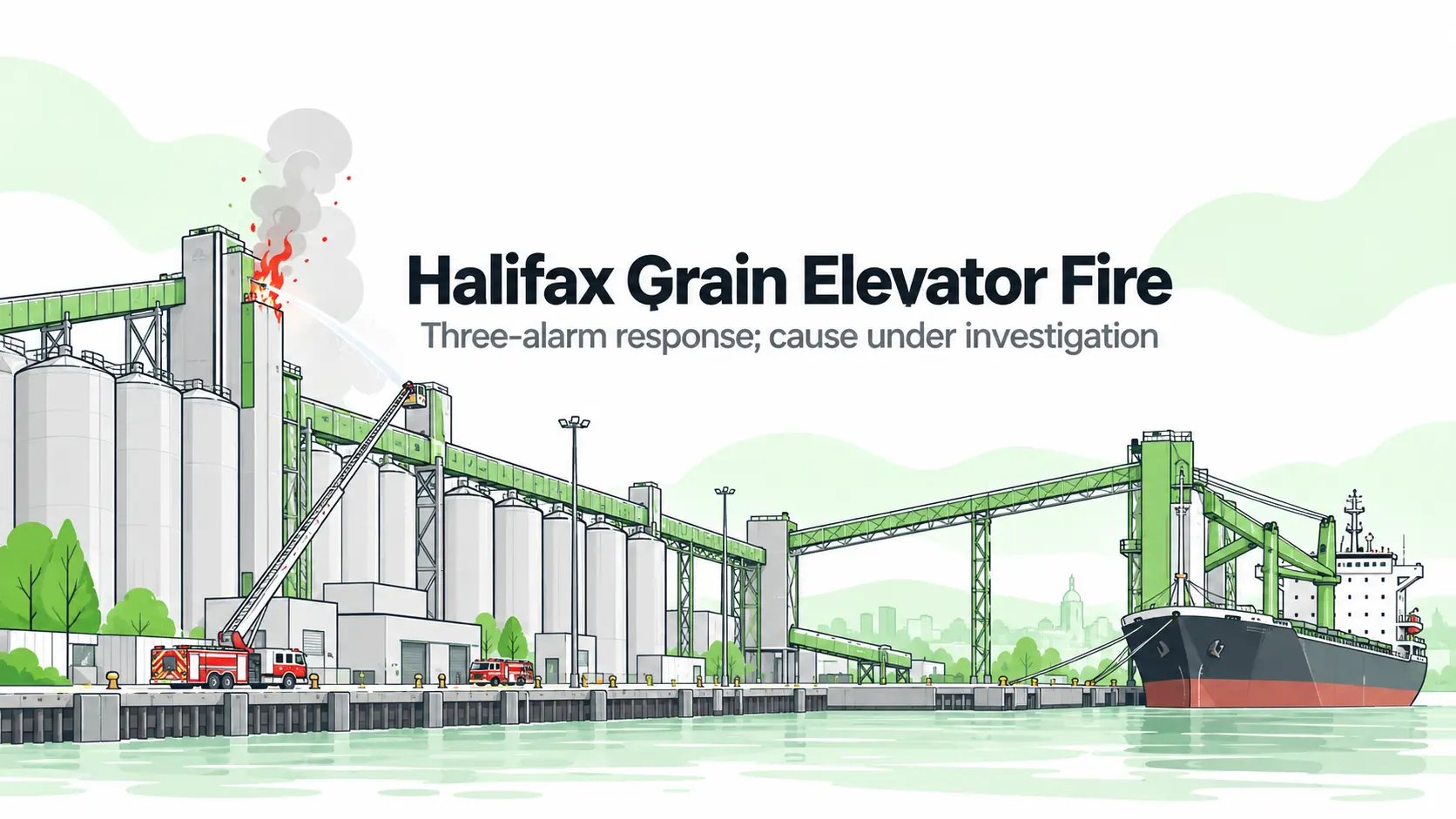
HALIFAX, NOVA SCOTIA, CANADA — A fire at the Halifax Grain Elevator in Nova Scotia was brought under control after a three-alarm response, according to the Halifax Regional Municipality's October 27 update. No injuries were reported.
The incident involved the terminal's elevated dust-handling equipment at 730 Marginal Road. Firefighters faced an industrial structure with difficult access and a vessel alongside, making coordination and safe positioning central to the response.
Fire contained to the conveyor dust-handling area
Halifax Regional Fire & Emergency received the call at approximately 7:15 p.m. on Monday, October 26. Responders found flames in the dust-management system about 135 feet above ground.
At its peak, the operation involved about 20 firefighting and support vehicles. Crews contained the fire to the south conveyor dust-handling area and prevented it from spreading to nearby structures. The municipality said the fire was declared under control at about 10:40 p.m.; its morning update confirmed that crews had left the scene.
The response and containment details were corroborated by CityNews Halifax. World Grain also reported the absence of injuries. The origin and cause remain under investigation.
Industrial access shaped the emergency response
The height of the affected equipment and the layout of a working waterfront facility created operational challenges beyond those of a conventional building fire. Authorities described a coordinated effort involving crews, specialist equipment and aerial operations.
The available official update does not establish an ignition mechanism or identify a failure in the terminal's safety systems. A fire in dust-handling equipment should not be described as a confirmed dust explosion without investigation evidence.
HSE Blog analysis: plan for elevated industrial equipment
HSE Blog analysis: Grain terminals need emergency plans that account for elevated conveyor routes, enclosed equipment, access restrictions and neighbouring operations. The ability to isolate equipment, account for workers and give responders accurate information can materially affect the options available during an emergency.
For site managers, a practical review should consider access for aerial appliances, reliable communication with vessel personnel, current process drawings and the location of isolation points. These are general preparedness priorities, rather than findings about this incident.
HSE Blog's guide to the key components of an emergency management plan explains how roles, resources and communication arrangements can be organised before an event.
Sources and images
Reporting was checked against the municipality's October 27 update, CityNews Halifax, World Grain and Your Halifax Now. Local republications of the same municipal release were treated as the same source, not independent confirmations.
The featured artwork is an HSE Blog illustration. Actual response photographs were found, but no explicit reuse permission for HSE Blog was verified. They are not reproduced here; the CityNews report links to the original response imagery.
Source
Halifax Regional Municipalityhalifax.ca