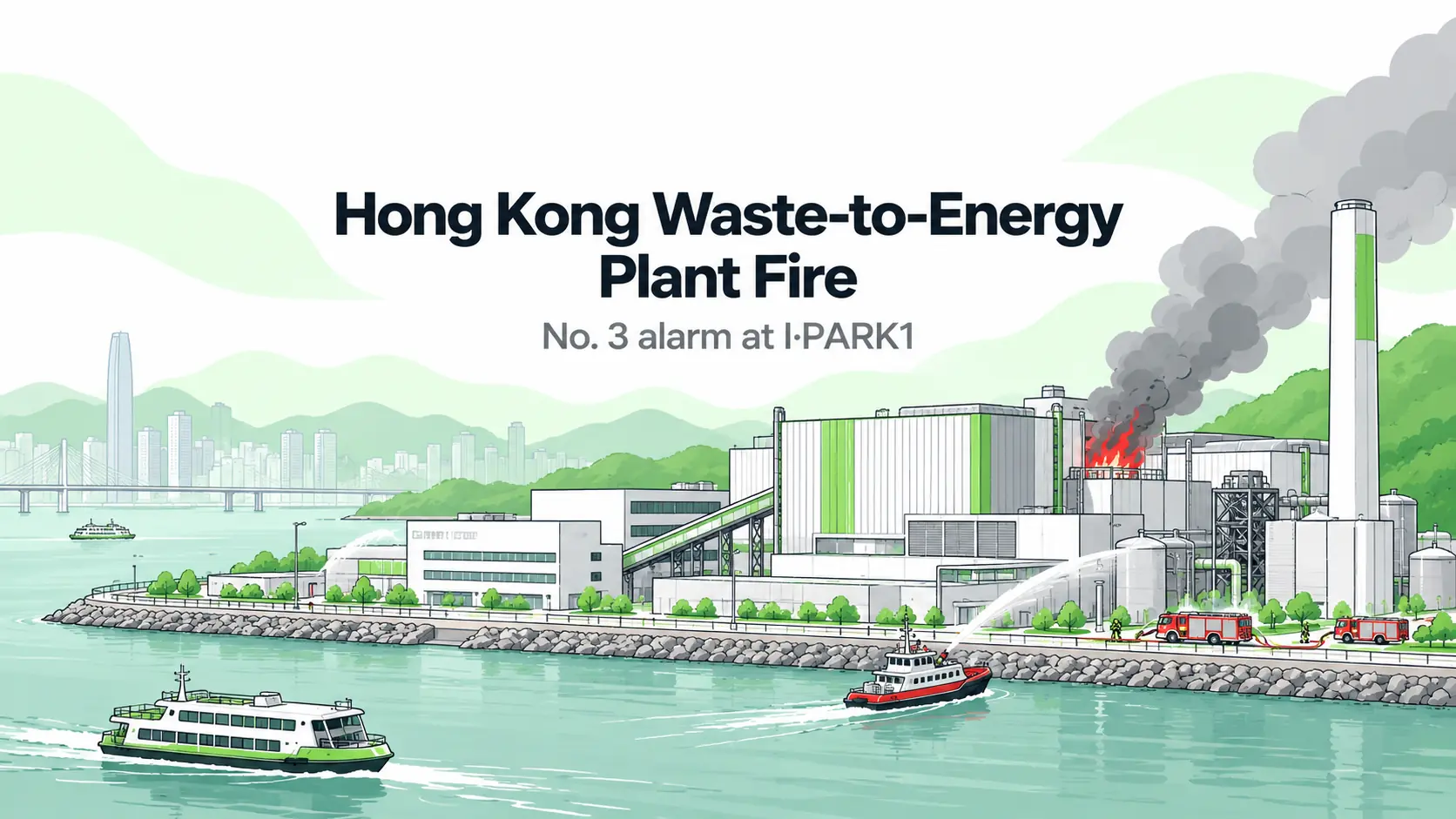
SHEK KWU CHAU, HONG KONG — A fire at Hong Kong’s I·PARK1 waste-to-energy facility prompted a No. 3 alarm response on Monday, 26 October 2026, with firefighters deploying hose jets and breathing-apparatus teams at the artificial island site off Shek Kwu Chau.
The Hong Kong Fire Services Department said it received the first report at 12:43 p.m. HKT and upgraded the incident to No. 3 alarm at 1:24 p.m. Its 2:09 p.m. update said two jets and two breathing-apparatus teams were being used and that no casualties had been reported at that stage.
What authorities confirmed
The incident occurred at Integrated Waste Management Facilities Phase I, known as I·PARK1. The plant is on an artificial island south of Lantau Island and forms part of Hong Kong’s municipal solid-waste treatment infrastructure.
- Initial report: 12:43 p.m. HKT on 26 October.
- Alarm level: upgraded to No. 3 at 1:24 p.m.
- Response: two jets and two breathing-apparatus teams in the official early update.
- Casualties: none reported as of 2:09 p.m.
- Public advice: people affected by smoke or an unusual odour were told to close doors and windows and remain calm.
Reuters reported thick black smoke rising from the site. RTHK independently carried the emergency-service timeline. The Standard reported that workers were evacuated by boat; its figure was not included in the official releases reviewed by HSE Blog and is therefore treated as a local-media report rather than a final official count.
Cause and operational impact remain unconfirmed
At publication time, authorities had not announced a cause, the specific plant area involved, the extent of damage or the effect on waste-treatment operations. No conclusion should be drawn from the colour or volume of smoke alone. Those questions require evidence from fire investigators, plant operators and environmental authorities.
The island location adds an emergency-planning dimension: personnel movement, access for responders, evacuation by marine transport and continuity of essential operations may all require site-specific arrangements. The response illustrates why high-hazard facilities need tested command structures, reliable communications and clear accounting for employees and contractors.
HSE Blog analysis
This is an early incident report, not an investigation finding. For HSE teams at waste and energy facilities, immediate priorities after life safety and fire control typically include process isolation, confirmation of hazardous-material inventories, smoke or runoff monitoring where required, preservation of evidence and documentation of the alarm and response sequence.
Waste-treatment sites can combine variable feedstock, conveyors, enclosed processing areas, stored combustible materials and complex ventilation or emissions-control equipment. The relevant controls depend on the actual seat and cause of the fire, which remain unknown. A later review should distinguish prevention systems, detection and suppression, evacuation arrangements and emergency access.
For background, see HSE Blog’s guides to the key components of an emergency management plan, effective fire-safety training and hazardous-waste disposal methods. These general resources do not establish the cause of this incident.
Sources and image note
HSE Blog checked five reporting sources: the Hong Kong Government fire update and smoke advisory, treated together as one primary official source; Reuters; RTHK; the South China Morning Post; and The Standard.
Current reports include event imagery, but HSE Blog did not find clear permission allowing those photographs to be copied or embedded. The featured image is a story-specific illustration, not documentary photography.
Source
Hong Kong Fire Services Departmentinfo.gov.hk