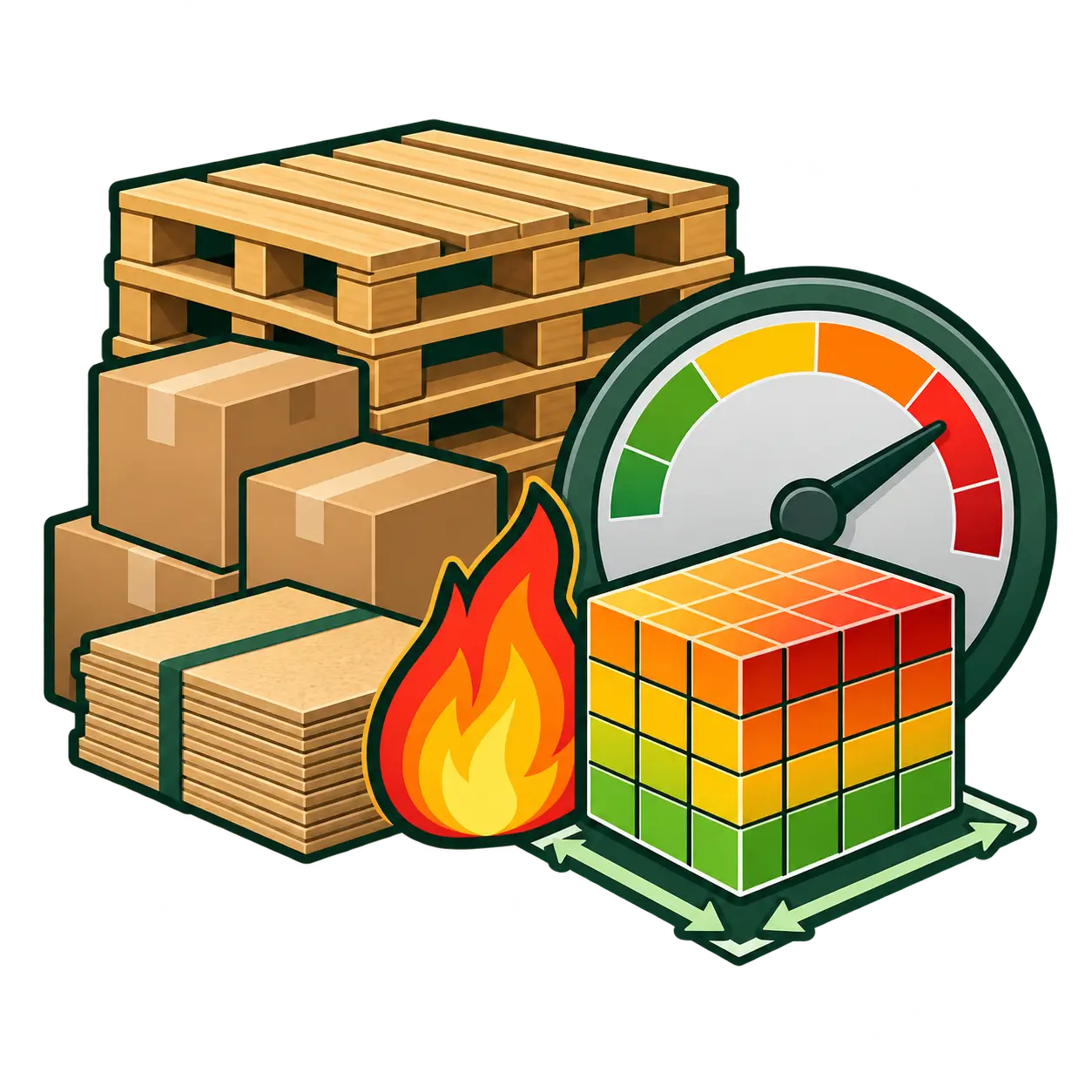

What is fire load density?
Fire load density expresses the heat energy available from combustibles per unit floor area, usually in MJ/m². A simple estimate is:
q = (m × H) ÷ A
where m is combustible mass (kg), H is calorific value (MJ/kg), and A is floor area (m²). Real assessments sum multiple materials and may use wood-equivalent methods.
Fire Load Density Calculator
Fire load · density (MJ/m²)
Estimate q = (mass × calorific value) ÷ area. Sum multiple materials offline, then enter totals — planning aid only.
Formula: q = (m × H) ÷ A (MJ/m²)
- Sum each material’s m × H before dividing by area.
- Exclude structural steel mass; include contents and relevant linings per your method.
- Protection systems and compartmentation matter as much as q.
Frequently asked questions
Typical calorific values?
Wood ≈ 17–19 MJ/kg, many plastics higher, liquids vary widely. Use material data sheets when available.
Is this a code compliance check?
No. It is a planning estimate. Fire engineers use adopted codes, occupancy, and protection systems for design.
Include fixed furnishings?
Usually yes for design fire load — contents plus relevant linings per your method. Exclude structural steel mass.
Units?
Stay consistent: kg, MJ/kg, m² → MJ/m². Convert ft² and lb carefully if you start in imperial.