Walk three shifts at the same plant and ask how to isolate a machine before maintenance. Three different answers is not a people problem. One worker got a careful walkthrough from a supervisor with time to spare, another got a rushed version on a busy Tuesday, the third got a handout with a signature line.
Safety training drifts. It drifts between departments, between sites, between day shift and night shift, and it drifts quietly, because nothing looks broken until an investigator starts pulling records. Then you are reconstructing who was told what, and when, out of memory and paper.
Digital learning tools do not make anyone safer by themselves. What they do is strip out the variation, so every worker who needs a given procedure gets the same version of it, and so you can show that they did. That is a narrower promise than most vendors make, and it is the one worth acting on.
Where Inconsistent Safety Training Actually Hurts
The gap rarely appears in the dramatic topics. Confined space entry and hot work get attention because the consequences are obvious. It is the everyday material that slides: manual handling, chemical labeling, housekeeping, reporting a near miss. Each one gets taught by whoever has the floor that week, in whatever depth the schedule allows.
Regulators are not vague about the standard. The UK Health and Safety Executive states in its guidance on information, training and supervision that everyone who works for you needs to know how to work safely and without risk to their health, contractors included, with particular care for new recruits and people changing jobs.
The workers least likely to get that consistently are the ones already carrying the most risk: new starters, agency staff, and anyone whose shift keeps them away from the best trainer in the building.
One Module, Every Site, Every Shift
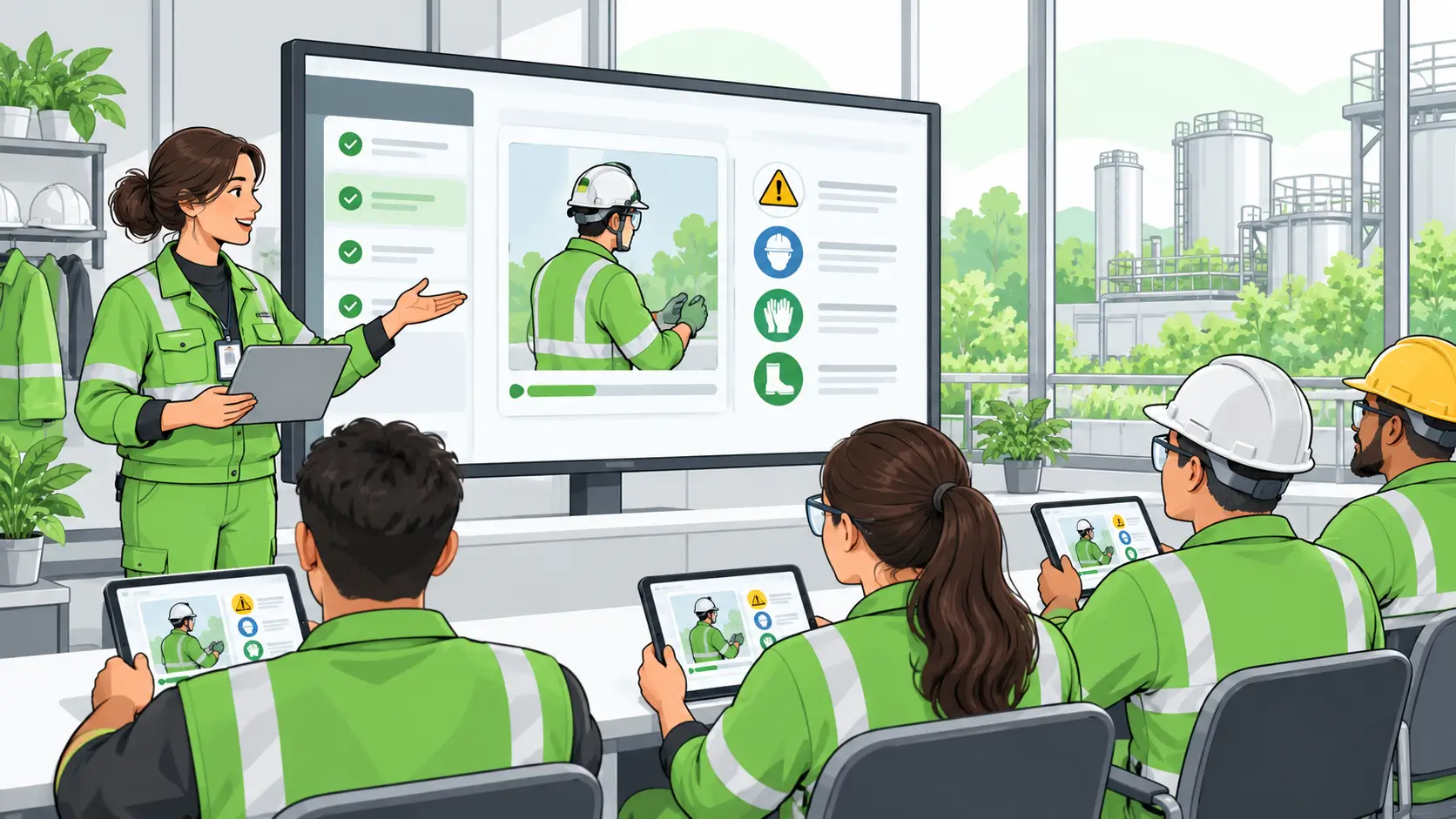
This is the part digital delivery is genuinely good at. You build a module once, have your safety lead and a frontline supervisor review it once, and then every location runs identical content. The quiet win is that your best explanation becomes the default explanation, instead of the one only half the workforce ever heard.
Version control matters just as much. When a procedure changes after an incident review, or new equipment lands on the floor, you update one module rather than chasing fourteen slide decks and a laminated wall poster. Modern eLearning software handles the republish and the reassignment together, so the old version stops being served.
Shift coverage comes along for free. A night maintenance tech can take the module at the start of their shift instead of waiting three weeks for a classroom session built around day workers, and a multilingual workforce can get the same content in the language each person thinks in.
Assessments Show You the Gaps Before an Incident Does
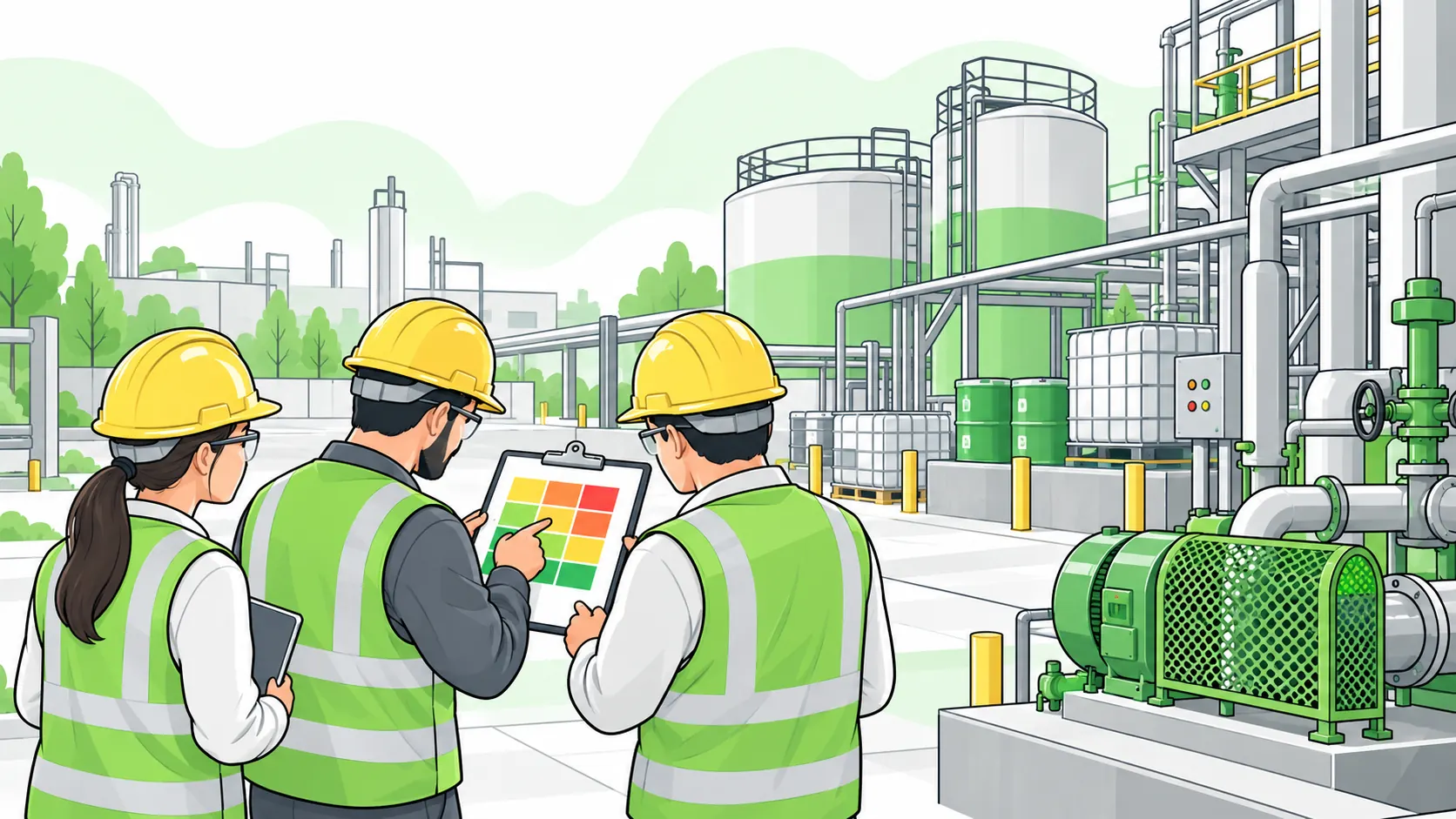
A knowledge check at the end of a module is a weak signal on its own. Across two hundred workers it becomes something far more useful. If most of one department misses the same question about when a permit is required, you have found a badly written procedure, not a department of bad employees.
That is the loop occupational health research keeps pointing at. NIOSH builds its workplace training programs out of its own research so they can be applied directly in real workplace settings, and the logic scales down to a single employer: measure, fix the content, measure again.
Refreshers run on the same evidence. Knowledge fades fastest on procedures people use rarely, which is exactly where serious incidents cluster. Automatic refreshers at a set interval, with a short reassessment rather than a full repeat, keep the rarely used material alive without burning days of productive time.
Records That Hold Up Under Scrutiny
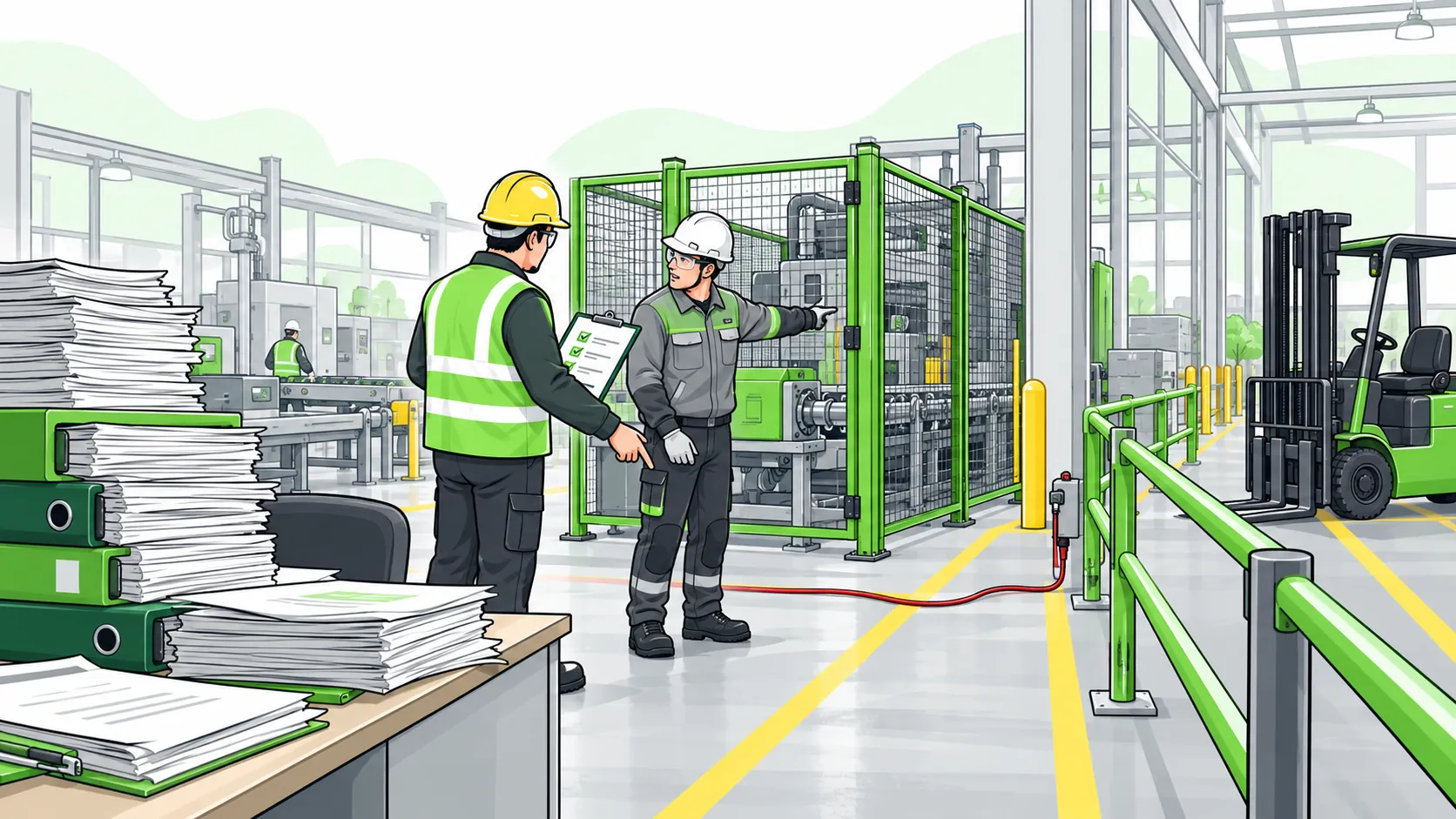
Completion tracking sounds like the boring feature and turns out to be the one managers use daily. Every assignment carries a name, a module version, a date and a score, and the record assembles itself while the training happens instead of being typed up later by someone working from a clipboard.
The practical effect is that overdue training becomes visible while it can still be fixed. A supervisor opens a dashboard on Monday, sees the four people whose working-at-height refresher lapses this month, and sorts it before anyone stands on a scaffold with an expired record.
Digital Tools Belong Alongside Hands-On Practice
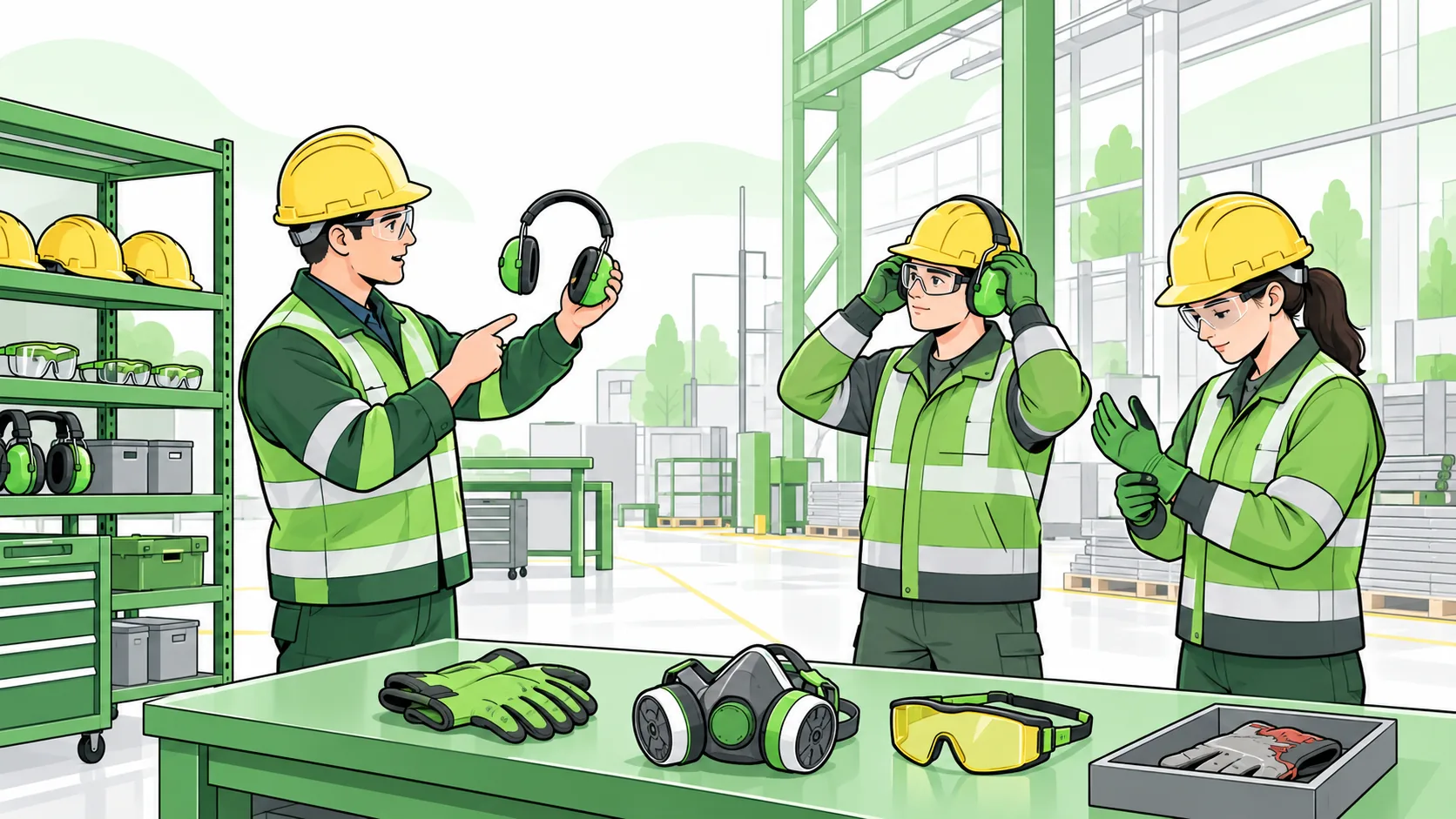
Here is the limit. Nobody learns to fit a harness or don respiratory protection from a screen. Grip, face seal, the feel of a correctly tensioned lanyard: those are physical skills, and they need a competent person watching. HSE Blog makes the point well in its piece on why PPE only works when workers know how to use it, where training covers selection, limits and defects.
Blended sequencing is the pattern that works. The module carries the knowledge load, so the hazard, the rule, the reasoning and the paperwork are already understood by the time the worker reaches the practical session. The supervisor then spends floor time on technique and sign-off instead of reciting background a slide could have delivered.
The failure mode to watch is treating a completion percentage as competence. A green tick means someone consumed content and answered questions correctly. It does not mean they can do the task under pressure, in the rain, at the end of a twelve-hour shift. Keep the observed sign-off as a separate, deliberate step.
Start With the Procedure You Repeat Most
If you are standardizing from scratch, skip the full curriculum. Pick the one procedure you teach most often, the one every new starter gets in week one, and build that single module properly. You will learn more about your own content gaps from that exercise than from any platform demo.
Then watch what the data tells you for a quarter. Which questions get missed, which departments lag on completion, which refresher interval turns out to be too long. Those answers are specific to your workplace, and they are the ones that make the next five modules sharper than the first.
Consistency is unglamorous work. It is also the part of safety training you can genuinely control, and the part an inspector will ask about first.