Young Workers Safety: Legal Duties & Risk Assessment Guide

Two workers wearing safety hard hats, orange reflective vests, and protective eyewear review blueprints together in an industrial manufacturing facility with machinery in the background.

TL;DR Employers of workers under 18 — and under 25 in some jurisdictions — owe specific legal duties beyond general worker safety. These include a pre-start young person’s risk assessment, prohibited-work compliance, and proportionate-to-inexperience supervision under MHSWR 1999 Reg 19 (UK), Directive 94/33/EC (EU), the FLSA Hazardous Occupations Orders at 29 CFR Part 570 Subpart … Read more
Silica Dust Exposure: Hazards, Limits & Controls Guide

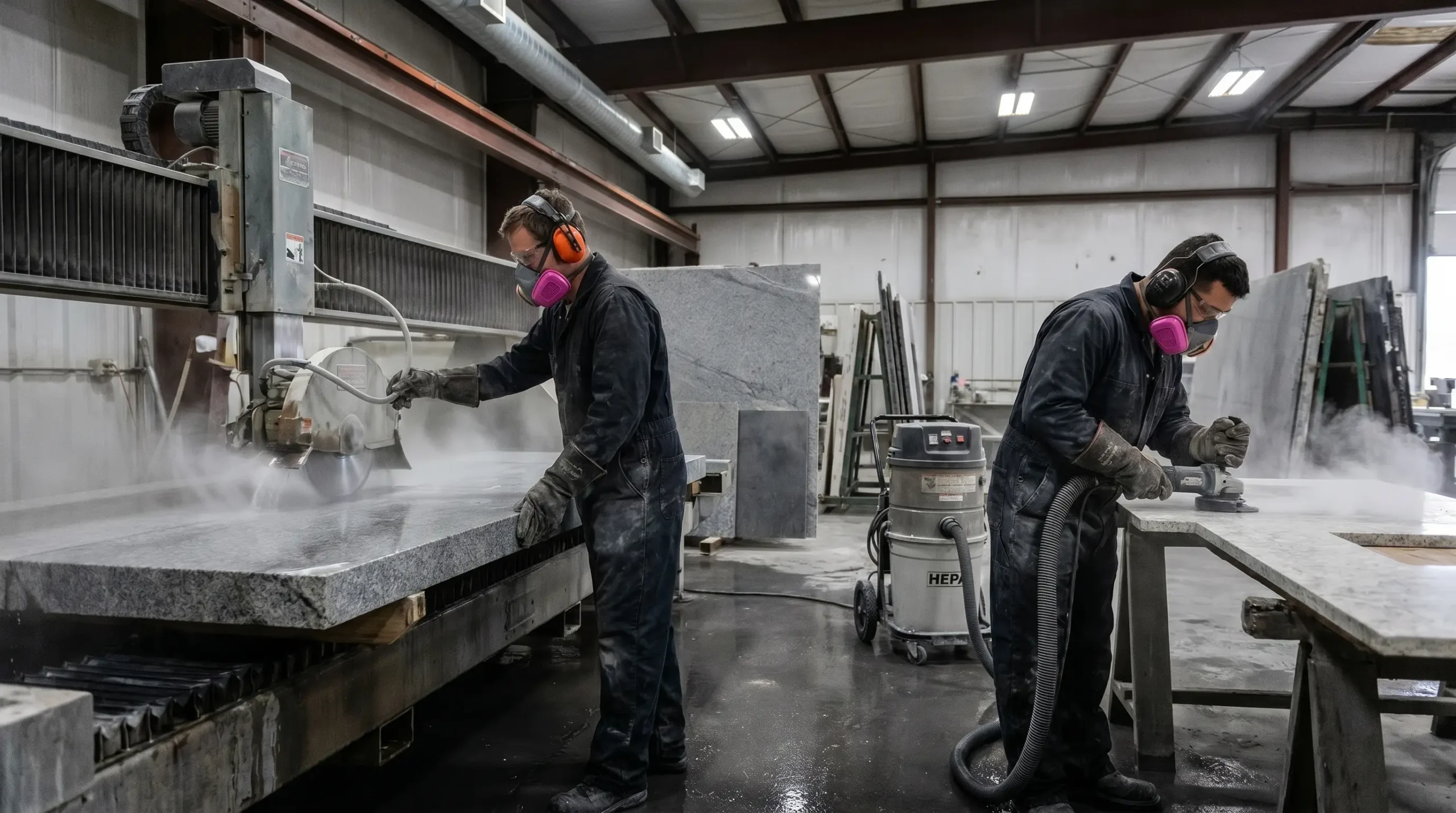
Two workers in safety gear use water jet cutting equipment to process large stone slabs in an industrial warehouse facility.

TL;DR — Key Numbers Silica dust exposure occurs when workers cut, drill, grind, or crush materials containing crystalline silica, generating respirable particles that cause irreversible lung disease including silicosis, lung cancer, and COPD. Occupational exposure limits range from 25 µg/m³ (ACGIH TLV) to 100 µg/m³ (UK WEL), with OSHA setting its PEL at 50 µg/m³. … Read more

Biological Monitoring: Definition, When It’s Needed & How It Works

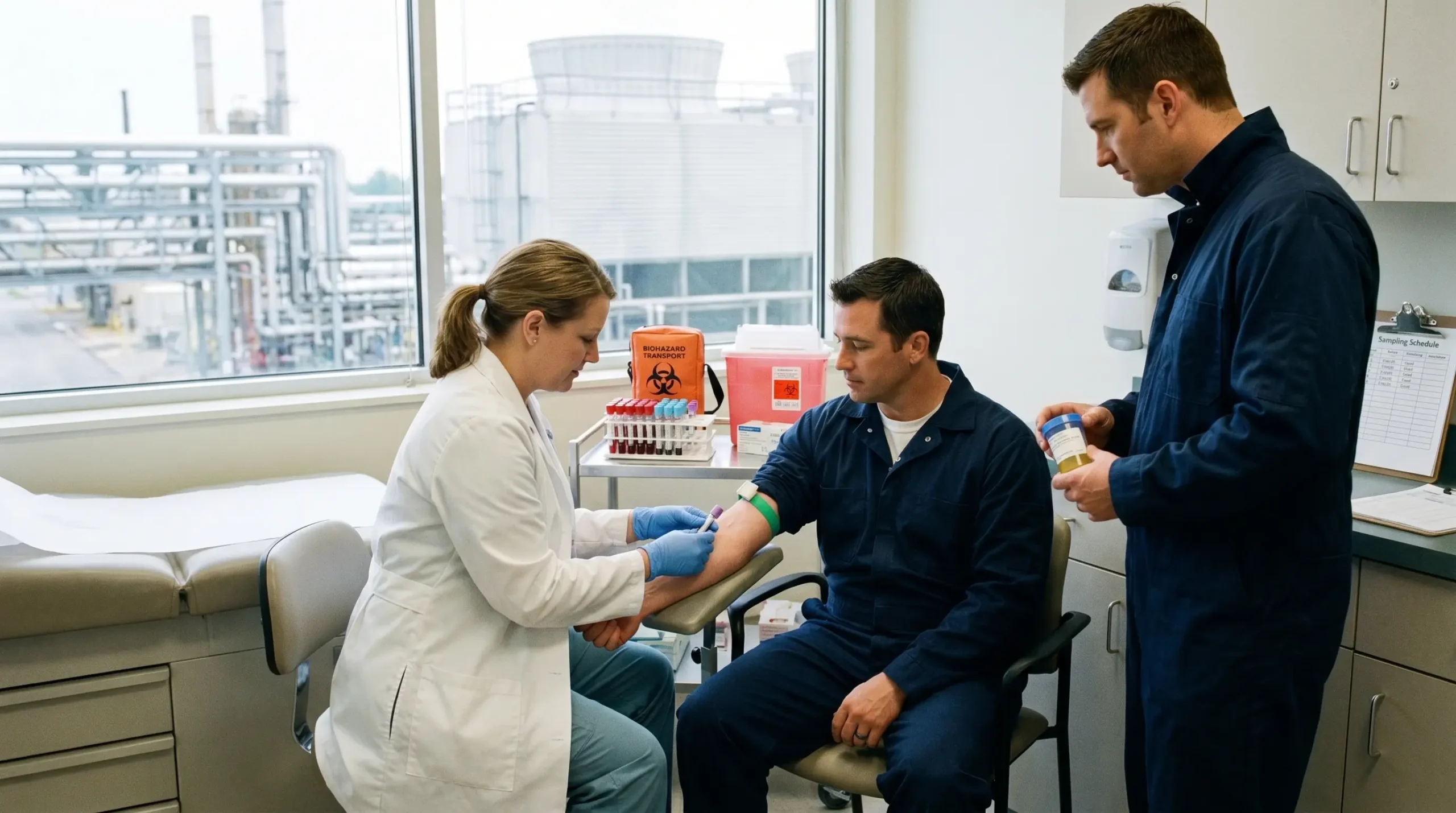
TL;DR Biological monitoring is the measurement of a chemical substance, its metabolites, or its biological effects in a worker’s body fluids — typically blood, urine, or exhaled breath — to assess how much of a workplace chemical has actually been absorbed. It is needed when air monitoring alone cannot reliably capture total exposure, particularly for … Read more

Workplace Air Quality Monitoring: Standards & Implementation

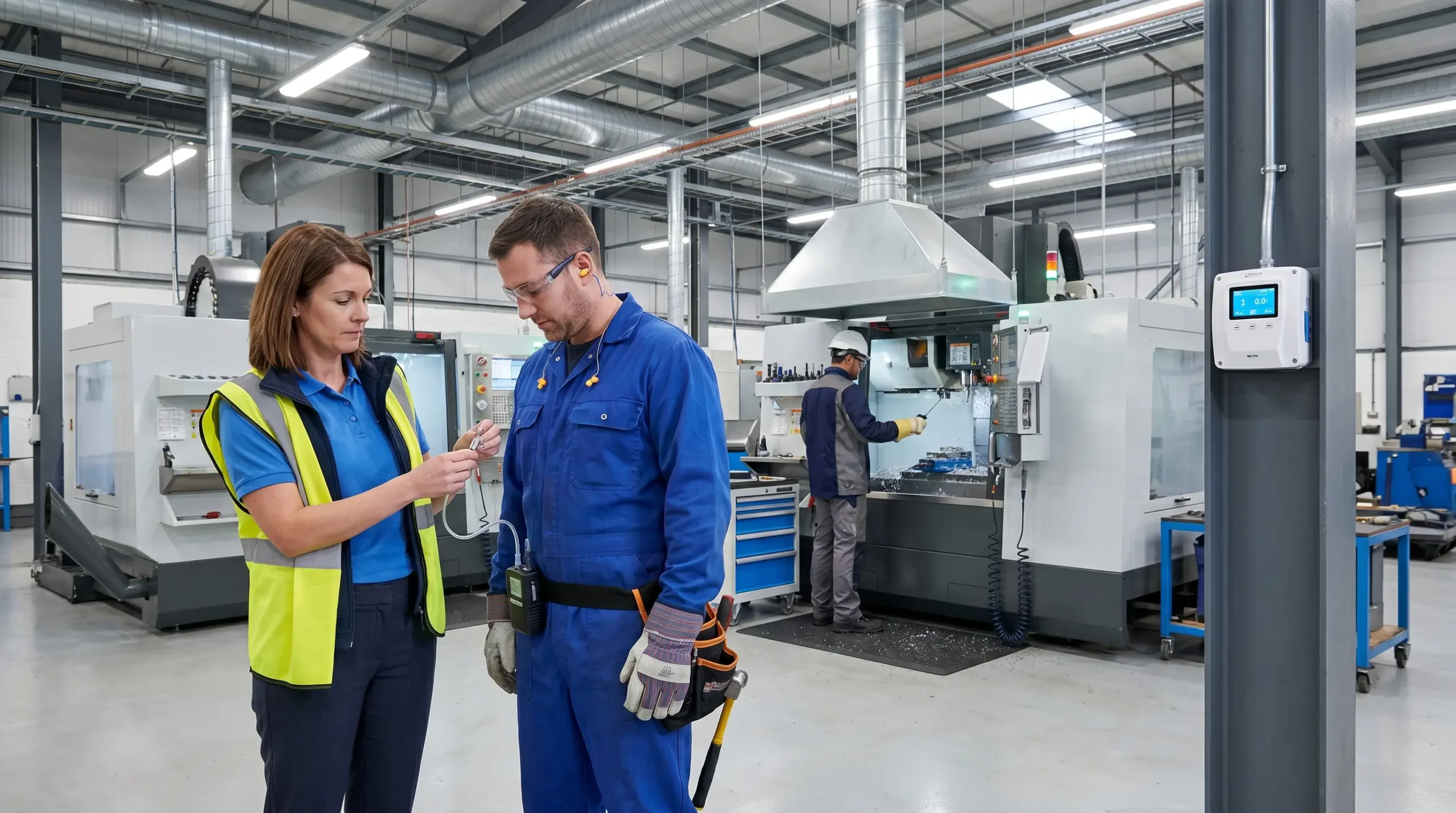
Two factory workers in safety gear discuss work details in a modern manufacturing facility with CNC machines and industrial equipment visible in the background.

TL;DR Workplace air quality monitoring is the systematic measurement of airborne contaminants and environmental conditions in work environments to protect worker health and ensure regulatory compliance. It encompasses both occupational exposure monitoring — measuring personal exposure to hazardous substances against legal limits such as OSHA PELs (US) or HSE WELs (GB) — and indoor environmental … Read more

Random Drug Testing: Legal Requirements & Procedures Guide

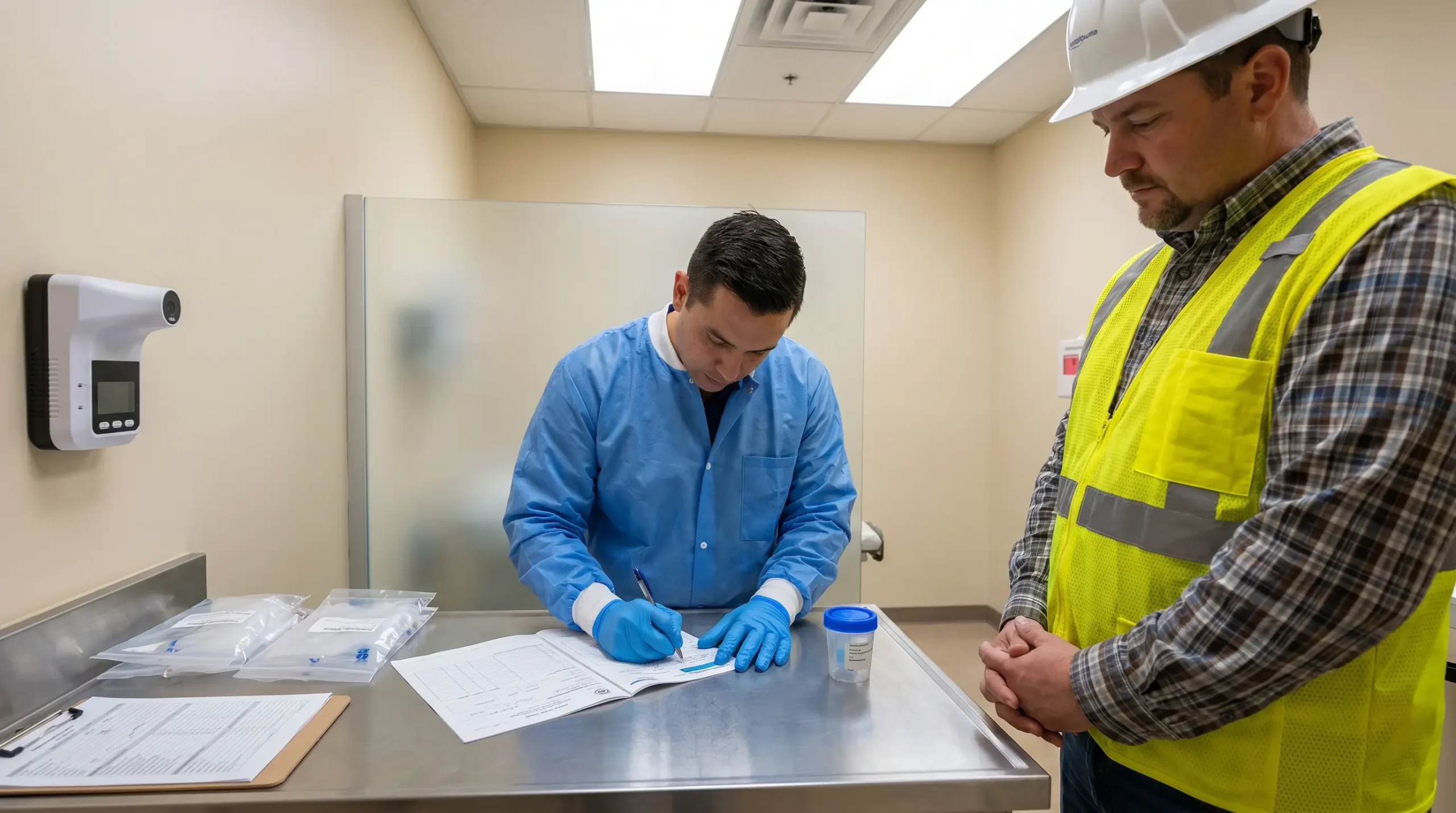
A laboratory technician in blue protective clothing writes on documentation while two construction workers in safety vests and hard hats observe at a stainless steel counter in a clinical setting.

TL;DR Random drug testing is a workplace testing method where current employees are selected through a statistically valid, non-discriminatory process — typically a computer-based random number generator — and required to undergo unannounced drug screening. In the US, DOT-regulated employers must test safety-sensitive employees at federally mandated annual rates (25–50% depending on the agency), while … Read more

Fitness for Work Assessments: Employer Guide (US & UK Law)

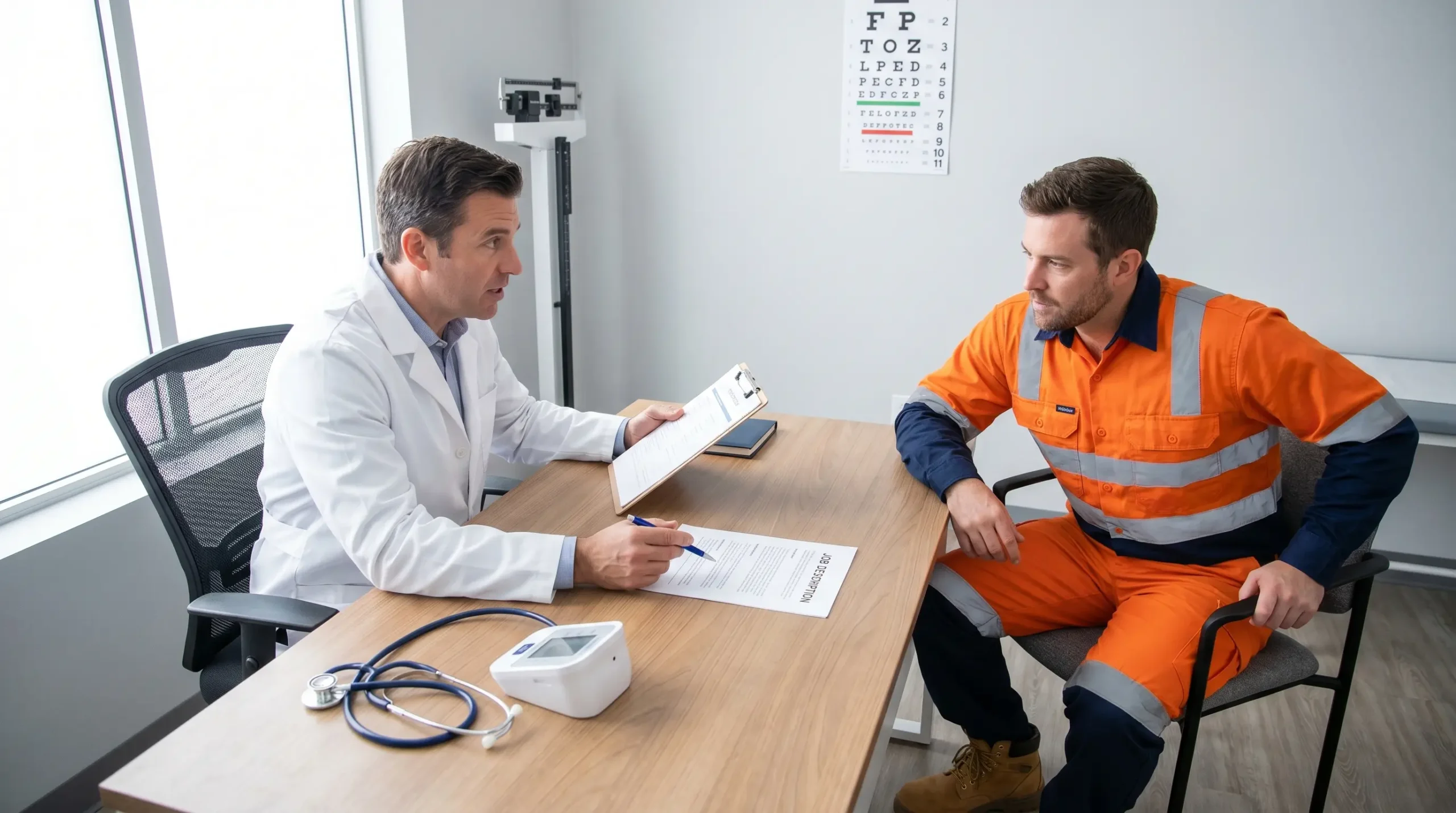
Doctor in white coat discusses health assessment with worker in orange safety uniform at desk in clinical office with eye chart on wall.

TL;DR A fitness for work assessment is a structured evaluation by an occupational health professional that determines whether an employee can perform the specific physical and psychological demands of their role without unreasonable risk to themselves or others. It is always job-specific, governed by anti-discrimination law in every major jurisdiction, and designed to enable work … Read more

Traffic Management Plan for Construction Sites: Full Guide

A Class 3 Marshal in high-visibility gear holds a stop sign to direct traffic at a construction site with steel framework, barriers, and a delivery truck, enforcing the 5 mph speed limit.

TL;DR: Traffic Management Planning by the Numbers A traffic management plan for construction sites is a documented plan that identifies every vehicle and pedestrian hazard on and around the site and specifies the controls applied to each. It must include scaled site layout drawings, segregated routes, signage, delivery scheduling, named roles, emergency access, and review … Read more

What Is Occupational Hygiene? Principles, Methods & OEL Guide

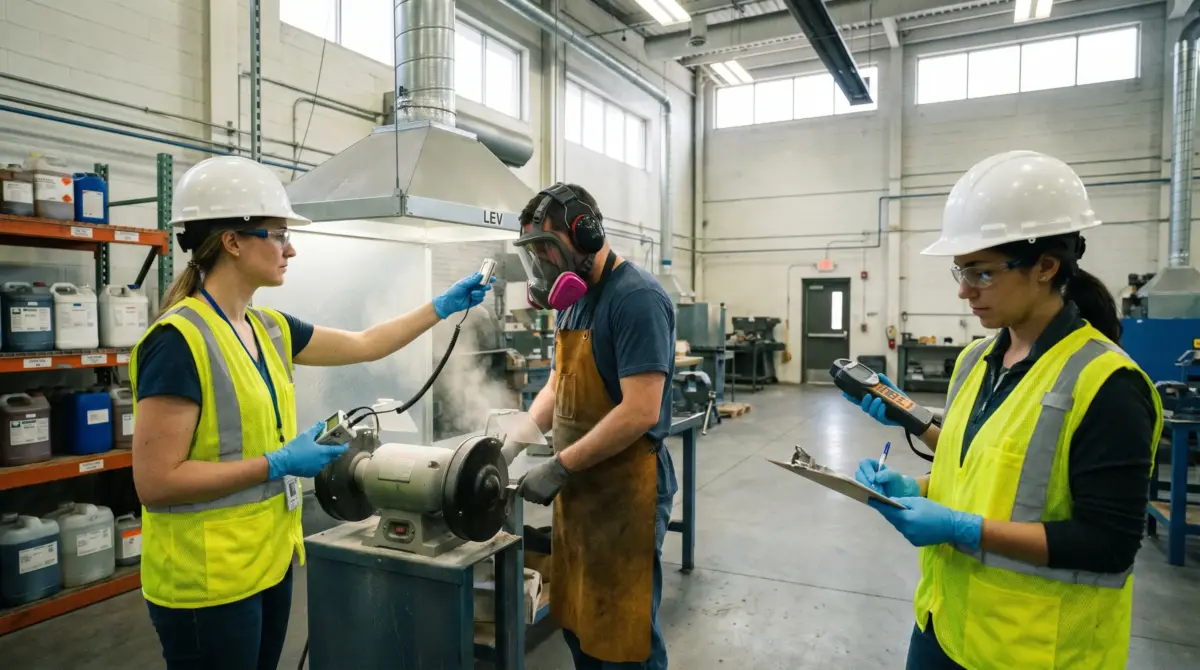
Three workers in safety gear conduct equipment inspection in an industrial warehouse, with one operating a grinder while others document measurements and take readings.

TL;DR — Three Questions That Frame This Discipline What is occupational hygiene? The science and practice of anticipating, recognizing, evaluating, controlling, and confirming workplace hazards that cause disease or impaired wellbeing — focused on the work environment, not the worker’s medical status. Why does it matter? Work-related diseases kill approximately 1.9 million people globally each … Read more

Legionella Risk Assessment: Step-by-Step Guide (UK & US)

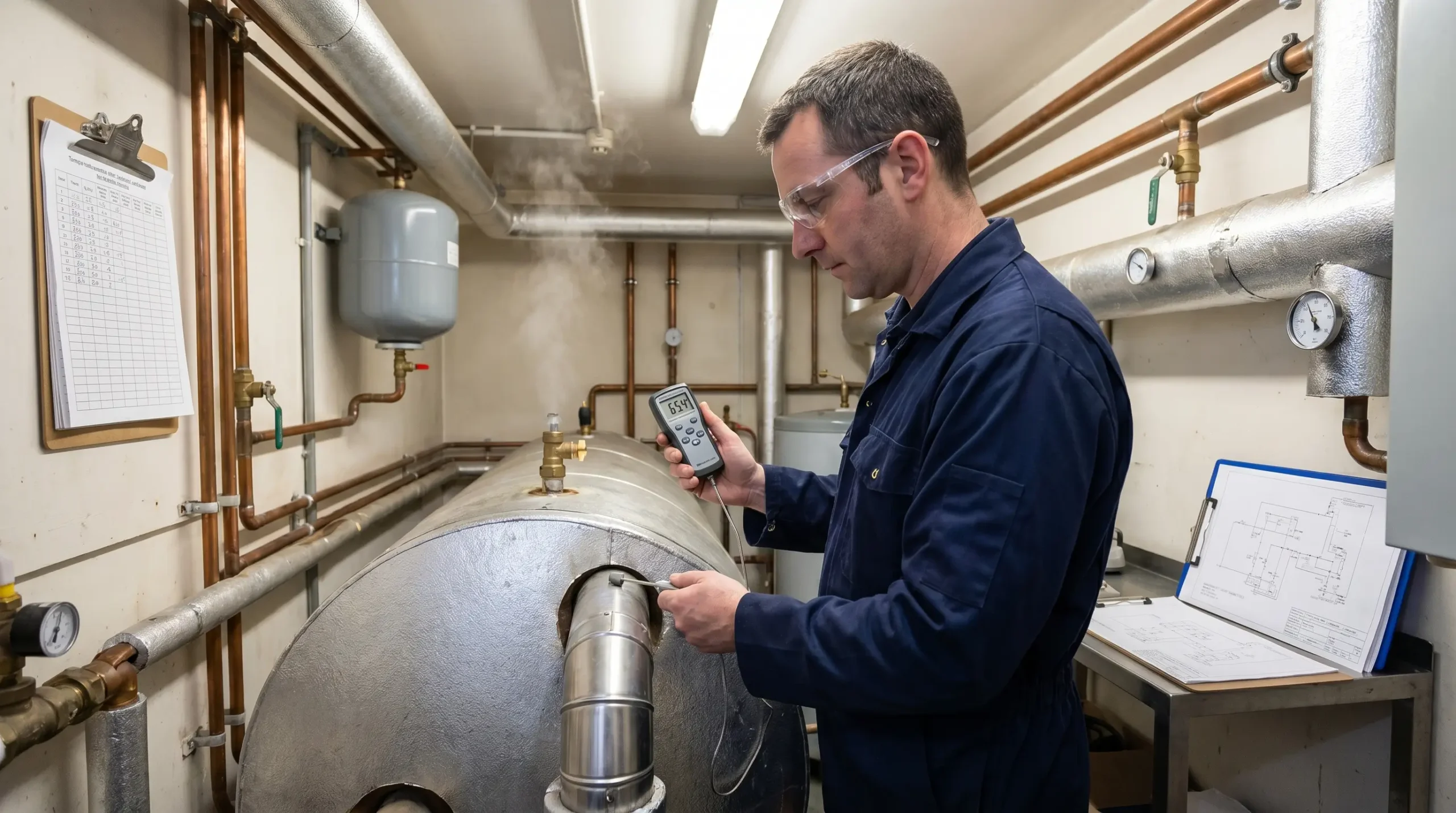
Technician wearing safety glasses and dark blue shirt uses a handheld digital meter to inspect a large cylindrical tank in an industrial mechanical room filled with copper pipes and gauges.

TL;DR — Legionella Risk Assessment in Six Steps A Legionella risk assessment is a systematic evaluation of a building’s water systems to identify whether conditions allow Legionella bacteria to grow and spread, posing a risk of Legionnaires’ disease. The assessment identifies hazards, evaluates who is at risk, and determines what control measures are needed. It … Read more

What’s SHEMS? Meaning, Key Elements & Standards Explained

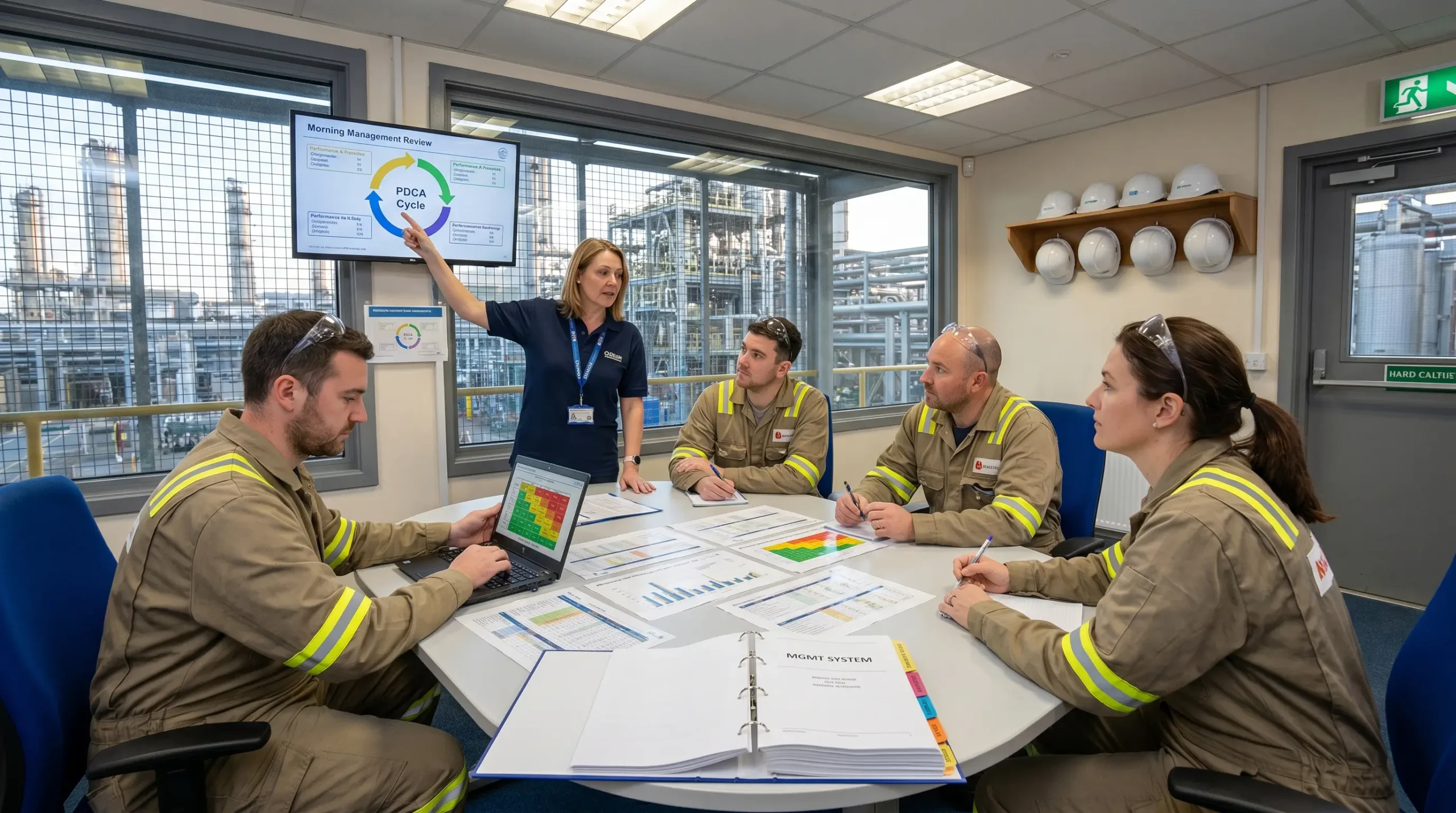
A woman in a blue lanyard presents a PDCA Cycle diagram to four workers in tan and yellow safety gear seated around a table during a morning management review meeting in a high-rise office.

TL;DR: I was auditing a mid-sized petrochemical facility in the Gulf when I asked the plant manager a straightforward question: “Show me your management system.” He pointed at three separate binders on three different shelves — one for safety, one for health, and one for environment. Each had a different revision date. The safety binder … Read more