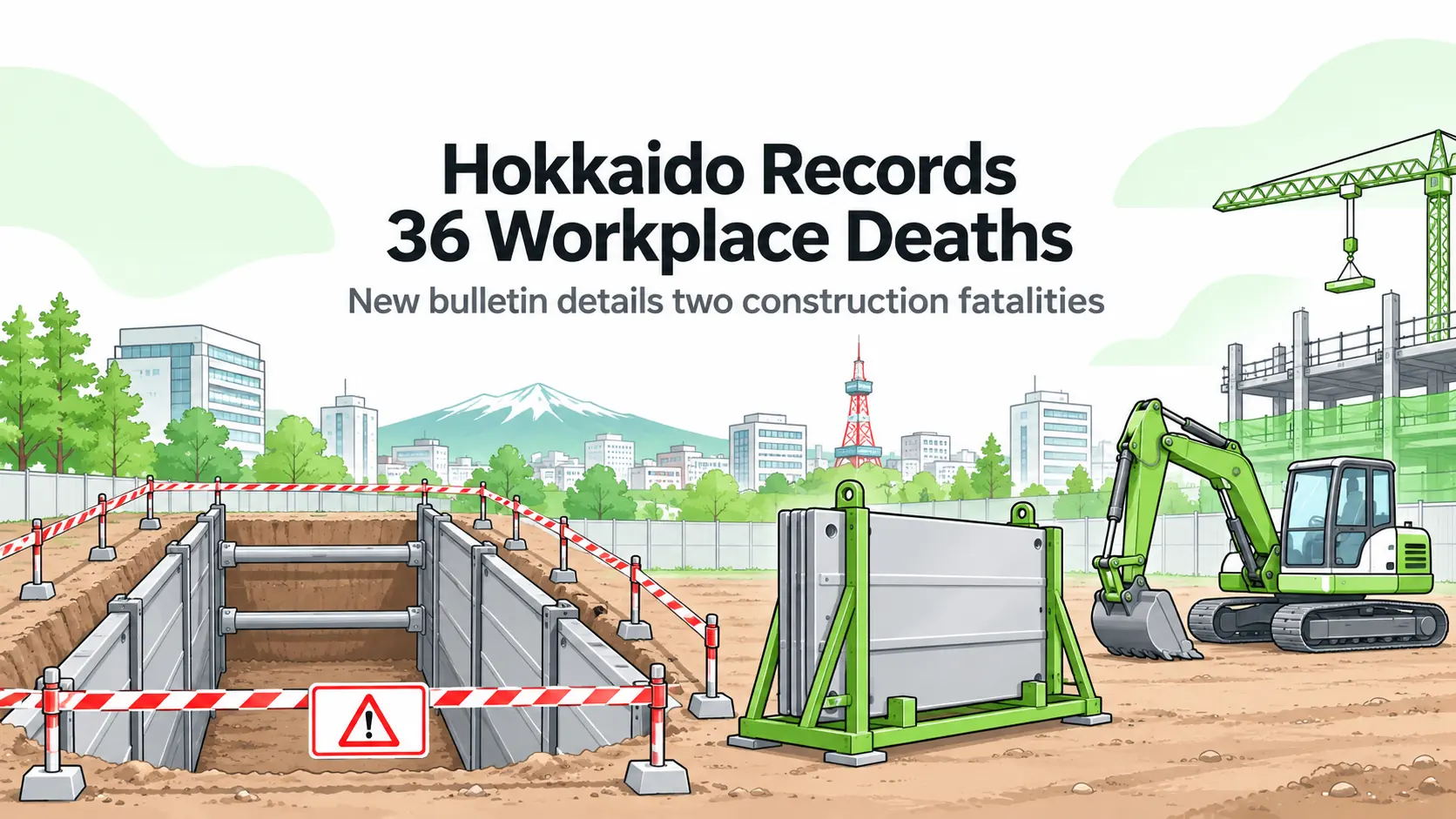
HOKKAIDO, JAPAN — Japan’s Hokkaido Labour Bureau published a workplace-fatality update on 20 November 2026 recording 36 deaths during 2026 after identifying two additional fatal incidents. Its November bulletin describes separate construction events involving a trench collapse and the dismantling of excavation support.
Two Newly Recorded Construction Incidents
In one preliminary account, a worker was dismantling temporary shoring used for an irrigation-channel excavation. A metal support panel fell after a cross-strut was removed, trapping the worker. The bulletin highlights management of the dismantling operation and a safe removal sequence.
The second account concerns hand digging during sewer-pipe replacement. A worker in a trench approximately 3.9 metres deep was buried when a sidewall collapsed. The bureau says shoring had not been installed. Its accompanying advice addresses a safe slope or appropriate earth support for trench work.
Bulletin Figures Are Provisional
The bureau explicitly warns that the early information can change. The records identify November as the month of the incidents but do not provide exact dates, employer identities or completed liability findings. Publication on 20 November should therefore not be mistaken for confirmation that both deaths occurred that day.
The total is the bureau’s recorded 2026 workplace-fatality count, not a national Japanese total or a final full-year figure. The announcement concerns newly recorded cases and associated preliminary safety information.
HSE Blog Analysis
The two accounts show why excavation protection must be considered throughout the work sequence. Ground retention during entry and the handling of support components during removal are related but different hazards. A system that protects a person while installed can itself become a moving load when dismantled.
Planning should therefore identify which components remain restrained at each stage, who controls the sequence and how people are kept outside a falling panel’s path. That is a general lesson from the described mechanisms, rather than a reconstruction of either workplace or a substitute for competent engineering assessment.
Utility operators considering temporary works for water main repairs face comparable coordination questions, although a water-main project differs from the sewer work described here. Across such tasks, action focused risk assessment should connect the planned sequence to the actual condition of the excavation and support system.
Sources and Verification
Checked the bureau’s dated news and safety listings, its early-warning page and both linked November incident summaries. These Japanese-language primary records share one organisational origin. Searches did not establish independent corroboration; this account retains their provisional status and does not add names or causes beyond the bulletin.
Featured image: original AI-generated conceptual illustration, not an actual event photograph, technical design or evidence of site conditions. Source imagery remains with the linked publishers; no photograph is reproduced without verified reuse permission.
Source
Hokkaido Labour Bureau, Japan Ministry of Health, Labour and Welfarejsite.mhlw.go.jp