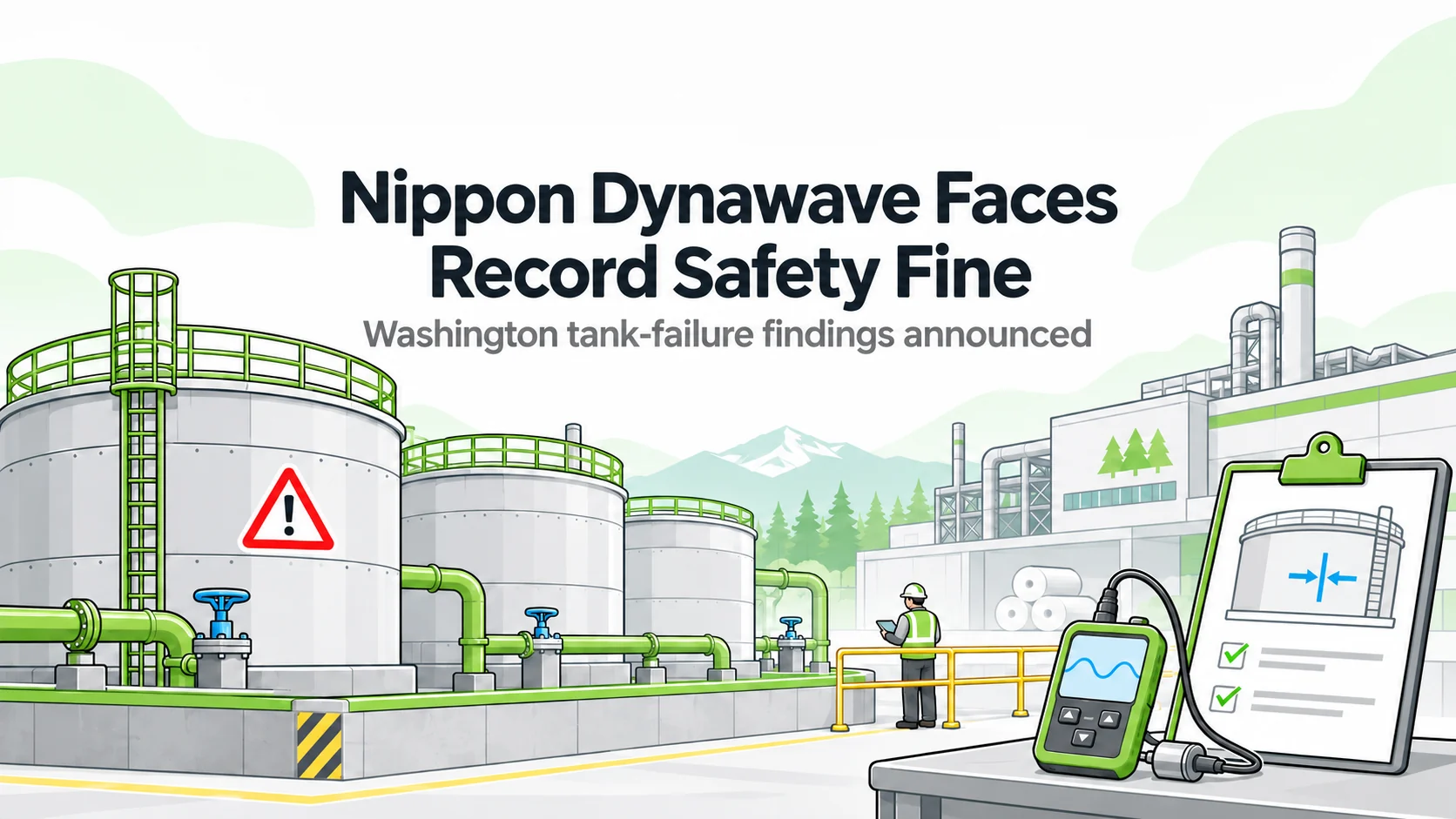
LONGVIEW, WASHINGTON, UNITED STATES — Washington’s Department of Labor & Industries (L&I) announced a $9,177,127 workplace safety penalty against Nippon Dynawave on 20 November 2026 following the Longview mill tank rupture that killed 11 workers and injured 12 on 26 May. The agency described it as the largest safety and health fine it has issued.
Inspection Warnings Underpin New Citations
L&I issued 75 citations after a six-month investigation. It said three reports between August 2025 and February 2026 identified dangerously thin tank walls, yet the company continued operating G-tank without making it safe. Its findings also address other tanks and deficiencies in emergency planning, training and response.
The newly announced enforcement action concerns the May disaster; it is not a report of another rupture. L&I said it will refer the case for consideration of criminal prosecution. That referral is distinct from criminal charges or a conviction.
Environmental Costs Are Separate From Safety Fines
The Department of Ecology’s records identify a $296,500 penalty for 34 environmental violations and a separate $664,776.77 response-cost reimbursement order. Those amounts should not be described collectively as an environmental fine.
Washington State Standard reported that Nippon disputes the characterisation of its conduct as egregious and willful and intends to use the appeals process. The company also distinguishes workplace-safety findings from the still-developing investigation of root cause. L&I says the citation can be appealed within 15 working days of receipt.
HSE Blog Analysis
An inspection has limited protective value if an adverse result remains an unresolved maintenance item while equipment continues operating. For asset owners, the practical question is who has authority to impose an operating restriction and what evidence permits that restriction to be lifted. The answer should be clear before a critical inspection result arrives.
That is a central assurance issue within a process safety management framework. Repair decisions, operating envelopes and emergency arrangements need connected ownership, rather than separate administrative tracks. This is a general management lesson, not an additional finding about this mill.
Similarly, turning risk assessments into safety actions means checking that a decision has changed the condition workers face. An action should close against verified evidence, with unresolved risk visible to the people responsible for operations.
Sources and Verification
Checked five organisations: L&I’s dated release, Ecology’s enforcement records, Associated Press coverage, KIRO 7 and Washington State Standard. AP syndication counts as one organisation. Findings remain attributable to the agencies and subject to appeal.
Featured image: original AI-generated conceptual illustration, not an actual event photograph, technical design or evidence of site conditions. Source imagery remains with the linked publishers; no photograph is reproduced without verified reuse permission.
Source
Washington State Department of Labor & Industrieslni.wa.gov