
What Is Fixed Wire Testing? EICR Guide for UK Buildings

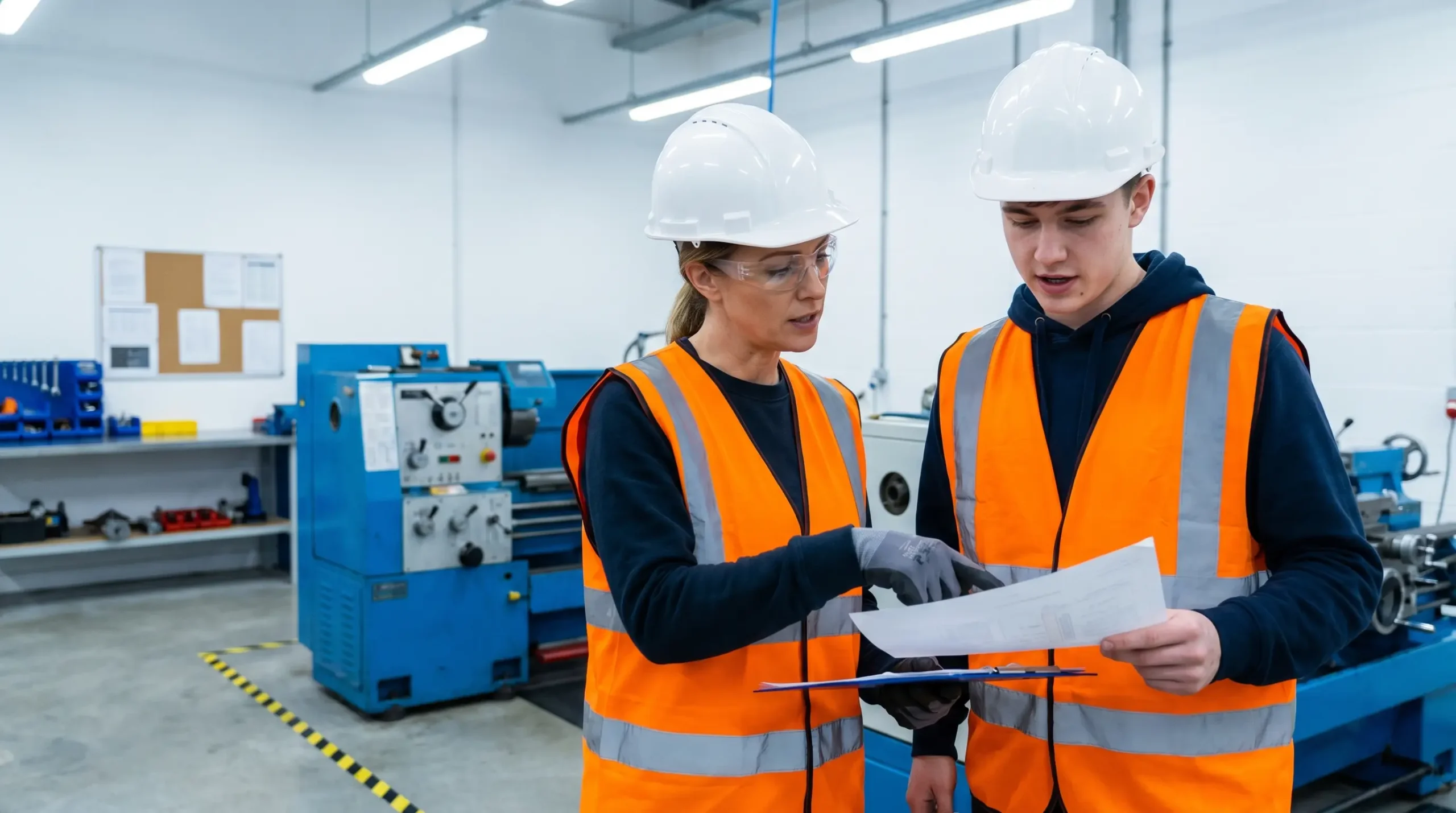
Two electricians in orange safety gear inspect an electrical panel with colorful wires and circuit breakers while reviewing documentation on a clipboard.

TL;DR Fixed wire testing is the systematic inspection and testing of a building’s permanent electrical installation — cables, circuits, consumer units, distribution boards, sockets, switches, light fittings, and earthing arrangements — to determine whether it remains safe for continued use. The formal output is an Electrical Installation Condition Report (EICR), which codes any defects by … Read more

Structural Steelwork Fall Prevention: Regulations, Equipment & Rescue

Two construction workers wearing hard hats and safety vests secure yellow safety lines on a steel beam framework during high-rise building construction on a clear day.

TL;DR — Structural Steelwork Fall Prevention Falls from height kill more construction workers than any other hazard in both the United States and the United Kingdom. Structural steelwork fall prevention demands a hierarchy-driven approach — eliminating height work through pre-assembly where feasible, preventing falls through collective and personal protection systems, and mitigating fall consequences through … Read more

How to Create a Mental Health Policy at Work | Step-by-Step Guide

Three professionals engaged in a collaborative discussion in a modern, sunlit office with large windows, plants, and minimalist furniture.

TL;DR A workplace mental health policy is a formal document that sets out how an organization prevents psychosocial harm, supports employees experiencing mental health challenges, and integrates psychological health into its occupational health and safety management system. It should cover scope, psychosocial risk assessment, preventive measures, support resources, reasonable accommodations, confidentiality protections, return-to-work protocols, anti-stigma … Read more

Mechanical vs Manual Demolition: Risk Comparison Guide

Two construction workers in hard hats and safety vests observe an excavator with hydraulic breaker demolishing a concrete building structure, with dust and debris visible behind orange safety fencing.

Mechanical demolition and manual demolition carry fundamentally different risk profiles rather than one being universally safer. Mechanical methods present higher risks from uncontrolled progressive collapse and struck-by debris across wider zones, while manual methods create greater worker exposure to falls from height, musculoskeletal injury, hand-arm vibration syndrome, and close-proximity respirable dust inhalation. Safe outcomes depend … Read more

Demolition Method Statement: What It Must Include | HSE Guide

Two construction workers in high-visibility safety gear observe a hydraulic excavator demolishing a multi-story concrete building on a controlled job site with waste containment barriers.

TL;DR A demolition method statement is a written document that records the planned sequence, methods, and safety arrangements for demolition work before it begins. In the UK, CDM 2015 Regulation 20 makes it mandatory for all demolition or dismantling. In the US, OSHA 29 CFR 1926.850(a) requires a written engineering survey by a competent person. … Read more

Hazard Identification & Risk Assessment (HIRA) Guide

Two industrial workers in safety gear inspect corroded pipes inside a large manufacturing facility with metal structures and equipment visible in the background.

TL;DR: I was three days into a turnaround at a gas processing facility in the Gulf when the scaffolding crew started erecting a platform over a live process line. The permit was in place. The method statement was signed. But nobody — not the scaffold supervisor, not the area authority, not the issuing authority — … Read more

Silicosis: Causes, Symptoms, Types & Prevention Guide (2025)

Workers in protective gear and respirators operate a large wet saw cutting stone slabs in an industrial workshop with dust extraction equipment and fluorescent lighting.

TL;DR — Myth vs Reality Silicosis is an irreversible occupational lung disease caused by inhaling respirable crystalline silica dust — fine particles generated when materials like concrete, sandstone, or engineered stone are cut, ground, or drilled. These particles scar the lungs, progressively destroying breathing capacity. There is no cure. Silicosis is entirely preventable through effective … Read more

What Is a Hole Watcher? 10 Key Responsibilities Explained

Worker in safety gear communicates by radio while monitoring a colleague inside a confined space entry point at an industrial refinery or processing facility.

TL;DR A hole watcher is a safety professional stationed outside a permit-required confined space to monitor workers inside, control access, track atmospheric conditions, and initiate emergency response. The term is an industry colloquialism for the OSHA-defined “attendant” role under 29 CFR 1910.146. In the UK, the equivalent role is called a “top man” or “safety … Read more

Categories PTW

10 Key PTW Holder Roles and Responsibilities | HSE Guide

Two industrial workers in safety gear inspect equipment at a refinery, reviewing documentation at a valve station marked with a danger tag.

TL;DR A PTW holder — also called the performing authority or permit receiver — is the person who accepts personal accountability for executing hazardous work safely under the conditions of a live permit-to-work. Their responsibilities span verifying worksite conditions before acceptance, briefing the work team on hazards and controls, maintaining safety measures throughout the task, … Read more

Categories PTW