
A tandem crane lift uses two cranes to support the same load at the same time, so the moving and flying objects workplace safety controls for the lift must cover both cranes' swing paths and the shared fall zone. Before either crane takes the load, a qualified planner needs to establish how much each crane will carry at pickup, during movement and at set-down. The lift director then briefs everyone involved on the sequence, who will signal each operator and when both cranes must stop. Adding the cranes’ nominal capacities or assigning half the weight to each can conceal an overload.
First consider whether one suitably configured crane can safely do the job. A second crane introduces another support point, another load chart and another set of movements to coordinate. If two cranes are needed, plan for the entire period of shared support, including any transfer from one crane to the other. New South Wales guidance on multiple-hoist lifting.
Assign the planner and lift director
For US construction covered by the Occupational Safety and Health Administration’s (OSHA) crane standard, the trigger is more than one crane or derrick supporting the same load. It applies even if the cranes share the load for only part of the operation. A qualified person must develop a plan that meets the applicable construction crane requirements. If the planner determines that engineering expertise is needed, the employer must provide it. 29 CFR 1926.1432(a).
The lift director must meet the criteria for both a competent person and a qualified person, or be a competent person assisted by one or more qualified people. Competence includes recognizing hazards and having authority to correct them promptly. Qualification concerns the demonstrated ability to resolve the technical problems of the work. Name the person directing the lift, identify the technical assistance they will use, and make that authority clear to both crane crews. OSHA definitions and lift direction requirements.
Does the plan have to be written? Federal OSHA requires the plan and a meeting to review it with all workers involved. Its enforcement directive allows the plan under this particular section to be oral. Check the rules governing the site before relying on that provision. Washington State, for instance, classifies a lift requiring multiple cranes as critical and requires its plan to be available on site in writing or digital form. A written method statement with drawings, chart references and a revision date gives both crews a common reference throughout the lift. OSHA crane enforcement directive and Washington’s critical lift definitions.
Determine each crane’s share from pickup to landing
Establish the load’s weight as it will be lifted, its center of gravity and the position of each attachment relative to that center. The center of gravity is the point through which the load’s weight acts. On a simple two-point lift, the support nearer that point generally carries more. Matching cranes and evenly spaced lifting points on a drawing do not establish equal shares. Verify the load as built, including fitted components or contents that can move.
For each stage, compare the load on each crane with the manufacturer’s chart for its actual configuration and working radius, the horizontal distance from the crane’s axis of rotation to the vertical load line. Account for hook blocks, slings, beams and attachments as the particular chart directs. Mark which items are already included to avoid counting them twice. Separately check the lifting points and rigging for the forces, angles and directions they will experience. OSHA requirements for crane operation and rated capacity and Queensland Mobile Crane Code of Practice, section 11.3.
| Stage | What can change | What the plan should establish |
|---|---|---|
| Taking the weight | The load transfers from its supports into two rigging systems. A snag or an attachment out of position can prevent it from lifting as expected. | Record the weight source, attachment details, expected shares and how the crew will verify the load is free and stable before proceeding. |
| Moving the load | A crane’s radius can increase as the load moves. Uneven movement can tilt the load or pull a hoist line out of vertical. | Plot the path of both hooks, check each crane at its most demanding position, and specify the coordinated movements and clearances. |
| Turning or transferring | During a planned change of orientation, one crane may progressively take more weight as the other unloads. | Show the sequence, the highest anticipated demand on each crane, and the condition for releasing a hook or changing rigging. |
| Landing | Contact with a support at one end can change the force on the crane at the other end before the load is fully seated. | Define the landing supports, order of contact, permitted load attitude and how the crew confirms stability before disconnecting. |
Record the capacity margin required by the governing rules, crane instructions and job conditions. The federal multiple-crane provision does not prescribe one percentage for every tandem lift. A load indicator can help check what is happening during a planned movement. It cannot establish in advance the crane’s capacity at a later radius or the suitability of a lifting point. Resolve uncertain weights, attachments or load shares before authorizing the lift.
OSHA documented a fatal lift in which two cranes were lowering a concrete beam. One end dropped below the other, transferring load to the crane at the lower end. That crane overturned and a flagger was killed. The incident illustrates why the landing sequence and the positions of workers around the supports need as much attention as the initial pickup. OSHA’s account, incident 11 in the cranes rule preamble.
Put the lift sequence and site controls in the method statement
A usable tandem lift method statement tells the two crews where each crane will stand, what each operator will do, who can authorize the next movement and what condition would stop it. Attach the calculations and drawings to the same revision used for the briefing. The following items let the lift director check the planned method against the site. Washington Administrative Code 296-155-53400(80), critical lift plan contents.
- Load and rigging. Identify the load, weight source, center of gravity, pick points, rigging arrangement and working load limits. Show which gear goes to each hook, who will inspect it and how the load will be secured against shifting.
- Cranes and setup. Identify each machine and chart. Record boom configuration, counterweight, hoist rope arrangement and outrigger or crawler setup as applicable. Confirm actual setup positions against the drawing. Position changes require another check of radii, clearances and support conditions.
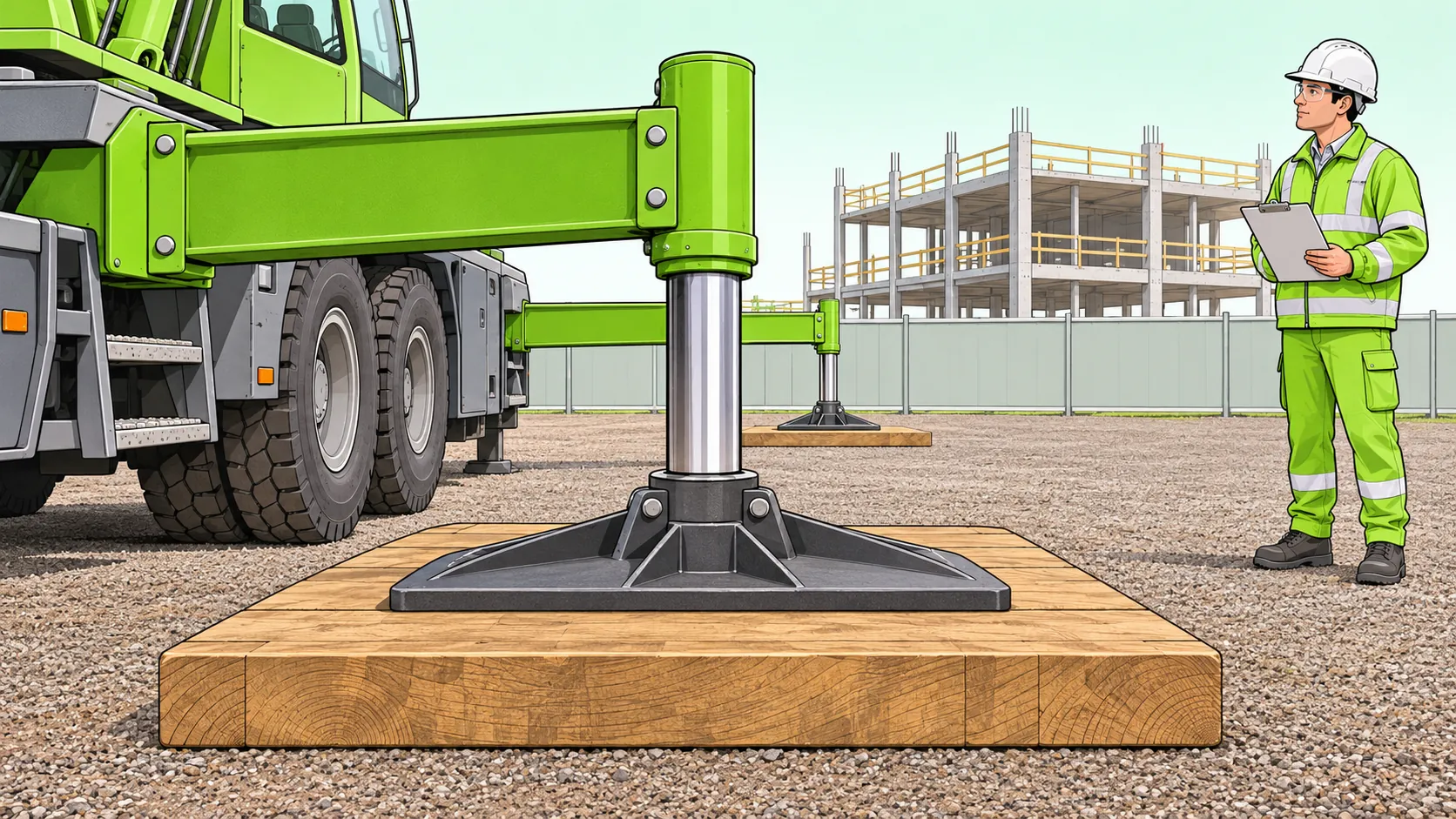
- Ground and overhead hazards. Inspect each bearing surface, including the ground conditions for crane outriggers where fitted. Check mats or other supporting structures against the loads each crane will impose. Locate buried utilities, tanks, voids, slopes and excavations. Plot power lines, nearby plant and the swept paths of both booms and counterweights. Under federal OSHA rules, the controlling entity has specific duties to provide necessary ground preparation and communicate known or documented subsurface hazards. OSHA ground conditions standard.
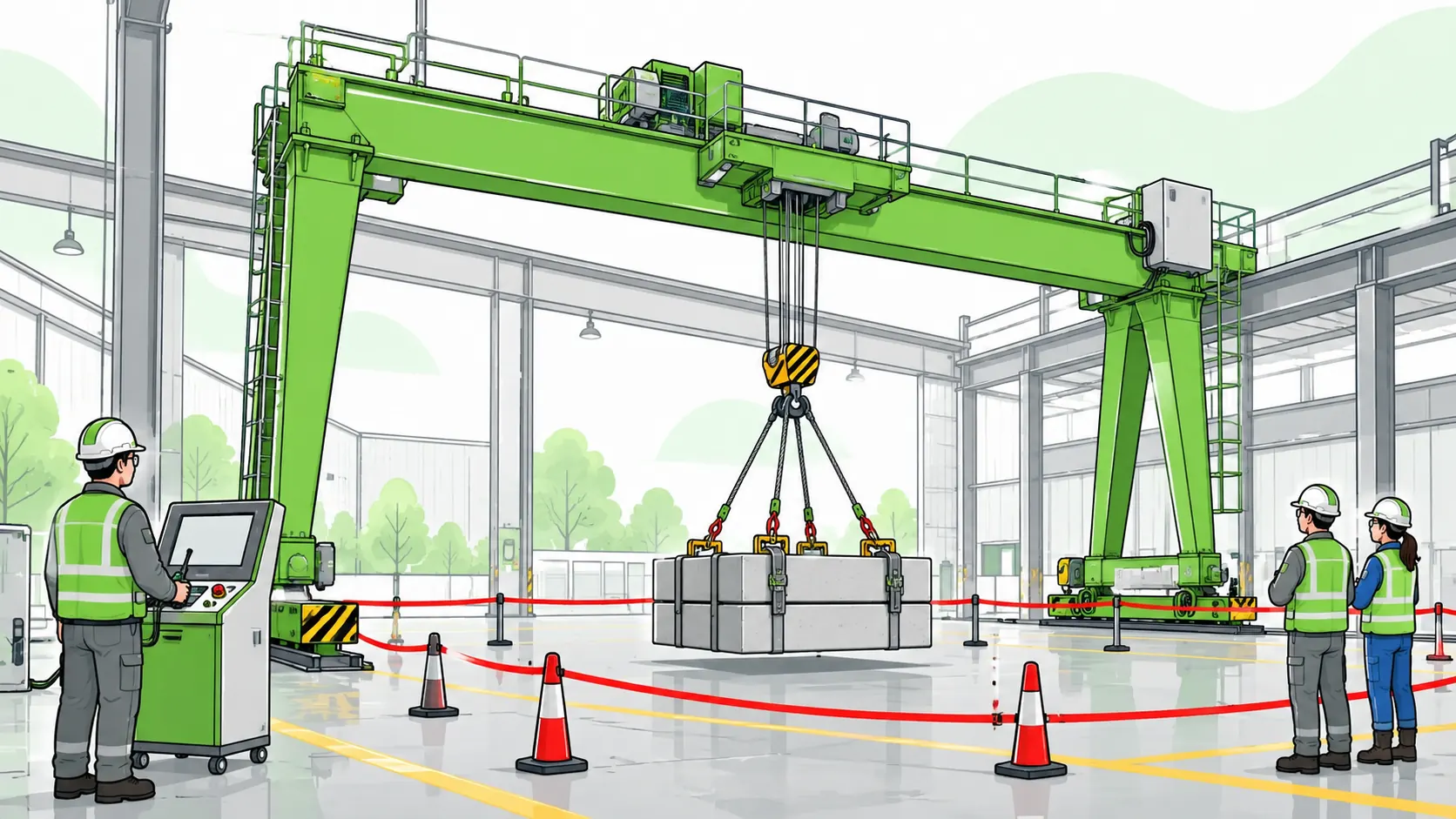
- Work area and conditions. Mark the travel path, fall zone, swing hazards, landing area and positions from which riggers and signal people can see without standing in danger. Set wind and weather limits for the equipment and load. Arrange access control and a safe route away from the landing area.
- Pauses and contingencies. Identify the points where both cranes hold position for a check. Name who confirms the condition for proceeding. Decide in advance how the crew will keep the load controlled or land it safely after a fault, loss of communication or change in the weather.
Agree on signals for each crane
The lift director must review the plan in a meeting with everyone involved. Use the drawing to walk both operators, signal people, riggers and the receiving crew through the movements in order. Have them identify the crane they will address, the stages where visibility changes, the stop signal and who will confirm that the load has landed securely.
Under federal OSHA rules, only one person gives ordinary operating signals to a particular crane at a time. Where a signal person communicates with more than one crane, identify the intended crane before the movement instruction or use an equally effective identification system. Give directions from the operator’s perspective. Anyone who sees a safety problem must signal a stop or emergency stop. Operators must obey it. OSHA rules for crane signals.
Agree on voice signals before starting. A movement instruction identifies the function and direction, the distance or speed, then the function and stop command. Test electronic signaling equipment at the site. The operators must receive radio signals hands-free, and multiple cranes can share a dedicated channel to coordinate their work. If reception is lost, safely stop the operations that depend on signals. Resume only when communication is restored and the intended signal is given and understood. Electronic signaling requirements and voice signal requirements.
Direct the lift and stop when the plan no longer fits
At the work area, the lift director checks the actual cranes, rigging, weather, route and landing supports against the briefed plan. Confirm radio coverage from the positions crews will occupy. A rehearsal can reveal an obstructed sightline or conflicting crane movement before workers handle the load. Resolve any discrepancy while the load is still supported.
Warning. Keep workers clear of a suspended load and out of the space where it could trap them against a support. Only people needed to receive the load may enter the fall zone during landing. When workers in that zone hook, unhook, guide or initially connect the load, OSHA requires a qualified rigger to rig it against unintended displacement and requires self-closing hook latches or equivalent protection. The hook exception is for J-hooks used to set wooden trusses. Never send someone underneath to inspect or align the load. OSHA requirements for keeping clear of the load.
- Take the load as planned. At the first planned pause, check that the rigging is seated, the load attitude is as expected and both cranes are taking the predicted shares within the planned limits. Use the verification method specified by the planner. Stop on a snag, unexpected tilt or unexplained reading.
- Coordinate movements through the planned path. Maintain the specified hook positions, clearances and speeds. Watch both cranes and their supports. Stop if a hoist line goes out of plumb, an outrigger support moves, the load departs from the agreed path or a planned limit is approached without sufficient margin. OSHA prohibits using the crane to pull a load sideways.
- Land and secure before release. Lower in the agreed sequence. Verify that the load is stable on its intended supports and any required connections or bracing are in place. Release each hook only when the plan permits it. A slack sling alone cannot establish that the load will stay stable.
If the job cannot proceed as briefed, stop and follow the agreed contingency. Each operator has authority to refuse further handling over a safety concern until a qualified person determines it is safe. Refer changes in crane position, rigging, load distribution or sequence to the qualified planner. The director must review the revised plan with the workers involved before they continue. OSHA operator stop authority and OSHA’s final-rule explanation of section 1926.1432(b).