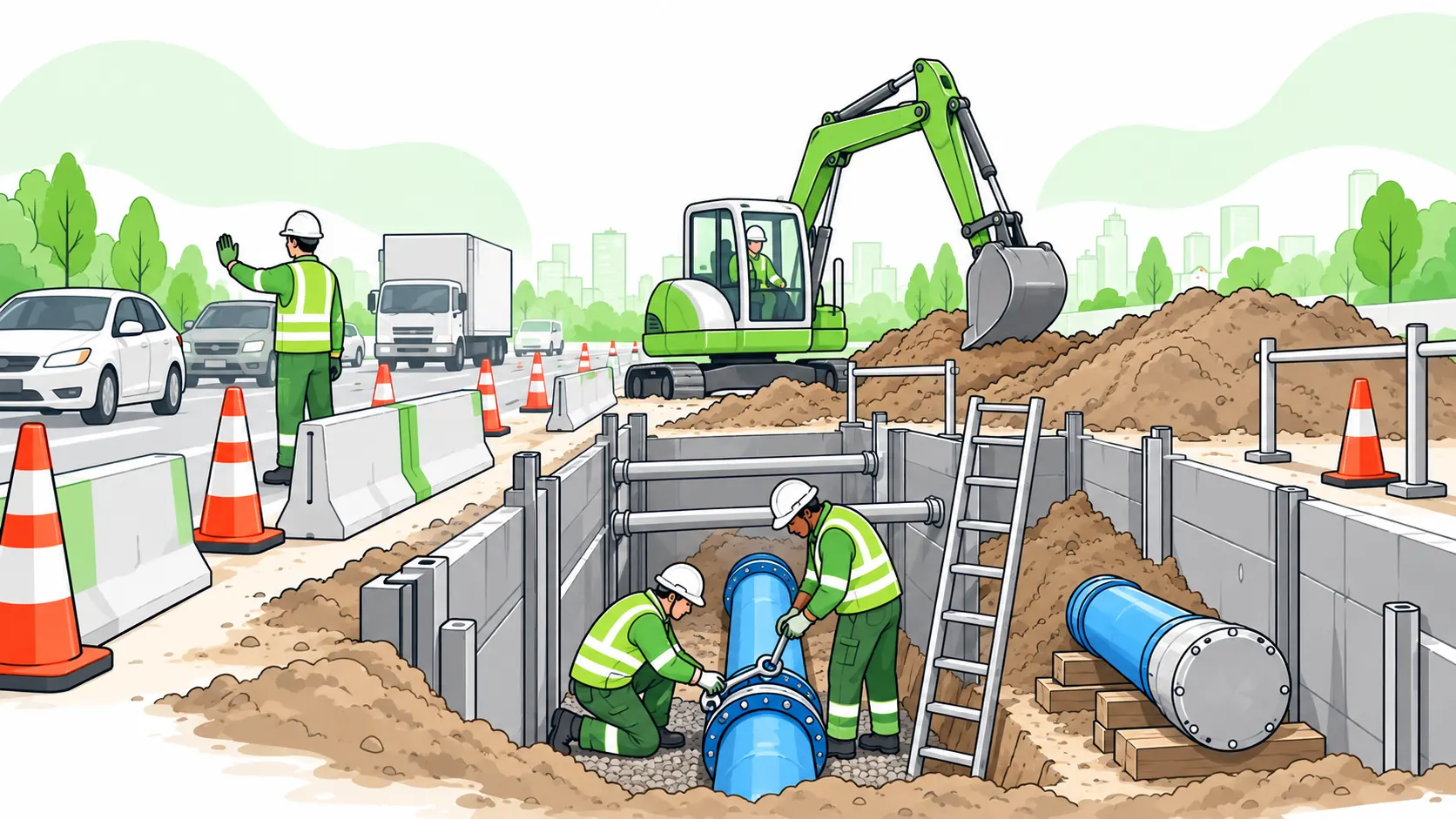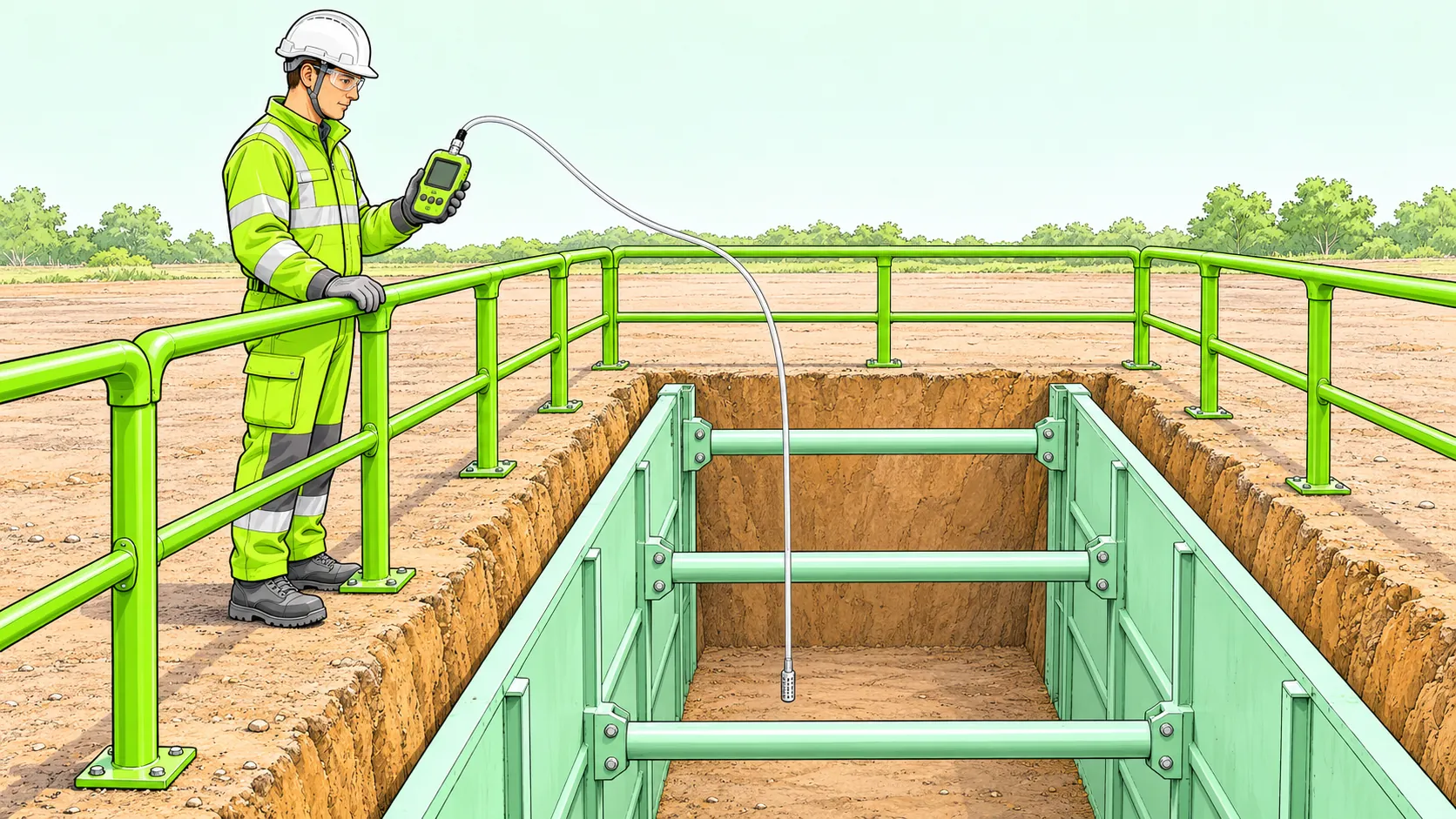
Test the air before anyone enters an excavation more than 4 feet (1.22 m) deep when oxygen deficiency or another hazardous atmosphere exists or could reasonably be expected. Both the depth and the likelihood of a hazard matter under the U.S. Occupational Safety and Health Administration (OSHA) excavation standard, 29 CFR 1926.651(g)(1)(i). Take the first samples from outside the cut. Test the air along the entry route and where people will work, using instruments that can detect the hazards identified for that job.
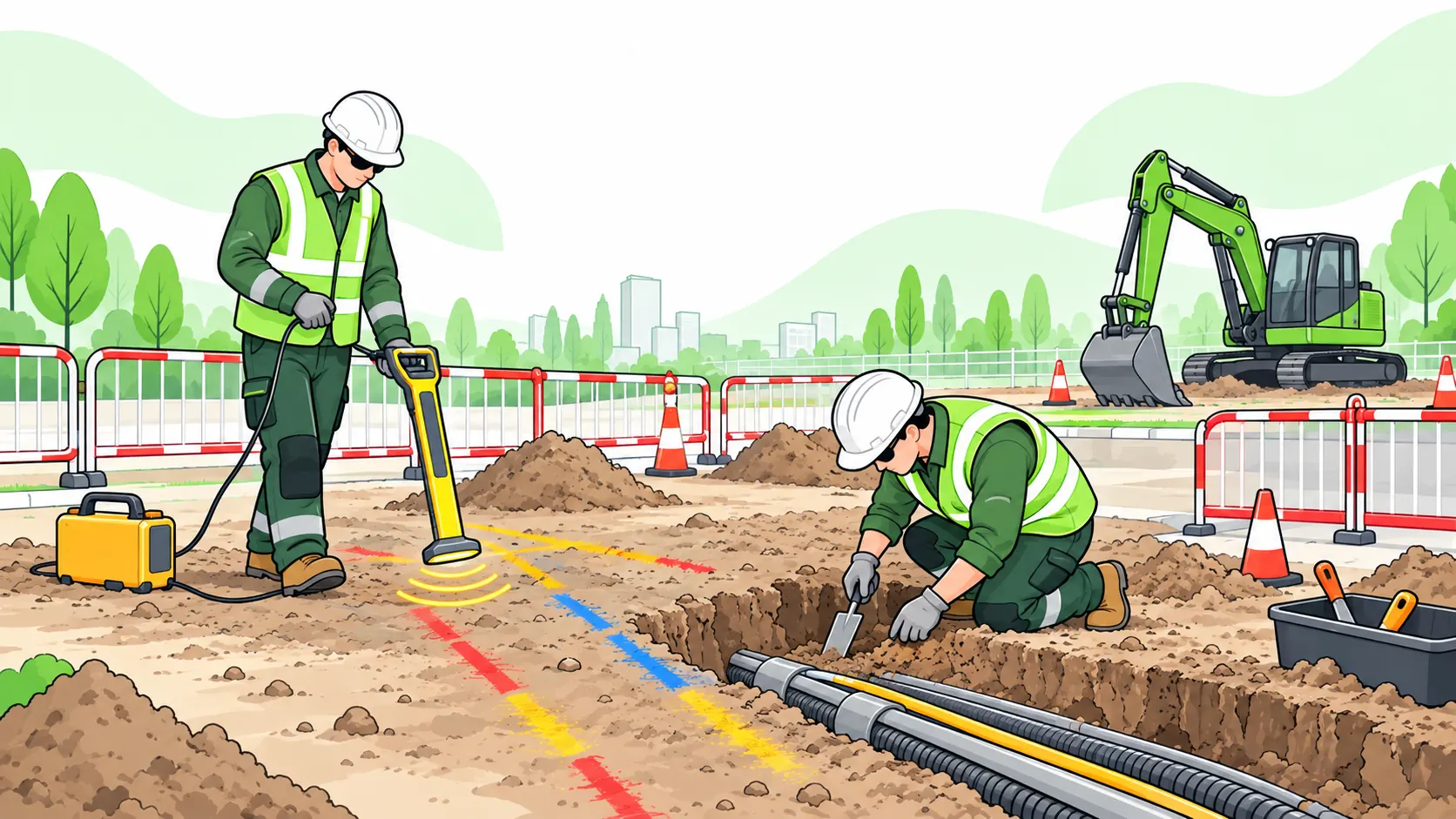
A utility locate before digging answers a different question. It helps the crew avoid striking a buried service. An atmospheric test measures the air people are about to breathe. Completing the locate, opening the trench to daylight or installing a trench box tells the supervisor little about the air at the bottom.
Decide whether the excavation needs a pre-entry test
Start with what could enter the cut and what the work itself could release. Review the previous use of the ground, the services exposed, nearby storage and the position of engines or generators. Ask the crew what will change once work begins. The air before a sewer connection is opened can differ from the air during the repair.
OSHA identifies landfill areas and nearby hazardous-substance storage in the standard. Its excavation inspection directive, section on hazardous atmospheres, also discusses sewer and gas work, vehicle exhaust and welding. A credible source is enough to trigger the likelihood part of the test. The crew does not need to wait for someone to smell gas or feel ill.
The federal pre-entry clause says greater than 4 feet. At exactly 4 feet or less, that particular depth trigger does not apply. A shallow cut can still collect contaminants. Where there is reason to suspect unsafe air, keep people out, investigate the source and test before authorising entry. The precautions in paragraph (g)(1)(ii) for oxygen deficiency and other hazardous atmospheres have no four-foot exemption. The same reasoning applies when a wider excavation falls outside the narrow OSHA definition of a trench.
Take the samples from a protected position
Plan the sampling points before switching on the instrument. Mark where the ladder ends, where the worker’s head will be during the task, and any lower or separated sections where the air may differ. A reading at the lip describes the air at the lip. It cannot clear a distant pipe joint or a deeper sump.
Warning. Keep workers outside the excavation while its atmosphere is unknown. If the probe cannot reach the work area from a safe position, stop and arrange a suitable sampling method. Sending someone down with a personal alarm exposes that person before the test is complete.
- Match the instrument to the source. List the gases or vapours the assessment identified. Check which sensors are installed, their ranges and what each display measures. A standard multi-gas meter cannot rule out a substance for which it has no suitable sensor. Obtain specialist monitoring advice if the contaminant or method is uncertain.
- Check the meter and sampling line. Follow the manufacturer’s instructions for the pump, filter, tubing and flow check. Before each day’s use, perform the recommended bump test or calibration check. A bump test challenges the sensors and alarms with gas. A calibration check tests the accuracy of the reading. Fully calibrate a unit that fails either check and remove it from service if calibration fails. See OSHA’s bulletin on portable gas monitors.
- Sample the approach and work positions. Use a suitable remote probe or pumped line from outside. Sample at different heights and along the length of the cut where conditions can vary. At each point, allow time for air to travel through the tubing and for the sensors to respond. Use the time specified for the actual instrument and line length. Moving the probe too soon can make air from the previous point appear to come from the next one.
- Read oxygen, flammability and the relevant toxic channels. Even when the monitor displays them together, interpret oxygen first. Some combustible-gas sensors need oxygen to work reliably. Record the actual values and units, sampling location, time and instrument identity. For instrument limitations, consult the OSHA Technical Manual on direct-reading instruments.
Use the readings to make the entry decision
Review each channel against its own criterion. Oxygen is measured as a percentage of the air. A combustible-gas reading expressed as a percentage of the lower flammable limit scales the reading against the concentration at which that gas can ignite. Toxic-gas readings commonly use parts per million. Those three numbers are not interchangeable.
| Finding | What the supervisor should do |
|---|---|
| Oxygen below 19.5% by volume | Treat the air as oxygen-deficient. Hold routine entry, identify the cause and arrange effective controls. A low combustible reading under these conditions may be unreliable. |
| Flammable gas detected | Follow the site’s alarm and withdrawal criteria. Paragraph (g)(1)(iii) requires precautions to prevent exposure above 20% of the gas’s lower flammable limit. This is not a target alarm setting or permission to continue up to that value. |
| Toxic gas detected | Identify the substance, concentration and applicable exposure limit, including its averaging period or ceiling. A single spot reading cannot establish compliance with a full-shift average. |
| Missing, unstable or out-of-range reading | Keep entry on hold. Resolve the instrument fault, gas identity or sampling limitation, then repeat the affected tests. Silence from a meter with the wrong sensor gives no assurance. |
Even acceptable readings resolve only the atmospheric part of the decision. The competent person must also inspect the excavation and adjacent area for cave-ins, protective-system problems and other hazards under paragraph (k). Record who authorised entry and the conditions on which that decision depends.
Know when to withdraw and test again
A pre-entry reading describes one place at one time. Moving an engine, opening a line, interrupting ventilation or extending the cut can change the exposure. Agree before entry who will watch the readings, what will trigger withdrawal and how the crew will be accounted for. Where controls keep contaminants at acceptable levels, paragraph (g)(1)(iv) requires testing as often as necessary to confirm that the atmosphere remains safe. A fixed once-per-shift check may miss a change within minutes.
On an alarm or evidence of a hazardous atmosphere, remove exposed workers and keep the area closed while the cause is investigated. Control the source and provide suitable ventilation where appropriate. Retest the affected locations under the conditions in which work will resume. A silent alarm after a fan starts does not establish that the whole work area is safe.
Where hazardous air exists or can reasonably develop during the work, paragraph (g)(2) also requires readily available rescue equipment appropriate to the hazard. Arrange the response and brief the crew before exposure. If someone collapses, raise the alarm and activate that response. An unprotected coworker entering the same atmosphere can become a second casualty.