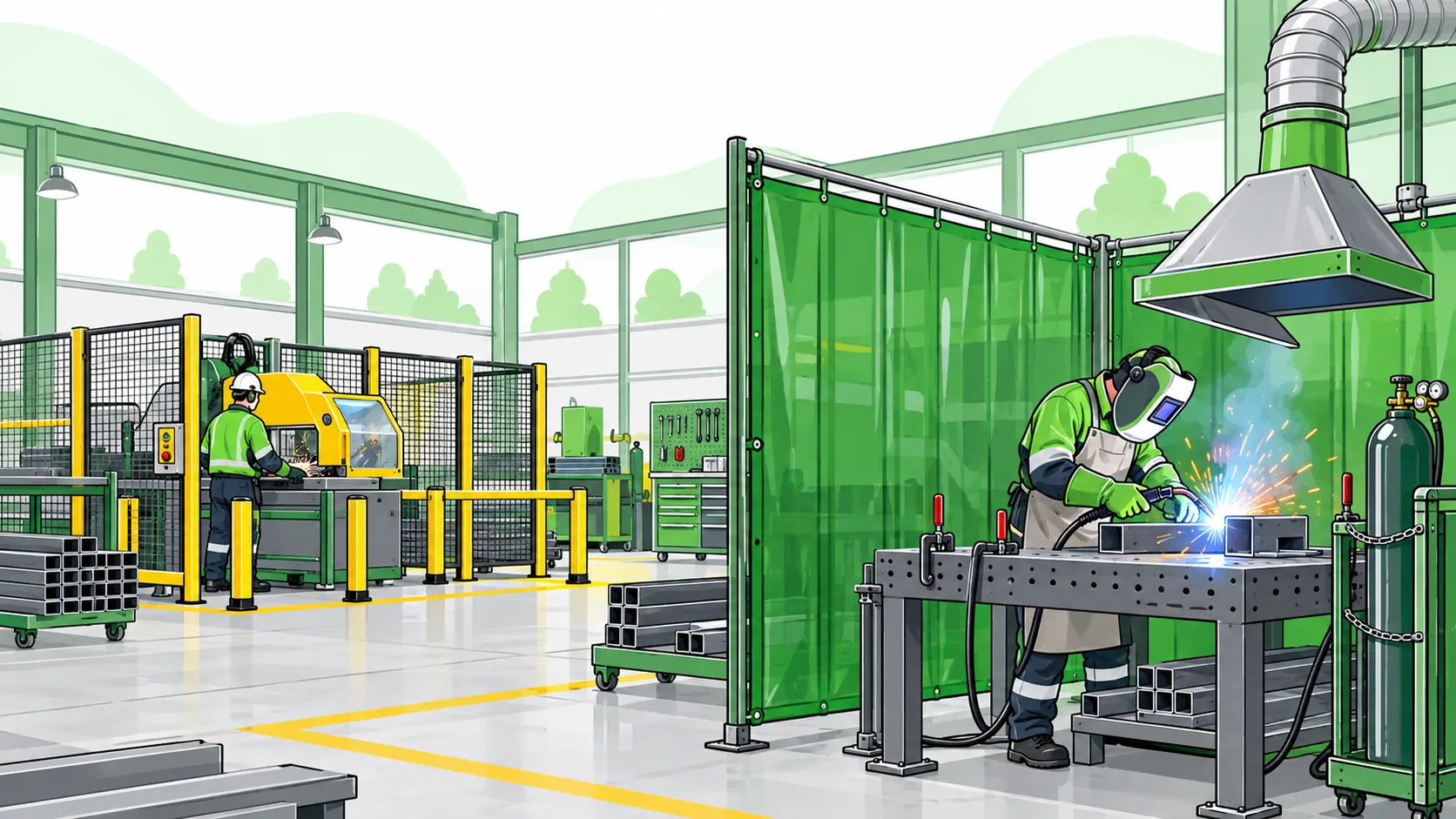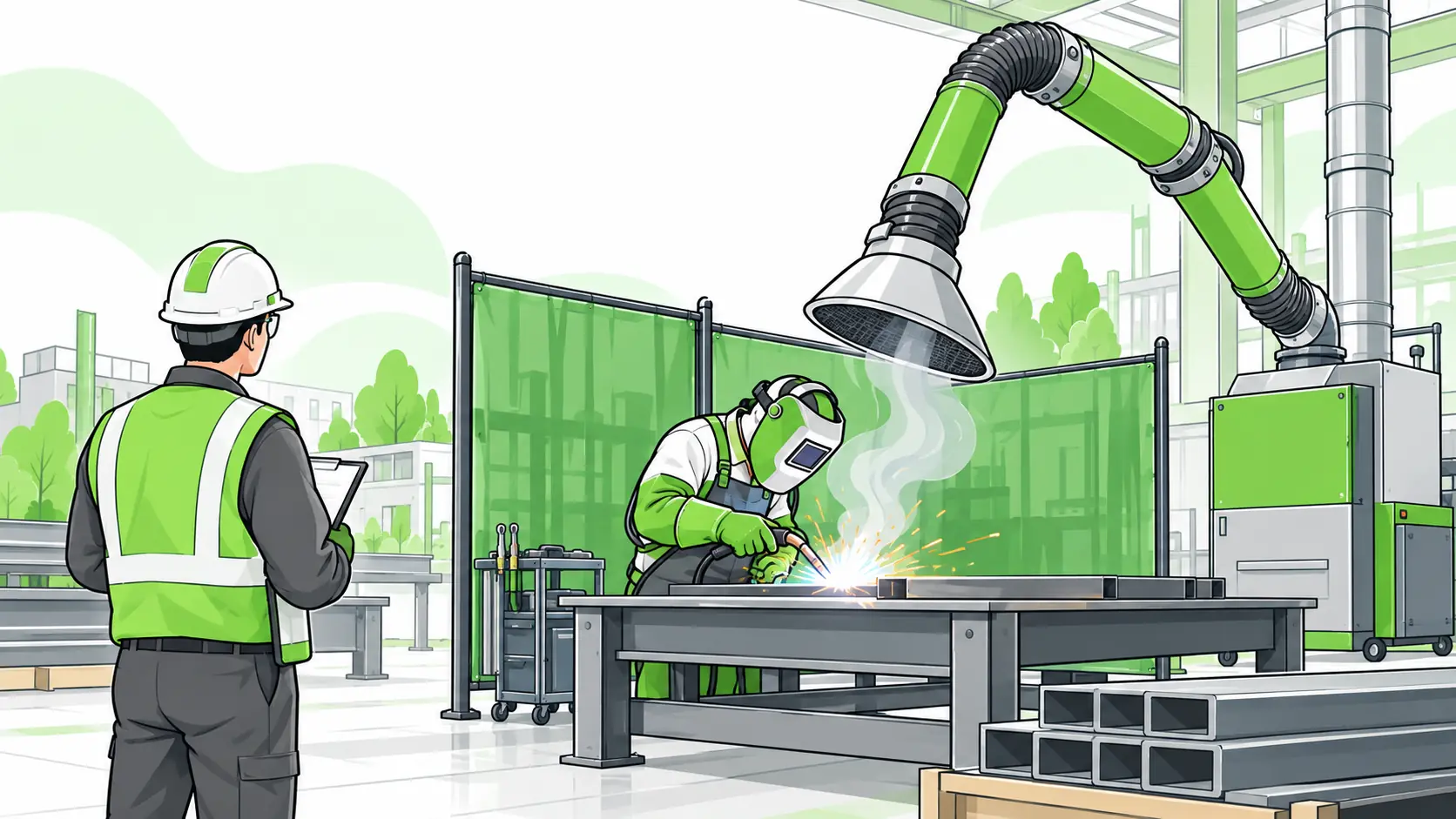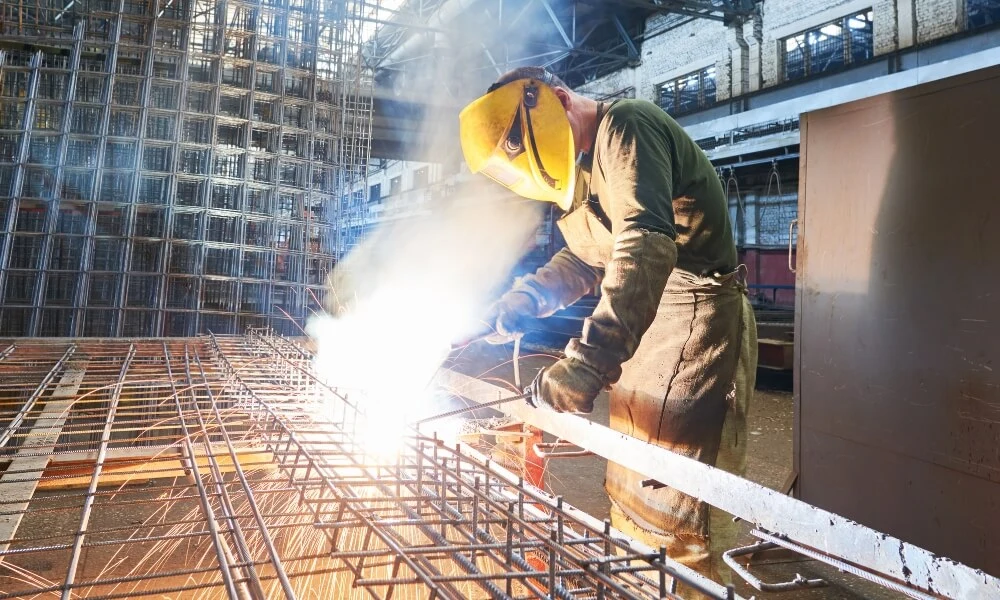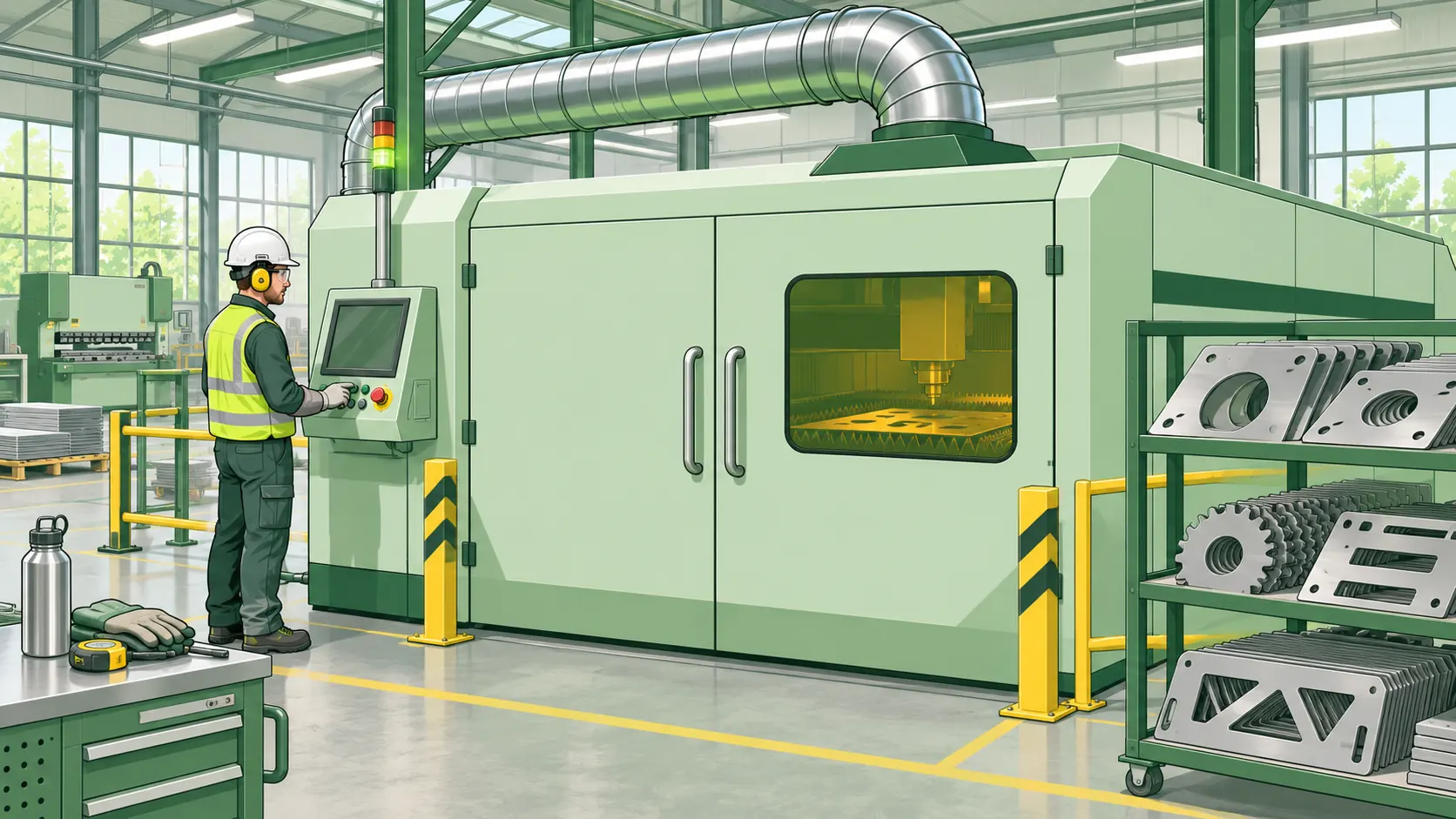
Safe metal cutting starts with three questions. What metal and coating will be heated? Where will fume and hot particles travel? What protects people from the energy used to make the cut? A plasma arc adds intense light, noise and an electrical hazard. Oxy-fuel equipment introduces an open flame and a gas supply. An industrial laser needs a protective enclosure or other controls designed for its beam. Each process can also expose the person at the next workstation.
Review the actual job with the people who will do it. A cutting table used for known stock in a fabrication shop presents a different task from removing steel during maintenance. The material history, work area, people nearby and safeguards available all affect the decision to proceed.
How the hazards differ across the three cutting processes
Start with the hazard that distinguishes the process, then check the hazards it shares with the other two. A fume hood, for instance, can capture contaminants while leaving a clear line of sight to a plasma arc. Both exposures need a control of their own.
| Process | What can reach people | What to verify |
|---|---|---|
| Plasma cutting | Arc radiation can injure eyes and skin. A plasma cut can also produce high noise, fume, hot particles and an electric shock hazard. | Screen the arc from neighboring work areas. Confirm source extraction, suitable eye and face protection, and noise controls. Take equipment with damaged electrical insulation out of service. |
| Oxy-fuel cutting | Flame and hot particles can ignite nearby materials. Leaks, damaged gas equipment and flashback can expose the operator and others to fire. | Check that a competent person has inspected the gas equipment and its protective devices. Secure the cylinders, protect hoses from damage and examine the spaces sparks could reach. |
| Laser cutting | An accessible direct or reflected beam can injure eyes or skin. Heating the material also generates fume, and hot waste can present a fire hazard. | Confirm that the enclosure, viewing panels, access interlocks and extraction are fit for the machine and job. Treat an enclosure fault or service task requiring internal access as a separate release decision. |
The UK Health and Safety Executive identifies fume, gases and noise as hazards of plasma cutting. Its guidance on portable oxy-fuel equipment also covers gas-system faults and the paths that sparks and molten metal can take.
Identify the stock and confirm that extraction captures the fume
Use the specification or supplier’s information to identify the base metal and any coating. Ask about plating, paint and residues on reclaimed parts. A cutting plan written for clean mild steel may fail to address the hazards of lead paint or a plated surface. If the identity of a coating matters to the assessment and remains unknown, set the work aside until the responsible person resolves it. HSE’s guidance on cutting metals explains why fume from these processes needs exposure control.
Look at the workpiece in its intended position. On a cutting table, extraction should capture emissions where the cut is made. On portable work, a hood that keeps getting left behind as work progresses is a sign that the proposed arrangement needs reconsideration. Include helpers who collect parts or work across the bench. A remote control station may protect its operator while leaving someone else in the path of the fume.
Use the system’s specified airflow indicator or equivalent performance check. A fan can sound normal when an intake is obstructed. Report an abnormal indicator, escaped fume or a damaged duct and hold the affected process until the system is checked. If there is doubt about exposure, a competent occupational hygienist can assess it and advise on supplementary respiratory protection. HSE Blog explains how local exhaust ventilation works and why capture at the source matters.
Follow sparks and conducted heat beyond the cutting area
Inspect the opposite side of the workpiece and the space below it. Partitions and openings can hide packaging, insulation or people. Heat passing through steel can also ignite material on the far side. Agree who controls adjoining areas, who can authorize the work and whether a fire watch is required during or after it. In US general industry, OSHA’s welding and cutting standard specifies conditions requiring a fire watch and restrictions on hot work around used containers.
A US Chemical Safety Board investigation illustrates how far the assessment needs to extend. At a wastewater plant, workers were removing a steel canopy above a storage tank. Investigators concluded that the cutting torch likely ignited flammable vapour from the tank. Two workers died and another was seriously injured. The canopy was the workpiece, but the tank beneath it was the source of the hazard. Read the Chemical Safety Board’s wastewater-plant case summary.
Where an adjacent process, used container or unknown residue could supply flammable vapour, stop and involve the person responsible for the plant. Consider relocating the work or using an assessed alternative. The site’s hot work safety precautions should identify who may release the work and how changes are communicated to the cutting crew.
Distinguish normal production from access inside a laser enclosure
An enclosed industrial cutter can be classified for normal operation with its protective housing intact even though the laser inside is more hazardous. The distinction matters when a viewing panel is cracked, an interlock fails or servicing requires access to the interior. Keep the machine out of use if its beam protection is in doubt. Give the fault to the person authorized to assess the laser system.
The service team must determine what beam and machine-energy controls are needed for its task. An operator’s routine production instructions do not establish whether an open enclosure is safe. Return the machine to normal use after authorized personnel confirm that access protection and extraction have been restored. The OSHA Technical Manual on laser hazards explains how the embedded laser changes the risks during maintenance or service.
Frequently Asked Questions
These questions come up when cutting is moved to another area, another material is introduced or a machine changes hands at the end of the job.
Can one pair of protective glasses cover all three cutting methods?
Choose eye and face protection for the particular process and exposure. Arc and flame work have task-specific filter requirements. Laser protection, where the hazard assessment requires it, must suit the laser wavelength and exposure. Visually similar lenses can provide different protection. The Canadian Centre for Occupational Health and Safety lists eye protection by welding and cutting process.
Does an open roller door make a cutting area adequately ventilated?
An open door alone gives no dependable indication of capture at the cut or exposure at the next workstation. Check the extraction intended for that job and investigate fume moving into occupied areas. HSE lists checks that workers can make on an extraction system.
What should the cutting crew tell the next shift?
Identify parts, offcuts and waste that are still hot, any outstanding fire watch and who will complete it. Report faults in screens, gas equipment, extraction or enclosure protection. Clearly identify equipment held out of service so the incoming shift understands who must authorize its return.