Before the first batch, confirm that people are clear of moving plant, guards are in place, any maintenance has been handed back, and vehicles can reach the loading point safely. Repeat the relevant checks when a tanker arrives, a blockage develops or someone needs access to the equipment. These are the moments when a plant operator, driver and maintenance worker can have different understandings of what is about to move.
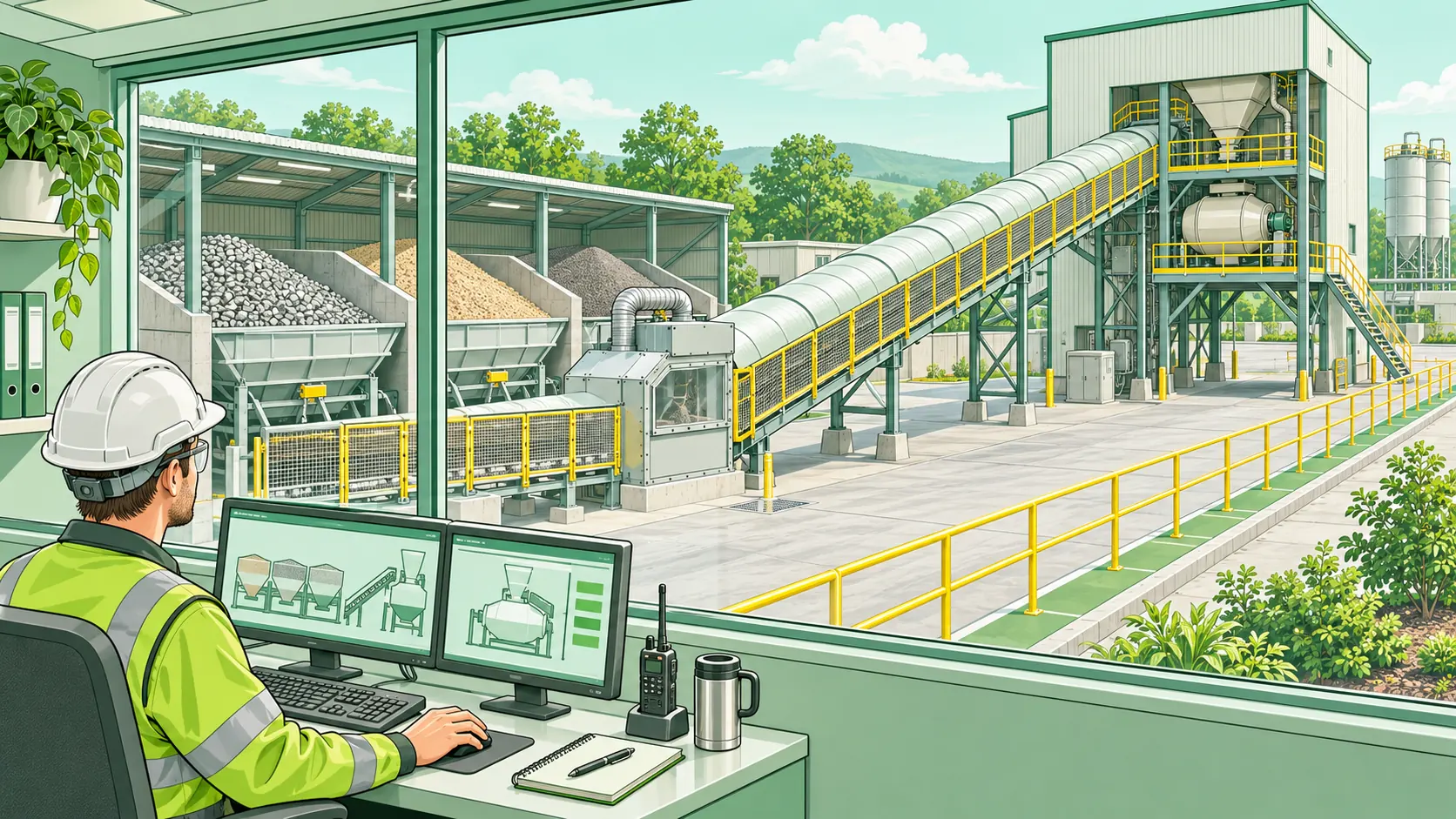
Follow the material through the plant. A loader feeds aggregate into bins, conveyors or skips carry it toward the weighing point, and cement is fed from a silo. At a central-mix plant, mixing takes place in a fixed mixer. At a dry-batch plant, materials are discharged into the truck for mixing. The actual equipment and layout determine which checks apply.
Release the plant for the first batch
The shift supervisor and batching operator should agree which equipment is available and what is still under maintenance. Read the previous shift’s handover and check the actual condition from designated safe access points. A control screen showing that the plant is idle cannot tell the operator whether someone is behind a guard.
- Account for people and permits. Check planned maintenance, contractors, access restrictions and isolations still in place. Confirm repairs through the person responsible for the work before releasing the affected equipment.
- Check guarding and access. Look for displaced guards at conveyor pulleys and drives, open access gates, damaged platforms and material obstructing stairs. Report a fault that would expose someone to moving plant. Use the approved pre-start procedure to check protective devices.
- Walk the people and vehicle routes. Check the loader aisle, truck waiting point, pedestrian crossings and route to the driver reporting area. Put an alternative arrangement in place before dispatching vehicles through a blocked route.
- Confirm communication. The batcher, loader operator and loading-bay team need to know how movement is authorized, who can call a stop, and how a new or visiting driver receives the instructions.
Keep people apart from the loader and mixer trucks
A loader turning between stockpiles and feed bins can enter the path of a driver walking to the office. Give drivers a reporting point and a protected route, and establish where they wait while loading takes place. Use barriers where pedestrians and vehicles would otherwise share a route. Keep sampling, spill cleanup and routine checks out of an active loading lane.
Design out reversing where the layout permits. If a reverse is unavoidable, keep people out of the maneuvering area. Where the site uses a signaller, agree the signals and a safe position visible to the driver. The driver must stop if visual contact is lost. The UK Health and Safety Executive explains these controls in its guidance on reversing vehicles. Coordinate the plant’s workplace transport safety arrangements with dispatch so the next truck waits clear until the bay is released.
Give each cement tanker delivery a clear stop decision
Before transfer, the receiving operator and tanker driver should identify the correct silo and connection, confirm available capacity for the load, and agree who will monitor filling and call a stop. Check that the high-level warning and other protection required for that silo are in service. The driver needs the limits and instructions for the receiving installation.
Filling pushes air out through the silo filter. A restricted vent or unsuitable delivery conditions can create pressure even when there is room for more powder. Resources Safety & Health Queensland documented incidents in which pressure dislodged filter equipment and covers landed near workers. The alert identified filter and relief-valve maintenance and control of tanker discharge as important factors. Read the regulator’s silo pressure alert.
Hold a delivery when the destination or available space cannot be confirmed. If a level or pressure warning operates, dust escapes unexpectedly, or communication breaks down, follow the agreed safe-stop procedure and keep people away from the affected equipment. A competent person should establish the cause before transfer resumes.
Control dust and wet cement where people encounter them
Inspect the charging points, transfer chutes and dust collection system where powder escapes or aggregate drops. Check enclosures, extraction indicators and damaged seals from a safe position. Repeated dust deposits outside an enclosure warrant investigation. Identify which materials and tasks can release respirable crystalline silica, including handling silica-bearing aggregate or disturbing hardened deposits.
Use dust controls suited to each task and keep them working during cleaning as well as production. Appropriate wet methods or a suitable filtered vacuum can prevent settled dust becoming airborne again. Follow the plant’s exposure assessment for respiratory protection. NIOSH describes engineering controls and safe work practices for silica.
At sampling and washdown points, wet cement can enter boots or soak sleeves. Workers should know the first aid for wet cement burns before a splash occurs. Provide suitable waterproof gloves, boots, splash protection and accessible washing facilities. Keep the approach clear, drain standing water and provide a designated washout point. A person taking a sample needs protection from both splashes and vehicle movement. OSHA’s concrete manufacturing guidance covers cement contact and plant hazards.
Hand a blockage over as maintenance work
When sand bridges in a bin or material accumulates at a conveyor tail, tell the batcher what has stopped and keep people outside the danger area. At a concrete batching conveyor, the Health and Safety Executive for Northern Ireland found that a worker suffered serious arm injuries after guards had been removed to clear sand while the belt was running. Investigators found that workers lacked a documented isolation procedure and the equipment to lock out each isolation point. Read the investigation into the batching conveyor injury.
Hand the fault to personnel authorized for the equipment-specific lockout/tagout procedure. The plan must address all relevant energy and movement, including an upstream feed, a raised skip, a gate under pressure or material held above the work. The authorized team verifies isolation before anyone enters the danger zone. A control-room stop or an open interlocked hatch alone does not establish that condition.
Prefer cleaning methods that keep people outside mixers and hoppers. Necessary entry requires a competent assessment of mechanical movement, engulfment, access and atmospheric hazards. Where permit-space rules apply, the required entry controls, communications and rescue arrangements must be in place. In US general industry, OSHA sets out the applicable duties for permit-required confined spaces.
Return the equipment to production through one handover
Identify who may release the equipment. Have the authorized team confirm the work is complete, people and tools are accounted for, guards are restored and the isolation has been released under the site procedure. Inform everyone affected before startup. Record the fault, the release and any restrictions for the next shift. If the same chute repeatedly blocks, refer the design or maintenance problem for correction before clearing it becomes an accepted part of running the line.
Frequently Asked Questions
These questions help the shift team distinguish a routine production decision from a fault that requires escalation.
What should stop a concrete batching plant from starting?
Keep the affected equipment out of service when a guard is missing, someone still has access for maintenance, an essential safety device has failed, or the team cannot account for an isolation. Hold vehicle movements separately if the loading lane or pedestrian route is unsafe. Record who must resolve each issue.
Does a high-level alarm protect a cement silo against pressure?
The alarm indicates that material has reached a set level. Venting and pressure-relief equipment address a different hazard. Check the functions specified for that silo, including the operator response to each warning. Never assume that free storage capacity makes filling safe when the vent or pressure protection is impaired.
Which checks change between dry-batch and central-mix plants?
Identify where mixing actually happens. A central-mix plant needs controls for its fixed mixer and access points. A dry-batch plant needs close attention to charging the truck and managing the vehicle below the discharge point. Both layouts still need safe material handling, silo receiving and controlled access for maintenance.