Before the first bend, check the safeguarding at the punch and die, access from the sides and rear, the path of the moving sheet and the position of everyone involved. Use the procedure for the particular press brake, tooling and job. If the safeguard is damaged, the setup differs from the approved one or someone must reach into danger to hold the part, keep the machine out of use until the problem is resolved.
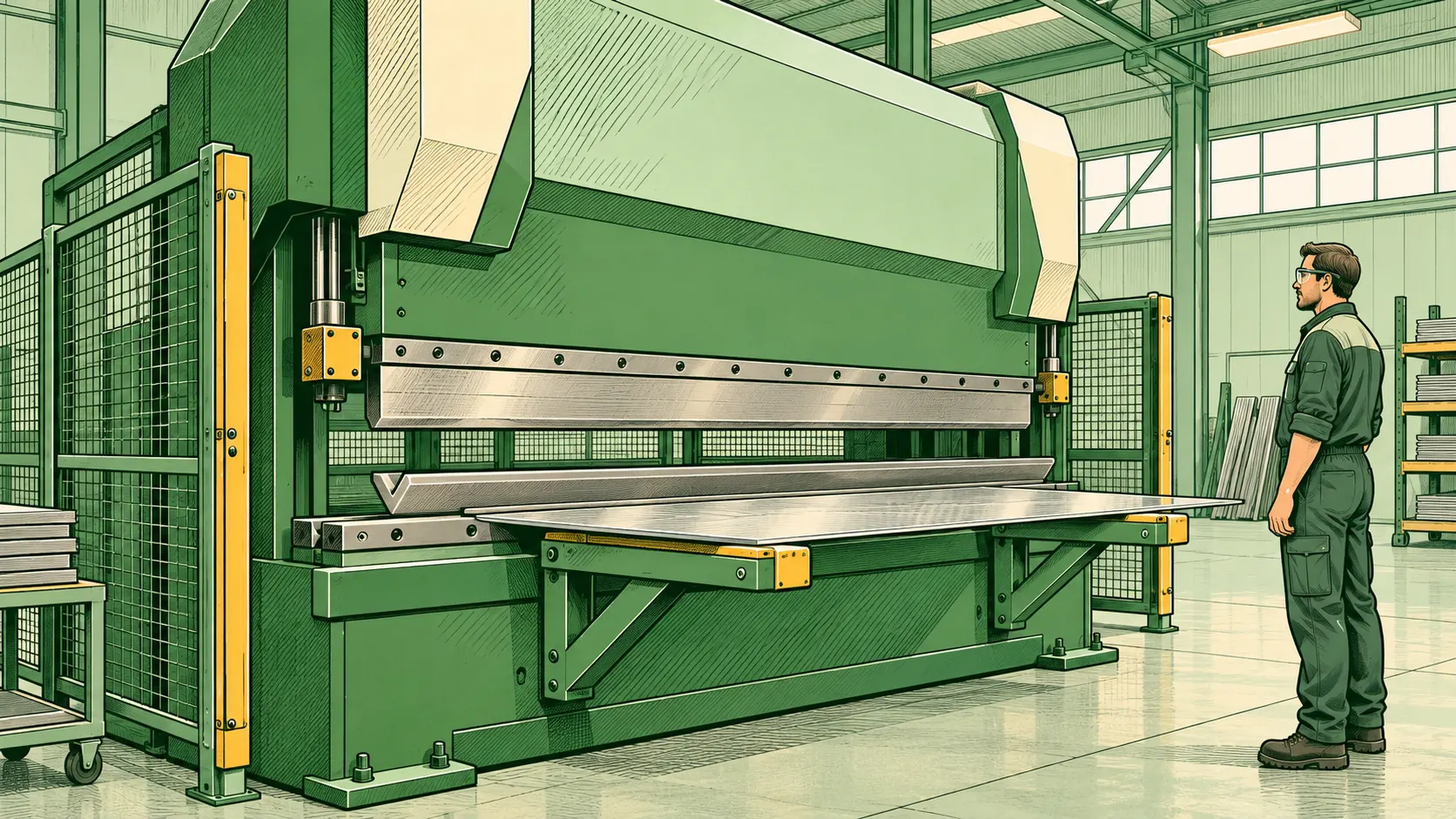
A press brake forms sheet metal between an upper punch and a lower die. The obvious crush point is along the tooling. A long flange can also swing up toward the operator, and a moving backgauge can trap someone at the rear. A pre-start check has to account for all three places, even on a repeat order.
Walk the job before enabling production
Start with the job drawing and the approved setup. Check what part is being formed, the sequence of bends, where the operator will stand and how the finished piece will leave. A different blank length, material thickness or bend sequence can change where the operator’s hands and body would have to be. Ask the setup person to resolve a mismatch before the job is released.
Look down the full length of the brake. The point of operation includes the part of the tooling away from the person at the controls. Check who can approach from either end, whether someone working at a neighboring bench could enter the sheet’s path, and whether the route for removing finished parts crosses the operator’s position.
Use this press brake pre-start checklist
The operator can identify visible defects and confirm that the authorized setup checks are complete. A qualified person should select and validate the safeguarding method for the machine. Follow the manufacturer’s and site’s approved test procedure for safety devices. Keep hands and other body parts out of the tooling during every test.
- Point-of-operation protection. Identify what prevents access to the closing tools for this bend. Check that the specified guard or protective device is present, undamaged and in its approved position. A guard fitted for a previous job may leave a different route to the tools.
- Ends, sides and rear. Check that barriers and interlocked access gates are in their normal operating condition. Look for openings beside stock racks or tables that would let someone enter the backgauge area. Keep access clear so a damaged gate is visible.
- Tooling and supports. Confirm that the authorized setup person has released the specified tooling and work supports. Check from outside the danger area for visible damage or an unexpected obstruction. Report anything that would require reaching in to investigate.
- Operating controls. Identify the selected control station, where the foot control is located if used, and how an operator can stop the machine. A pedal must be protected against unintended actuation as appropriate to the equipment. A pedal cover alone does not keep a hand out of the punch and die.
- Sheet movement and people. Trace the expected travel of the sheet and its projecting edges. Allow room for supports, operators, helpers and the unloading route. Resolve any position where the work could strike a person or pin them against the machine or furniture.
- Release to run. Confirm the machine-specific checks have passed and that each person knows how to call a stop. Record any fault and who took the brake out of service. An unanswered fault from the previous shift belongs with the person authorized to resolve it.
In the US, OSHA’s general machine guarding requirements cover point-of-operation hazards. Its guidance specific to power press brakes explains how guarding applies to this equipment. Selecting a light curtain, a barrier or another device requires knowledge of the actual brake and its stopping performance.
What a fitted light curtain can miss
OSHA documented a sheet-metal worker who lost two fingertips during a bend. The investigation summary records that the press brake’s light curtain had been set up incorrectly. A device was installed, yet the operator could still be injured in the tooling. The report gives no basis for assuming that a light or status display alone would have identified the fault. Read OSHA’s press brake incident summary.
For the supervisor, the relevant question is who confirmed that the safeguarding works with this setup. If tooling, the guard position or a control mode has changed, refer the job back to the authorized setup person for the checks the change requires. An operator should never reposition or defeat a protective device to make a difficult part fit. A broader explanation of types of machine guards helps distinguish a barrier that restricts access from a device that detects an approach.
Know when a production stop becomes a service job
Stop for a dropped part, an unexpected movement, a displaced guard, a control fault or a change that makes the sheet unmanageable. Keep others clear and tell the supervisor what happened and where. Leave retrieval from the danger zone, repairs and work that exposes a person to hazardous energy to personnel authorized for the applicable energy-control procedure.
An emergency stop can interrupt motion. On a hydraulic press brake, the weight of the ram and stored pressure can still present hazards after motion stops. The site’s energy-control procedure must address the energy sources on that machine before anyone enters the danger zone for service. In the US, OSHA’s control of hazardous energy standard addresses covered servicing and maintenance. Before production resumes, the authorized team needs to restore the safeguards, clear the area and release the machine through the site procedure.
Frequently Asked Questions
These decisions can come up even when the brake, operator and part number are familiar.
Can the operator rely on a guarded foot pedal?
The cover helps prevent accidental operation of the pedal. The operator still needs the specified protection at the tools. A person can deliberately press the pedal while a hand is in the danger zone, which is why the two checks serve different purposes.
What changes when a second person helps with a large sheet?
Include that person in the approved method. Establish protected positions, a clear view or agreed communication, who controls the cycle and how either person can stop it. If people must enter the tool area or the sheet’s swing path to support the work, pause and have the job replanned.
Does a repeat job need another pre-start check?
Yes. Confirm that the current tooling, guarding, material and people match the approved setup. Check for changes since the previous run, including a guard moved during maintenance or stock that now obstructs a side gate. The earlier run cannot establish the machine’s present condition.