
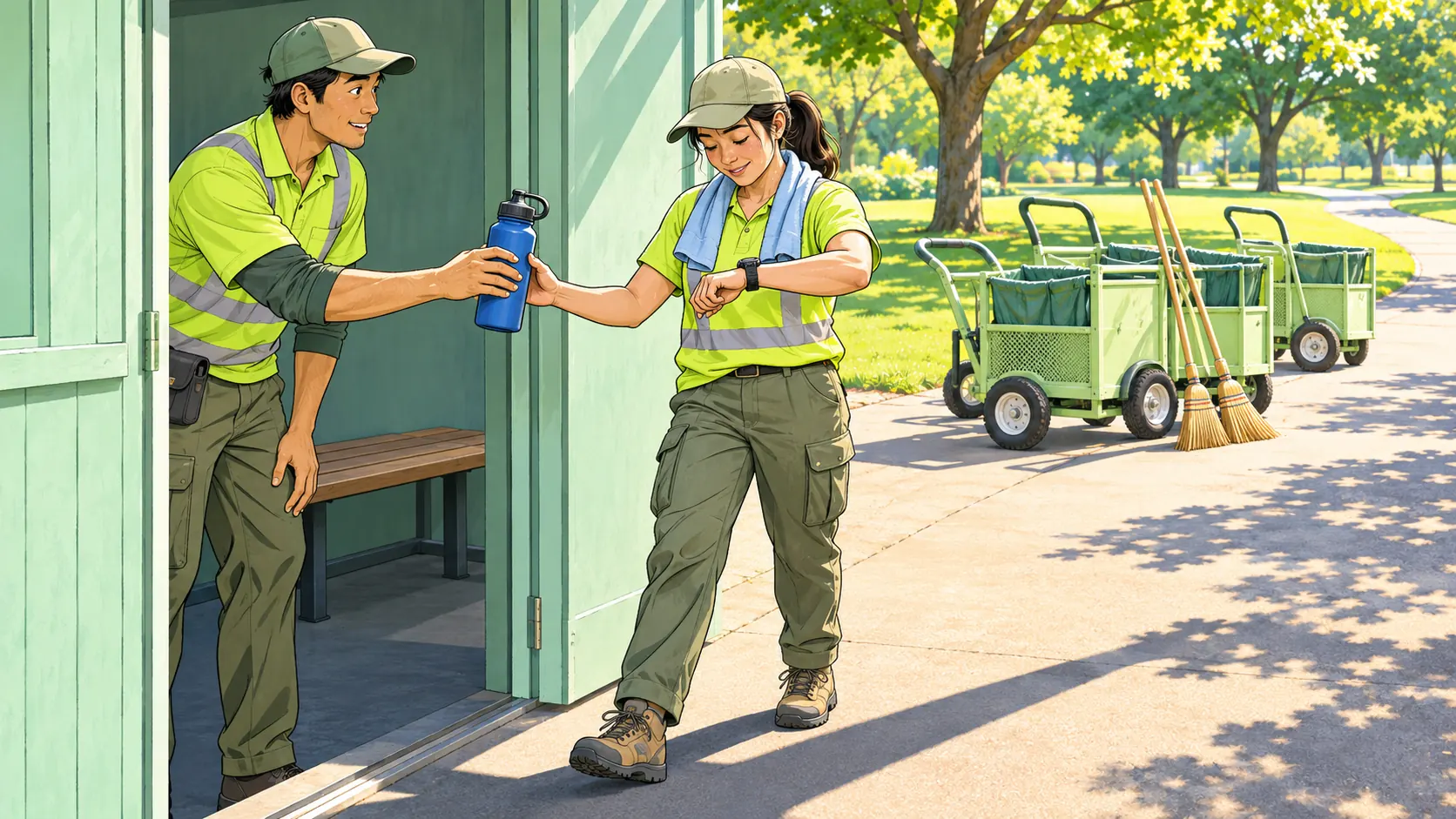
A worker new to hot work should spend no more than 20% of the usual hot-work time on the first day. Someone with recent experience doing the same job in similar heat may start at up to 50%. Increase exposure gradually, keep cooling breaks in place and allow more time when conditions or symptoms call for it. These starting points come from the US National Institute for Occupational Safety and Health (NIOSH).
Day-by-day heat acclimatization schedule
First establish how much time an experienced worker ordinarily spends on heat-exposed duties under the site’s heat controls. Use that time as the basis for the percentages below. A shift that includes work in a cool room has fewer hot-work minutes than its full length. NIOSH recommends the following progression for new workers and workers with previous experience.
| Day of exposure | New to this heat and workload | Previously accustomed to comparable work |
|---|---|---|
| 1 | 20% | 50% |
| 2 | 40% | 60% |
| 3 | 60% | 80% |
| 4 | 80% | 100% |
| 5 onward | 100% if ready | Usual hot-work duration if ready |
To find a new worker’s first-day limit, multiply the usual hot-task minutes by 0.20. Count all time spent doing those hot tasks across the shift. Assign cooler duties for the remaining work time and schedule recovery breaks during the hot portion. Shortening the exposure only works if the worker can hand the task over without having to rush to finish it.
The new-worker schedule adds at most 20 percentage points of the usual hot-work time each day. Reaching the last row means the worker may be ready for the usual duration. The body can still be adapting. With repeated exposure, sweating tends to start earlier and the same task may put less strain on the heart. NIOSH recommends building exposure over 7 to 14 days and closely supervising new workers for the first 14 days or until they are fully acclimatized. Follow any more protective local requirements.
Which schedule fits a returning worker?
Ask when the person last did comparable work in comparable heat. Someone can know the job well and still need time to adjust. Returning from leave, transferring from an air-conditioned area, starting heavier work or wearing an extra layer of protective clothing can all change what the body has to handle. OSHA identifies when experienced workers need extra protection.
- Recent, comparable hot work. The experienced-worker column is a possible starting point. Check what the person actually did, the conditions and the duration. Reduce the first day’s exposure when the new assignment is more demanding.
- A week or more away, a winter break or an unclear work history. Some heat tolerance may have been lost. Plan a gradual return. If there is little recent comparable exposure, use the slower new-worker schedule. A previous season on the crew alone is a poor reason to start at a full shift.
- A sudden heat wave. Review everyone’s plan, including the regular crew. Move demanding work to cooler hours where possible, shorten hot periods and increase recovery time. Recheck the plan if an indoor work area heats up as the day goes on. Safe Work Australia describes controls for heat waves.
How to manage the first shifts
Assign one supervisor to plan the hot tasks, arrange relief and decide whether to increase exposure on the next shift. Give the worker and their buddy the same plan. Both should know where to cool down and how to summon help.
- Walk the actual job before it starts. Check the heat where the work takes place, including direct sun or nearby hot equipment. Consider humidity, workload and required clothing. Use the site’s heat assessment to set the work and rest periods. A forecast alone cannot describe the heat beside an oven or under protective coveralls.
- Make the breaks workable. Name who will take over, put cool drinking water near the work and show the worker the shaded or cooled recovery area. Allow more recovery as heat or exertion rises. A daily time limit still leaves a separate decision about the length of each individual work period. OSHA explains how to plan water, rest and shade.
- Check in during the work. Pair a new worker with someone who can notice a change, ask how they feel and act on the answer. Explain that anyone can stop for symptoms. Use a heat stress toolbox talk before the shift to practice who will call for help and who will stay with the worker.
- Hand over a specific plan. Record the task, conditions, actual time in the heat, breaks taken and any symptoms reported. At the next briefing, use that record to decide whether to increase the time, repeat the previous limit or reduce exposure. If a cooler assignment, relief worker or recovery space is unavailable, change the work before it starts.
What a first-day heat stroke investigation found
A construction worker spent his first day cutting timber for concrete forms. The crew had drinking water and took breaks in an air-conditioned trailer. After the shift, another worker found him unconscious in the parking lot. He died of heat stroke the next day. Investigators recommended adjusting work hours to the conditions and training crews to recognize heat illness. The original fatality investigation records both the work performed and the cooling facilities available.
The timing also showed up in a wider review. In 20 US federal heat-enforcement cases from 2012–2013, investigators counted 13 deaths. Nine occurred within the worker’s first three days on the job or back at work. None of the 20 workplaces had an acclimatization program. These figures describe the cases reviewed. For a supervisor, they give a concrete reason to check the first day’s assignment before the worker starts. Read the original review of the 20 cases.
When to stop work and get help
Headache, dizziness, nausea or unusual weakness during hot work are reasons to stop, move the person to a cool place and start first aid. Stay with them and arrange prompt assessment. A buddy who recognizes heat stress symptoms can act even if the worker wants to finish the task.
Confusion, slurred speech or loss of consciousness can signal heat stroke. Call local emergency services immediately and start active cooling while help is on the way. Cool their skin with cold water or apply cold, wet towels while someone stays with them. Heat stroke can occur while a person is still sweating. OSHA lists the emergency signs and first-aid actions.
Frequently Asked Questions
Days away, recovery breaks and indoor assignments can all raise questions when planning a worker’s next shift.
Does a weekend off mean starting over?
A usual weekend away from the heat does not generally undo acclimatization. Ask what the worker is coming back to. A much hotter work area, heavier work or extra protective clothing can call for shorter periods even after a short break. After a week or more away, plan a gradual return. NIOSH explains how time away affects heat tolerance.
Do breaks in air conditioning undo acclimatization?
No. Workers can recover in an air-conditioned room or vehicle between hot tasks. Choose a break area close enough to reach and cool enough for recovery. Keep it available as the worker builds tolerance. OSHA gives examples of suitable recovery areas indoors and outdoors.
Do indoor workers need a heat acclimatization schedule?
Yes, when their tasks expose them to heat. A worker assigned to a hot production line or a laundry can face heat from equipment even on a cool day. Assess the conditions at the workstation, the physical effort and the clothing worn. Set the exposure schedule for that job. The Canadian Centre for Occupational Health and Safety explains which workplace conditions to assess.