Review a fire risk assessment before a change that could affect fire safety, after a fire or near miss, and at regular intervals even when work seems unchanged. Bring the review forward whenever a drill, inspection or worker’s report gives you reason to doubt a precaution. An exit that keeps getting blocked or an alarm that people on one shift cannot hear deserves attention as soon as you find out about it.
How often should you review a fire risk assessment?
Set the next review date according to how the building is used, who may need help to leave and how quickly conditions change. Check the fire safety requirements that apply to your site. For a small workplace with stable activities, a yearly review can be a useful starting point. A site undergoing refurbishment, changing its production process or repeatedly finding the same defect needs earlier attention. Published fire safety guidance explains how risk and complexity affect the review interval.
Give one person responsibility for arranging the routine review. Make sure the people who change layouts, buy materials or organise shifts know whom to tell before a change goes ahead. It is much easier to choose a different storage area while a refit is being planned than after deliveries are already arriving. The International Labour Organization’s fire safety guidance recommends keeping the assessment current and checking that the precautions protect the people exposed.
Changes that should bring a review forward
Ask what the last assessment assumed about the workplace. Then look at the proposed change on site with someone who does the work. These are common reasons to review earlier than planned.
| When to review | What to check |
|---|---|
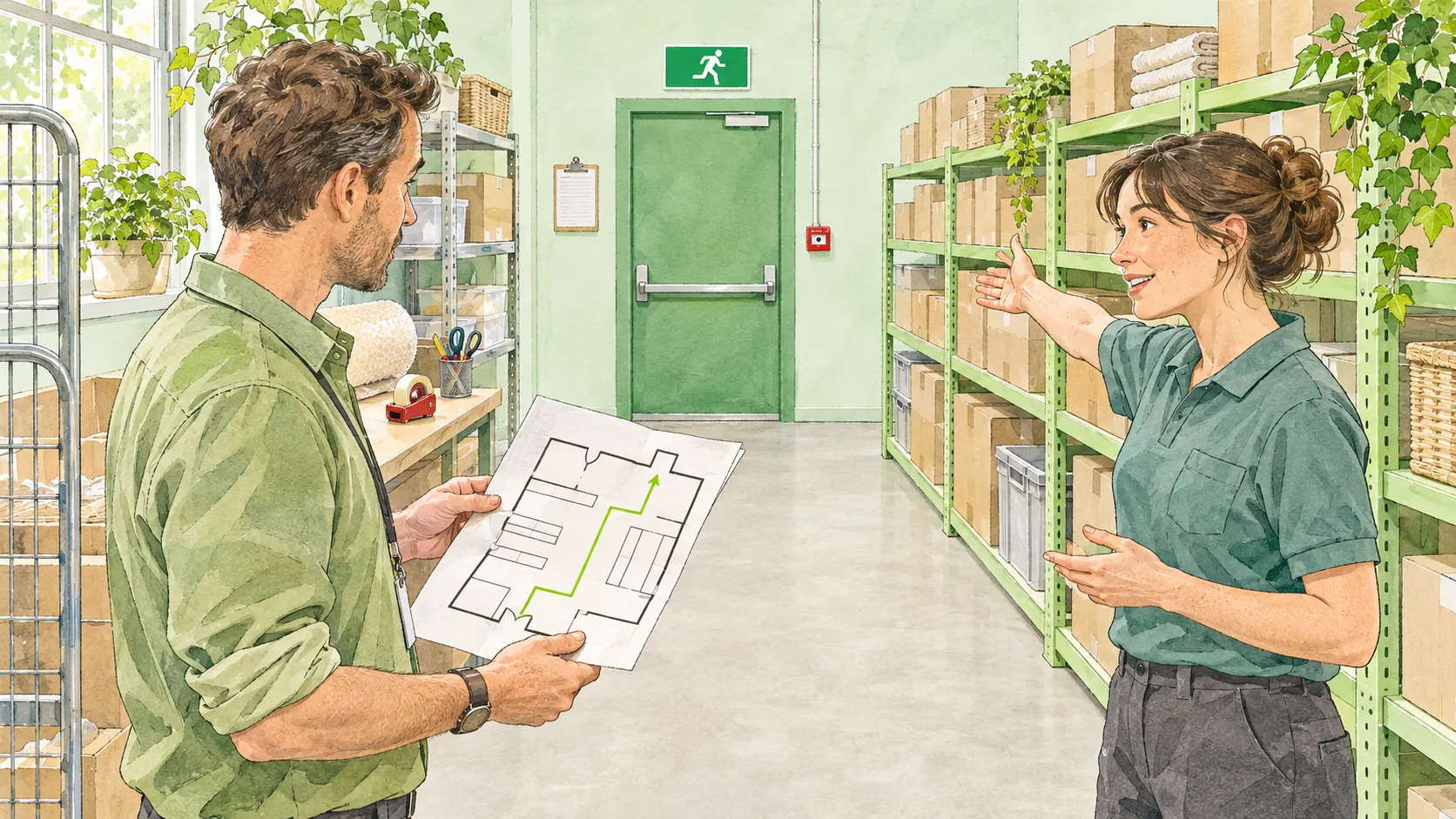
| Before moving partitions, racks or stock displays | Walk the route from the affected work area to the final exit. Check which signs people can see, whether doors can open and where incoming deliveries will stand. |
| Before introducing new equipment, materials or processes | Check what can generate heat or sparks, what nearby materials can burn and whether their quantities or storage needs have changed. Include packaging and waste from the new work. |
| When occupancy, shift cover or evacuation needs change | Account for visitors, contractors and people who need help to leave. Check who can raise the alarm or provide agreed assistance on the least-staffed shift. |
| When a fire door, alarm or other precaution fails | Find out which areas and people depend on it. Get competent advice on temporary precautions where needed, assign the repair and verify that protection has been restored. |
The review may lead to changes in the fire evacuation plan as well. When a route or staff role changes, walk through the revised arrangements with the people expected to use them. Safe Work Australia identifies changes to the premises, workforce and activities as reasons to revisit emergency plans.
After a fire, near miss or difficult drill
During an emergency, follow the workplace emergency plan. Once people are safe, record what happened and compare it with what the assessment said would protect people. Which precaution worked? Which failed? Who was affected? After a near miss, find out what prevented harm this time and whether the same protection will be there next time. The five-step fire risk assessment checklist includes fires and near misses among its review prompts.
For a drill, the total evacuation time tells only part of the story. Ask where people hesitated, who missed the warning and whether assistance reached the right person. Name the specific problem in the debrief and build an observation of it into the next exercise. That gives the team a way to check the change it made to its workplace fire drill procedures.
What a recurring blocked exit tells you
At one retail store, OSHA inspectors found stacks of merchandise and rolling containers blocking exit routes, a stockroom exit and access to extinguishers. A later agreement with the same retailer called for lower inventory levels and changes to the way stores handled stock. Clearing the route removes the immediate hazard. Reviewing where the next delivery will go, and whether staff have room to put it away, addresses the reason it may happen again. Read the inspection findings and the agreed changes to stock handling.
A practical fire risk assessment review checklist
Take the current assessment and its outstanding actions to the work area. A short review can answer four practical questions.
- What has changed? Identify the activity, area or shift involved. Look at normal working conditions and ask workers what is different during busy periods, deliveries or maintenance.
- Who depends on the precaution? Follow the route or task from their position. Include people unfamiliar with the building and anyone whose escape depends on another person being available.
- What evidence shows it works? Check the relevant maintenance record, walk the route or speak with the person who raised the concern. Address any immediate danger straight away. Give each remaining action an owner and a due date.
- How will you confirm the fix? Specify what someone needs to see or test, and when. For a recurring obstruction, check the aisle during the next delivery. For an alarm fault, obtain the appropriate test result and confirm that the affected workers know the arrangements.
What to record after the review
Record the date, the reason for the review, the area checked and who took part. Describe the finding and the decision in terms the next shift can use. List the action, its owner, the due date and the evidence that will show it is complete. If the existing precautions are still adequate, note what you checked to reach that conclusion. Keep the next routine review date alongside any earlier follow-up dates. Safe Work Australia’s risk management guidance covers reviewing controls and keeping records.
Frequently Asked Questions
The scope of a review depends on what changed, who controls the affected area and what you can verify on site.
Does every change require a new fire risk assessment?
Start by identifying which part of the existing assessment the change affects. A focused review can be enough when one activity changes and the rest of the assessment is still accurate. A relocation, a change of building use or a major redesign may mean that the old description of the workplace no longer fits. In that case, work through the full fire risk assessment process for the site.
Who should take part in the review?
Include the manager who can authorise changes and workers who know the affected task or shift. In a shared building, involve whoever controls the common alarm, stairs or exits when your arrangements depend on them. Ask a competent fire safety specialist for help with technical questions your team cannot verify, such as whether alterations have affected fire separation. The ILO’s advice on reviewing workplace risks explains the value of checking conditions with workers.
Does a fire inspection or alarm test count as a review?
An inspection can identify a blocked exit. An alarm test tells you about the equipment that was tested. Both give you evidence for the review. You still need to decide whether the precautions cover everyone and whether changing the work could prevent the problem coming back. The CCOHS fire protection checklist shows the different checks involved, from clear exits to staff training.