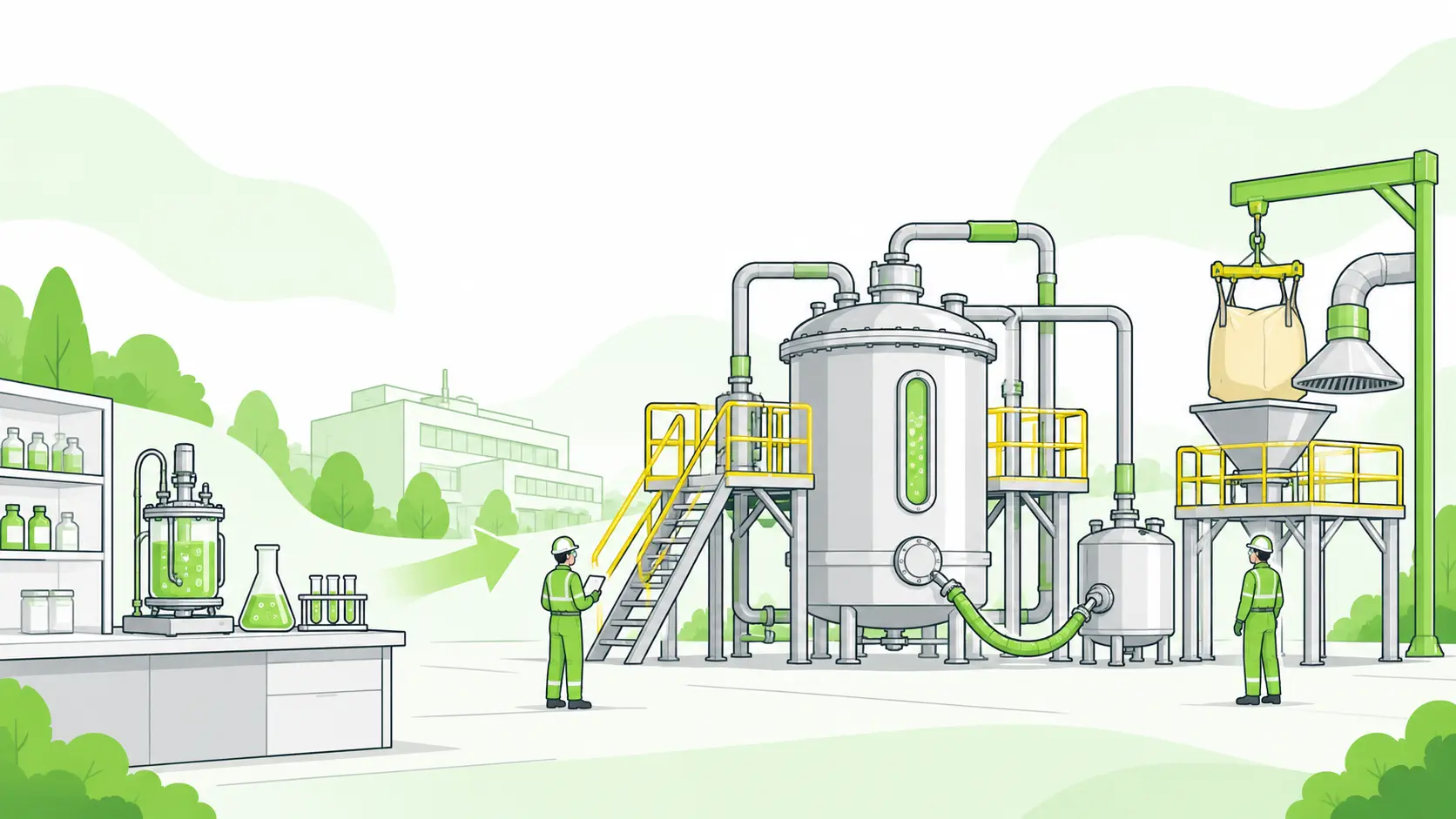
On a Tuesday afternoon, you'll typically see one scientist standing in an R&D fermentation bay, manually adjusting a peristaltic pump and recording dissolved oxygen levels in a notebook. It is not under any live steam headers. Take that same host strain over the yard, however, to a commercial building and a two-thousand-liter stainless bioreactor, and forklifts are unloading pallets of raw materials, while overnight crews are passing off pressurized tanks that have been operating for 10 days in a row. Safety teams must go beyond the cell growth curves and ask what floor staff lift, unbolt, breathe and wash before batch one starts.
From Flask to Fermenter: What Actually Changes
Tech-transfer meetings almost always focus on oxygen transfer and impeller tip speed because yield pays for the building, even though moving out of research pulls in shift operators, mechanics, samplers, warehouse handlers, and contractors who never sat in on the early design reviews. Nothing in a commercial suite sits at waist height anymore. Companies in the sector lean on specialist IT partners for regulatory automation, clinical data, and enterprise IT systems – life sciences offering at https://dxc.com/industries/life-sciences-solutions, for example – and worker safety deserves the same planning attention. The physical risks, after all, follow the vessel, not the software.
The Same Task, a Different Hazard
Take any routine step and follow it up the size ladder. Weighing media components on a bench means grams on a balance. Out in a commercial dispense booth, an operator spends two hours slicing open twenty-five-kilogram paper sacks of dextrose over a stainless hopper while trying not to breathe the dust plume, even though the batch record still uses the same one-word verb:
Task | Bench scale | Production scale | Risk that appears or grows |
|---|---|---|---|
Media preparation | Weigh grams, stir a flask | Charge kilograms of powder into tanks | Dust inhalation, heavy lifting, repetitive handling |
Sterilization | Autoclave a vessel | Steam-in-place on large, jacketed equipment | Burns, pressure release, hot surfaces, trapped condensate |
Sampling | Pipette inside a cabinet | Sample port on a live vessel | Aerosols, splashes, awkward postures |
Cleaning | Wash glassware | Recirculate caustic and acid through piping | Chemical burns, incompatible mixtures, line-break incidents |
Harvest | Bench centrifuge | Large centrifuges, filtration skids, transfer hoses | Aerosols, noise, moving parts, pressurized lines |
Waste | Autoclave bag | Tanks of liquid waste and inactivation systems | Incomplete inactivation, chemical exposure, large spills |
Gas supply | Small cylinder on a bench | Bulk liquid storage feeding wall manifolds | Nitrogen asphyxiation in pits and regulator blowouts |
Look at that right-hand column again. High-pressure steam, hot caustic soda, heavy bags, and oxygen-displacing gas are standard chemical-plant dangers that catch biotech teams off guard mainly when project managers have spent their whole careers working around micropipettes and laminar flow hoods.
Why Old Lab SOPs Stop Fitting
It is assumed that the scientist operating the vessel also constructed the rig, and knows which clamp weeps and when to turn the pump off before dinner; commercial fermentation runs around the clock with rotating crews and outside contractors. A procedure that is written into the first world quietly infiltrates the second world. A formal change with documented review is the cleanest fix, treating scale-up as a formal change rather than a hallway conversation. Biosafety guidance is in the same direction: the sixth edition of the CDC and NIH biosafety manual included an Appendix M on large-scale biosafety, and it is based on protocol-driven risk assessment rather than on one-size-fits-all checklists.
Biological Hazards at Production Volume
Organisms do not become nastier because there are more of them, but the ways a person can be exposed change. Dropping a 50 mL tube is an annoyance. A failed gasket on a harvest line is an event. Same agent, same risk group, very different release scenario.
Open-Floor Mist and Large Spills
A hood cannot be used with a production fermenter. Nearly every action that generates droplets is performed within the glass sash of a biosafety cabinet, while commercial sparging, high-speed centrifugation, and depth filtration all release mechanical energy directly into live broth on the open bench. Closed piping reduces the normal exposure. Once the harvest filter plugs up or the pH probe fouls mid-run, the situation changes instantly: if the line had not been vented and purged, the spray of mist throughout the room will occur when the connection is opened, while the filter is plugged.
Spill planning must be proportionate, too. Paper towels and bleach will be used to clean up a dropped flask. A split 2" harvest hose can dump 100 liters onto the floor in 30 seconds and requires easy access to the pump stop, biocide sized to the tank, and a kill system to accommodate a full vessel dump.
Regulatory Sign-Off and Pre-Batch Reviews
The principles are the same, although the rules vary from country to country: assess, contain in proportion, record, and report. The Genetically Modified Organisms (Contained Use) Regulations 2014 have been in force in Great Britain since October 2014 and HSE's GMO guidance covers the classification of the work, notification to the competent authority, application of control measures, and reporting of accidents. CDC/NIH BMBL 6th edition is advisory in the US, but the Federal Select Agent Program (9 CFR 121 / 42 CFR 73) has its own regulatory requirement that a plan rest on an agent-specific risk assessment rather than adopting universal inspection checklists from the 6th edition.
When the risk assessment is reopened, the engineers and biosafety officers have to review the piping diagrams together. A short set of questions makes that review concrete:
- Which steps still involve open handling of live cultures?
- How is liquid waste inactivated, and who verifies foam layers reach target temperature?
- Which floor drains route to the kill tank during a full vessel dump, and who responds on the night shift?
- Which dry media additions are fine powders or sensitizers?
- Who needs retraining, and who is new to biology altogether?
None of these needs an outside consultant to answer. They need people who have actually walked the line to say what happens when something goes sideways.
Enzymes and Other Sensitizers
Allergens deserve more attention than they usually get. A review of fungal enzymes in industry found that workers who handle purified enzymes are at higher risk of becoming sensitized, especially during debagging, sieving, weighing, dispensing, and mixing, and that atopic workers directly handling them face a greater risk of IgE-mediated disease and occupational asthma. Look at that task list again. The processes of debagging, sieving, weighing, dispensing and mixing are all part of a raw-material handler's morning in a plant, while an R&D scientist may scoop 5 milligrams out of a vial once a month.
It sometimes takes months before a problem is detected. A technician scooping protease or cellulase powder typically begins with a scratchy throat or a cough on a Friday that clears up over the weekend until the dust trace in the air causes chronic occupational asthma, and he or she is forced to leave the job if there are no downflow weigh booths, local exhaust, or annual spirometry screenings.
Chemicals, Energy and the Plant Itself
Biological agents are rarely the most energetic threat in a manufacturing bay. A commercial fermenter sits inside a web of industrial utilities:
- Clean or plant steam for sterilization
- Compressed air and bulk process gases
- Caustic and acid cleaning solutions
- Chilled water or glycol for temperature control
- Electric power feeders for drive motors
- Pneumatic actuators on process valves for flow control
- Centrifuges and lobe pumps for broth harvest
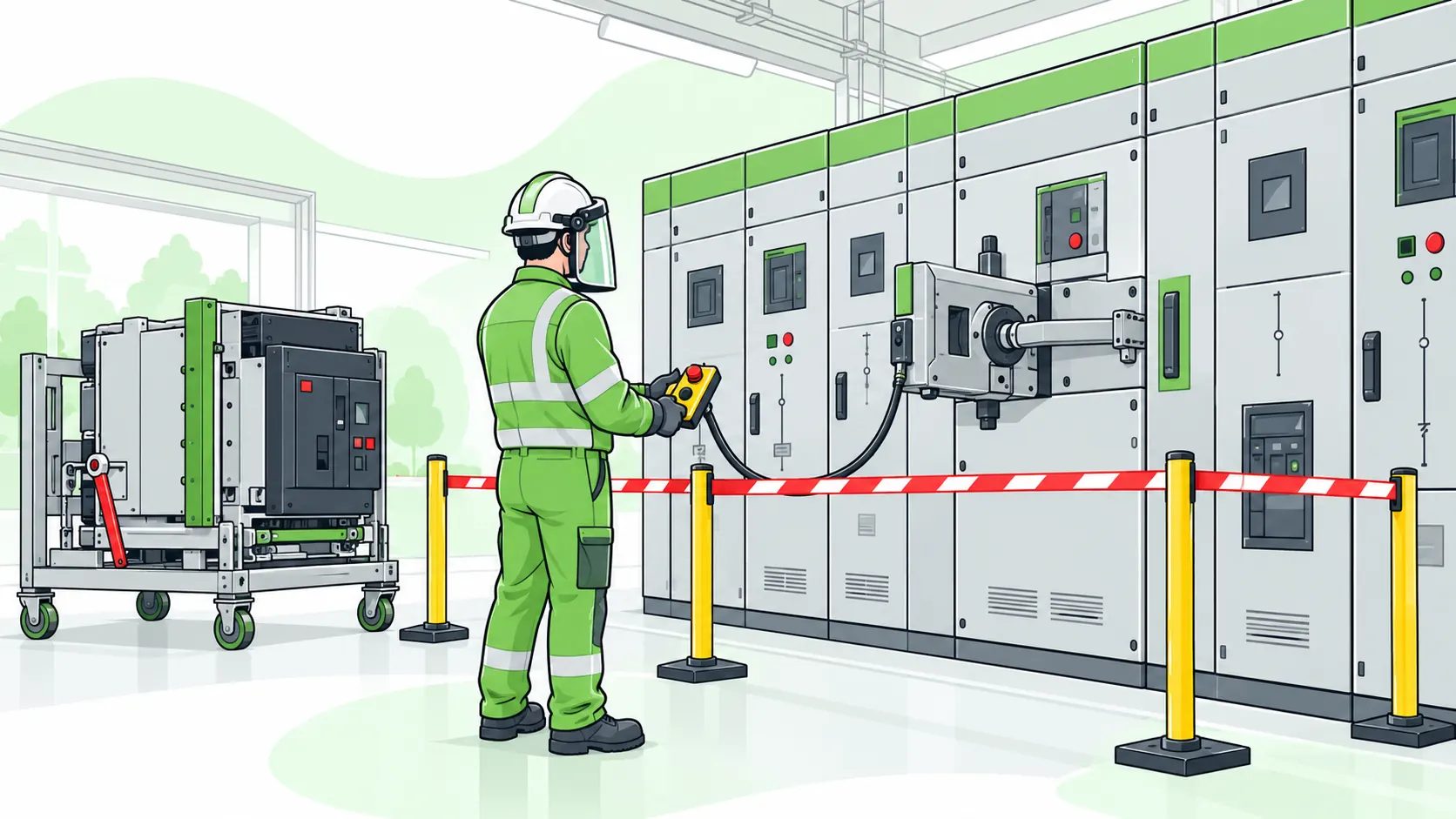
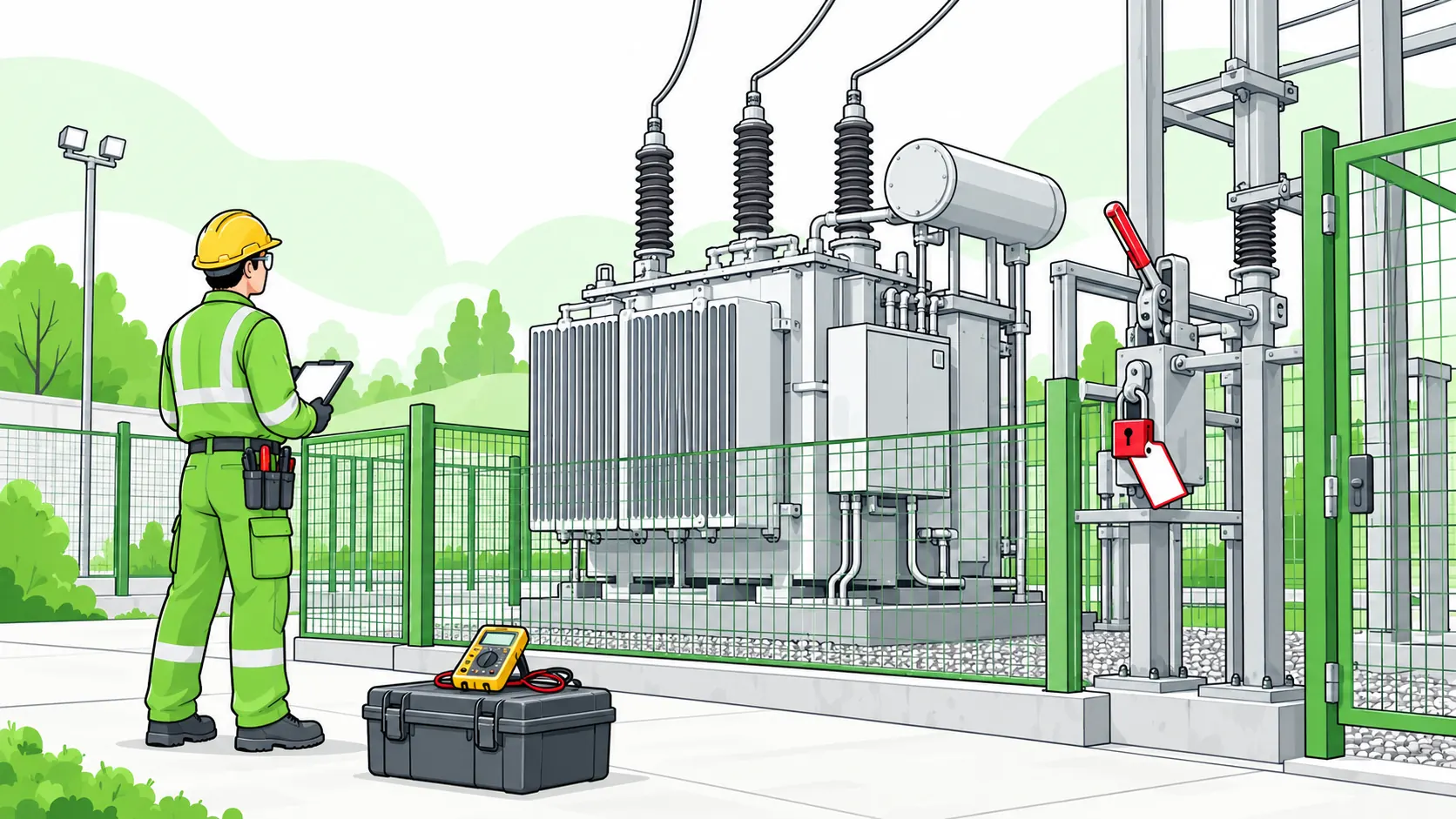
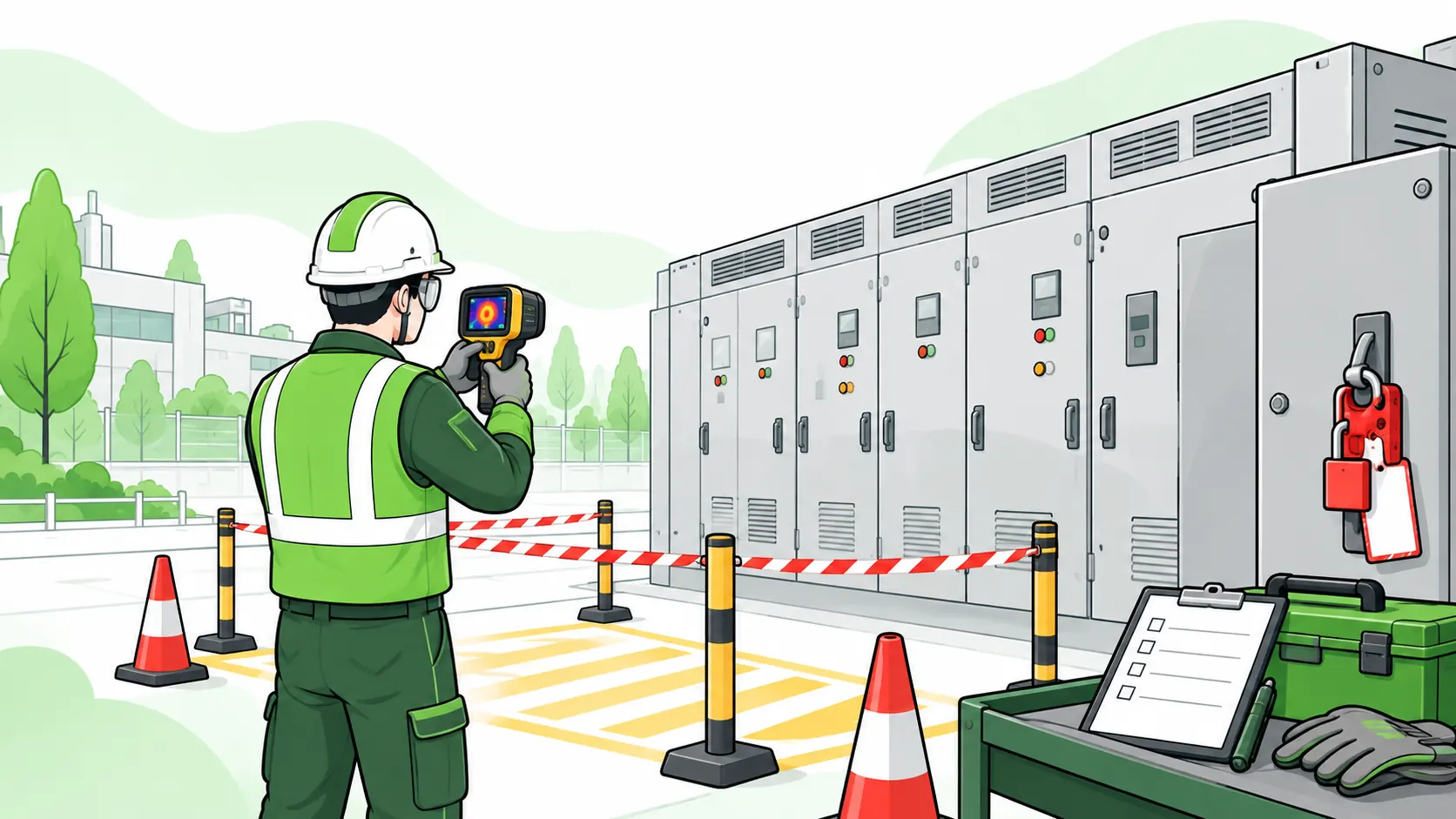
Each of these stores energy, and each can hurt someone during maintenance, when the process is “off” but the pipe is not. Unplugging a benchtop cord shows the bare prongs. Out on a commercial harvest skid, the 480-volt motor disconnect may sit down the hall in a control room while an energized PLC can still fire a pneumatic actuator upstream, which is why OSHA’s lockout standard (29 CFR 1910.147) requires machine-specific isolation sheets showing every valve tag, breaker, and low-point drain.
Pipe Cleaning and Steam Loops
Automated cleaning cycles keep people out of tanks. Climbing down a ladder with a scrub brush is gone, whereas circulating seventy-five-degree sodium hydroxide and nitric acid through eye-level stainless headers creates a nasty line-break hazard whenever a low-point check valve traps pressure behind a clamp. Steam loops bite back too. Letting live steam hit cold condensate or cracking a union before checking a local bleed gauge behind a wrap-around flange shield turns routine maintenance into a burn ward trip, and shared floor sumps must never allow acid rinses to mix with bleach and evolve chlorine gas.
Inert Gases and Tank Entry
Benchtop spargers bubble harmlessly into room air, whereas commercial suites pipe bulk nitrogen and carbon dioxide through wall headers into pressure-balanced rooms where a single leak displaces oxygen in low pits. A glass vessel on a bench cannot hold a person. A stainless tank with a manway can. OSHA’s permit-required confined space rule grew out of accident investigations showing asphyxiation as the leading cause of death in such spaces, often claiming would-be rescuers right after the first victim.
Ban human entry wherever a camera probe works. Leaning head-and-shoulders into an open top manway after a nitrogen purge gives zero odor or choking warning before a worker blacks out, whereas treating unavoidable tank repair as a full engineering shutdown – with physical pipe blanks, forced ventilation, continuous four-gas monitors, and a pre-rigged rescue tripod – keeps the crew alive.
Plant Noise and Thermal Stress
Pumps, compressors, centrifuges and air handling units add up. In the US, OSHA’s hearing conservation requirements (29 CFR 1910.95) apply from an eight-hour average of 85 decibels measured on the A-scale (dBA), and a utility room or centrifuge hall can reach or exceed that level. A walk-through with a sound level meter during commissioning is inexpensive and often surprising. Acoustic shrouds on homogenizers and vibration mounts beat handing out earplugs for twenty years.
Moving parts and heat bite too. Tabletop shakers don't break bones, whereas unguarded pump couplings and mobile skids can. Wrapping bare steam jumpers in removable insulation blankets – and scheduling regular water breaks outside the gowning airlock so technicians can cool down from impermeable Tyvek suits – prevents both contact burns and heat exhaustion.
Dust and Powders
A suspended sugar cloud can be ignited by one static spark from a plastic liner bag. Powdered glucose, yeast extract, and buffer salts in a raw-material bay do more than irritate airways; if a formal dust hazard analysis (DHA), as required by NFPA 652, during design is not used, the fine organic carbohydrates can deflagrate inside ungrounded bag-dump stations and dust collectors, rather than being blown out with compressed air using blowguns.
Heavy Lifting and the Shift Schedule
Back injuries pile up fast. One liter of water-based media weighs a kilogram (meaning a thousand-liter mixer bag holds a metric ton before you count the steel frame), and NIOSH’s ergonomic guidance notes that hauling sacks, wrestling hoses, and torquing clamps accounts for a large share of the more than half a million musculoskeletal disorder cases reported in the US each year. One lumbar surgery costs more than vacuum sack lifters and an overhead hoist.
Shifts, Alarms and Training
Cells don't pause at five o'clock. Once a facility moves to twenty-four-hour coverage across rotating twelve-hour shifts, a lone technician checking a utility basement or a pressurized harvest skid at three in the morning has to deal with fatigue, thin supervision, and rushed six o'clock handovers where someone forgets to mention a cracked manual bypass valve. Solo night workers need wearable check-in alarms, not just a wall phone across the room.
Alarm design matters too. When a distributed control system chimes every few minutes with low-priority warnings that nobody clears, operators tune the noise out until someone eventually mutes a real high-level kill-tank trip or a room oxygen-depletion horn.
Training needs a rethink as well. Experienced mechanics hired out of dairy or chemical plants know pumps, steam traps, and lockout cold, even if they have zero background in microbiology and no idea why a pinhole spray on a Risk Group 2 fermenter requires an immediate suite evacuation; R&D scientists know the organism inside out, but have never worked a night shift around live steam headers. Have both groups run the water batches together so floor operators can redline clumsy SOP steps themselves, and give outside turnaround contractors the exact same induction on nitrogen headers.
Pre-Batch Checks on the Floor
Moving a valve on a CAD drawing is cheap. Before batch one, sit down for a documented change review that lists every new task, chemical tote, and utility drop the scale-up introduces, then walk the line with the night-shift operators and mechanics who actually turn the wrenches and run a full water batch to time spill drills without live cells in the tank. Across the first 90 days after start-up, four checks catch what design missed:
- Review every near miss, weeping gasket, and minor injury, not just reportable ones
- Re-measure noise and airborne dust once real production is under way
- Confirm that night and weekend crews have received the same training as day staff
- Update the risk assessment with what operators actually do, as opposed to what the SOP says
Scale-up changes the question from “is this experiment safe?” to “is this system safe for different people, running it around the clock, for years?” The organisms stayed the same. Everything built around them – line pressures, chemical totes, lifting, and 3:00 a.m. valve repairs – turned into heavy manufacturing. Designing the safety program for that reality sends the whole crew home intact at the end of the shift.