
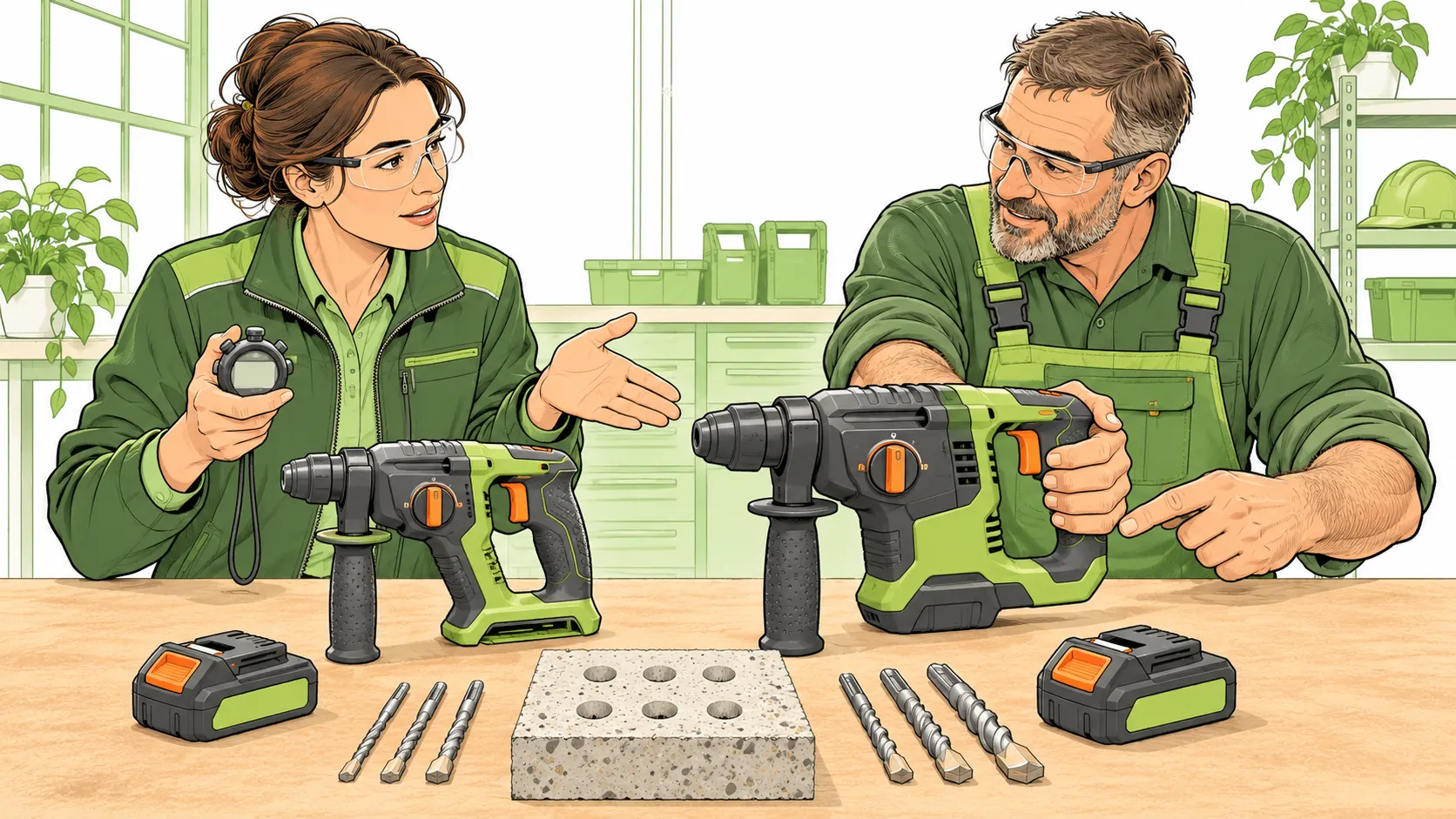
Buy or hire the tool that completes the required work with the lowest practicable hand-arm vibration exposure. Start by checking whether the job can be done without a vibrating hand tool. If one is needed, compare models of suitable capacity, then have operators try them on the actual material. Record both the vibration likely in use and the time their hands are exposed. A tool with a lower catalogue figure can give a worker more exposure if it takes much longer to finish the job.
For buyers and supervisors in Great Britain, the Health and Safety Executive (HSE) recommends considering suitability, efficiency, vibration and operator feedback together when replacing equipment. Its advice on selecting and purchasing tools applies to hand-held and hand-guided equipment. The decision is about what reaches the hands during work. Vibration transmitted through a vehicle seat is assessed separately.
Write the task specification before asking for prices
Describe the finished work in terms a supplier can test: the material, cut or hole dimensions, required finish, quantity, access and working position. Identify the accessories and dust controls the crew needs. A tool that works well on an open bench may be too heavy to control in the position where it will actually be used.
Look upstream before replacing like with like. Can the component arrive cut to size? Can the operation move to a machine that holds and feeds the work? Can a different cutting method avoid percussion? HSE gives a specific choice for large holes in brickwork: a diamond-tipped cutter operating by rotation can avoid the hammer action needed by a tungsten-tipped alternative. Confirm that the proposed method suits the material and other hazards before specifying it.
Read the vibration declaration in context
A declared vibration emission value, usually expressed in metres per second squared (m/s²), describes the machine under stated test conditions. It helps a buyer screen comparable tools. Daily exposure also depends on what the operator does, the condition of the accessory and the time spent using it. A declaration alone cannot establish a safe daily running time.
| Ask the supplier for | Check before comparing offers |
|---|---|
| Model, operating mode and test method | Match capacity and intended use. A drilling result for rotary mode gives little information about hammer drilling. Check which mode each quoted figure covers. |
| Declared emission and uncertainty | Keep the uncertainty with the figure. Small differences between published numbers give a weak basis for choosing a winner, particularly where the tests differ. |
| Evidence from comparable work | Ask what material, accessory, settings and task produced the in-use value. Identify any material difference from the job on your order. |
| Accessories, servicing and training | Price the bits, blades or wheels needed to maintain performance. Check how handles and vibration-reducing parts are inspected, serviced and replaced. |
When the declared values come from different test methods, or no supplier can relate them to the planned operation, leave the comparison open. Ask for a demonstration or competent on-site measurement if better data would change the purchase. HSE discusses comparable machines, supplier trials and ergonomic factors in L140, paragraphs 130–134 and Appendix 5.
Run a trial against the same finished job
Arrange a controlled trial with the people who will use the equipment. Agree on the quality and quantity of acceptable work before starting. A fast cut that needs another pass, or a hole that has to be redrilled, adds time with the tool in hand. Include that time in the comparison.
- Set up representative work. Use the usual material, work position and required protections. Fit a suitable serviceable accessory to each machine. Record its specification so a change of bit or wheel cannot silently change the result.
- Observe contact time. Time the periods when the running tool transmits vibration to the operator’s hands. Record the quantity of acceptable work completed. Keep setup, waiting and other non-exposed time separate from this trigger time.
- Ask the operator what the figures miss. Can they reach the controls, keep a neutral working position and guide the tool without forcing it? Check the weight, balance, grip and feed pressure. Record evidence of rework, excessive noise or ineffective dust capture. Comfort helps judge usability, but it cannot measure vibration magnitude.
- Compare a realistic working day. Use representative in-use vibration data and the trigger time needed for the normal workload. Include time on other vibrating tools used by the same person that day. The hand-arm vibration exposure calculator explains how to combine those contributions.
In Great Britain the daily hand-arm exposure action value is 2.5 m/s² A(8) and the daily limit is 5 m/s² A(8). A(8) expresses exposure on an eight-hour reference basis. These are values for the worker’s daily exposure, not cutoffs for rejecting or accepting a machine’s emission rating. Reaching the action value requires action to reduce exposure. Plan work so the limit is not exceeded. HSE explains the inputs in its vibration risk assessment guidance.
Put the trial result into the purchase or hire order
Specify the combination that worked: model, operating mode, accessory, protective features and training. Give the person approving substitutions enough detail to recognise a change that would invalidate the comparison. This matters for hire equipment, where an equivalent power rating may conceal a different mechanism, grip or vibration level.
Use these checks before accepting the equipment and again once it enters routine use:
- Match the delivered model, handles and accessories to the trial record. Refer a substitution for review before issuing it.
- Give operators the settings, safe-use instructions and maintenance checks used in the selection. For air-powered models, include pneumatic tool safety controls such as the specified operating pressure and hose checks. Make replacement consumables available where the tool is issued.
- Observe the first normal production run. Compare actual trigger time and acceptable output with the trial. Investigate a difference before relying on the original exposure estimate.
- Assign responsibility for wear checks and defect reporting. Revisit the assessment when the material, accessory, daily workload or tool condition changes enough to affect exposure.
A useful buying record fits the next supervisor’s decision: what work this tool was selected for, what evidence supported it, and when that evidence needs checking again. HSE’s good-practice controls for hand-arm vibration connect equipment selection with maintenance, training and exposure time throughout the tool’s working life.