An oxygen-enriched atmosphere contains more oxygen than ordinary air, which is about 20.9% oxygen by volume. The immediate danger at work is fire. Oxygen does not itself burn, but it makes clothing, hair and other materials easier to ignite. Once alight, they can burn fiercely enough to cause serious injury before a worker can get clear. You cannot see or smell the extra oxygen, and you may feel perfectly well. Health and Safety Executive (HSE), Oxygen use in the workplace, pp. 1–2.
If a high-oxygen alarm sounds or you suspect a release, stop work, leave the affected area and raise the alarm from a safe place. Keep others out. Tell the responders where the oxygen supply is and whether anyone is still inside. European Industrial Gases Association (EIGA), Doc 04/26, section 8.5.
What do oxygen readings of 23.5% and 24% mean?
The two figures answer different questions. Fire risk increases as the oxygen concentration rises. HSE gives an example of how small an increase matters. Industry guidance and some regulations use a specified value to trigger action. An unexpected rise deserves investigation even before a high alarm sounds. EIGA safety leaflet on oxygen enrichment.
| Reading | How to interpret it |
|---|---|
| About 20.9% | Normal background in air. An oxygen sensor measures only oxygen at the sampling point. Toxic gases can be present even at a normal oxygen reading. HSE L101, paragraphs 96–98. |
| Above 23.5% | EIGA calls for immediate evacuation of a work area at this concentration. Separately, the U.S. Occupational Safety and Health Administration (OSHA) defines an oxygen-enriched atmosphere this way for permit-required confined spaces in general industry. That rule excludes construction, agriculture and shipyards. EIGA section 8.5 and 29 CFR 1910.146(a)–(b). |
| 24% | HSE uses this example to show that an increase of only a few percentage points can make a fire hotter and much harder to extinguish. Waiting for 24% would miss an earlier warning. HSE INDG459, p. 1. |
Where can oxygen build up during the job?
Trace the oxygen from its source to the point of use. Include the cylinder store, pipework, torch or other equipment, and any nearby space into which gas could travel. In Great Britain, the employer must assess the risks to people who may be harmed. Include the maintenance crew and people working nearby as well as the person using the gas. HSE guidance on assessing and controlling workplace risks.
Walk through the job with the people who do it. Four questions help locate the most important controls.
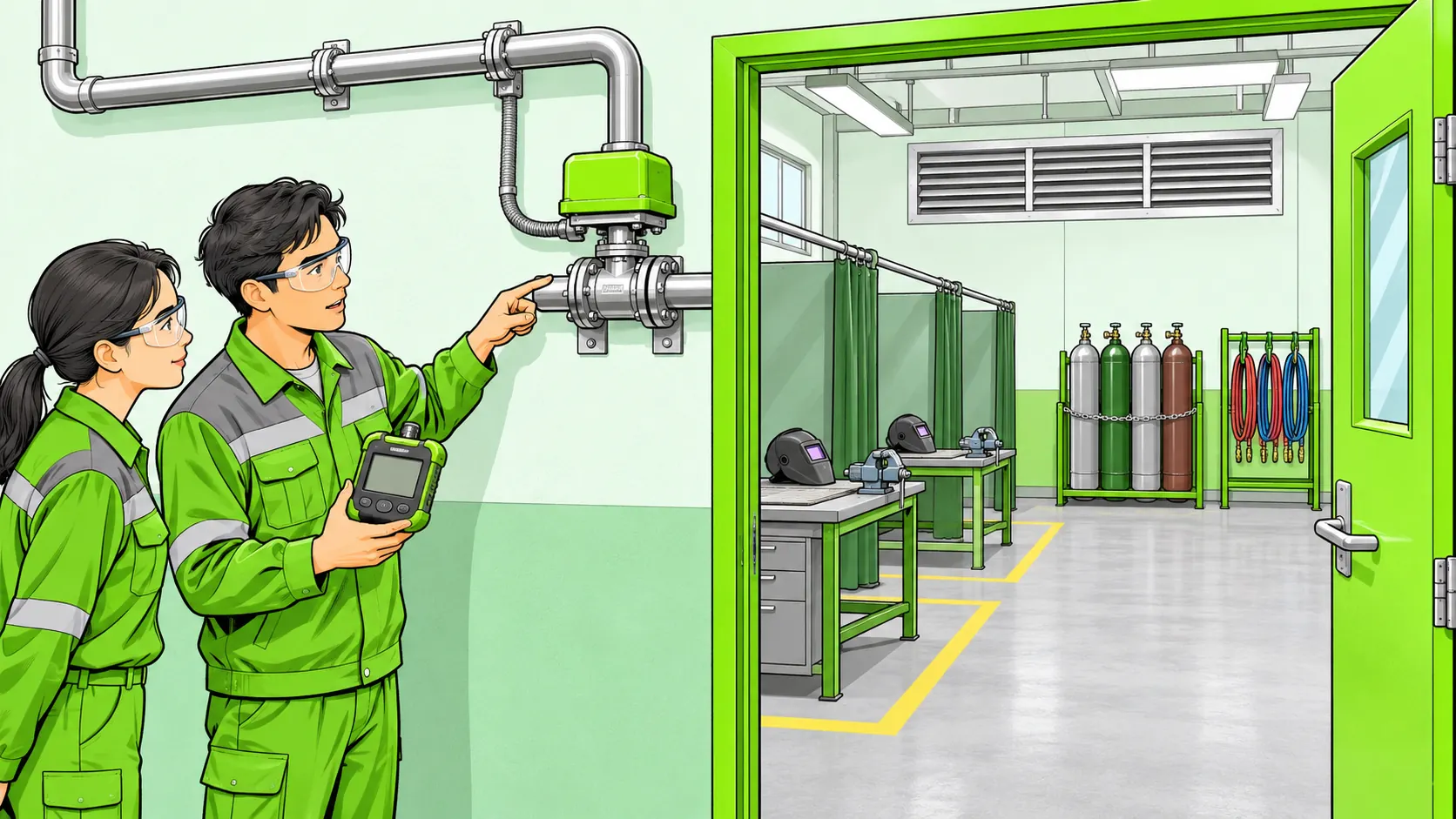
- Where could gas escape? Look for damaged hoses, loose connections, valves left open during breaks and oxygen released during normal flame cutting. Even with an intact hose, some oxygen from the cutting process can reach the surrounding air. EIGA section 5.2.1.
- Where could it collect? Check ventilation around the actual work position and inside tanks or recesses. After a liquid oxygen spill, cold gas can flow into pits, drains and trenches. Keep people clear of the visible cloud and remember that hazardous concentrations can extend beyond its edge. EIGA sections 4.3 and 8.5.
- Who or what could catch fire? Look for people in the path of escaping gas, combustible materials and sparks from nearby hot work. Oxygen caught in the weave of clothing can travel with a worker to a different part of the site. Include that worker when planning the response. EIGA oxygen enrichment safety leaflet.
- How will people know to leave? Check who can hear or see the alarm, whether escape routes are clear and who can isolate the supply from safety. Agree who will correct any gaps before work starts. EIGA sections 8.2 and 8.5.
How to prevent oxygen enrichment during routine work
The priorities are to keep oxygen in the equipment, carry away any gas released during normal use and control sources of ignition. A detector gives workers a warning. It cannot stop a leak, clear the atmosphere or protect clothing from catching fire. EIGA sections 6.3–7.
Check the equipment before opening the supply
Use a regulator, hose, seals and fittings approved for oxygen service at the working pressure. Check the hose and connections for damage. Keep hands, gloves and fittings clean and free of oil and grease. Inside a contaminated fitting, oil or grease in contact with high-pressure oxygen can cause a fire or explosion even while the room has a normal oxygen reading. Remove suspect equipment from service for a competent person to inspect. HSE INDG459, pp. 3–5.
When checking connections for leaks, use the supplier’s procedure and an oxygen-compatible leak-detection fluid where specified. Household detergent can leave unsuitable residues. Keep cylinders secured and know which valve shuts off the equipment you are about to use. The same handling checks apply when a full cylinder replaces an empty one. HSE cylinder and equipment precautions and HSEBlog’s precautions for handling compressed gas cylinders.
Ventilate with fresh air and control hot work
Make sure fresh air reaches the work area, including poorly ventilated corners. Keep ventilation openings clear and check that mechanical ventilation is running where the job relies on it. Never use oxygen to cool a person, ventilate a space or blow dust off clothing. Keep smoking away from oxygen use. EIGA calls for a hot-work permit for spark- or flame-producing work near oxygen equipment or where enrichment could occur. EIGA sections 6.3.3 and 6.5.
What changes in a confined space?
A leaking hose can affect the whole crew inside a vessel. HSE records that workers welding or cutting in confined spaces suffered serious or fatal injuries when leaking oxygen enriched their clothing and it ignited. For work covered by Great Britain’s Confined Spaces Regulations 1997, avoid entry wherever the job can reasonably be done from outside. Where entry is unavoidable, a safe system of work and suitable rescue arrangements must be in place before anyone enters. HSE INDG459, p. 3 and HSE summary of the Confined Spaces Regulations.
Include the following checks in the entry arrangements when oxygen may be present.
- Before entry. Isolate sources that could feed gas into the space inadvertently. Have a competent tester sample from outside wherever possible. Sample the work location and pockets where gas could accumulate. Allow time for each sample to travel through the tubing. Test for the other gases or vapours identified in the assessment as well as oxygen. HSE L101, paragraphs 96–98.
- During work. Use a suitable oxygen monitor that can warn of a high reading. Check that its function tests and calibration are current under the site procedure. A competent person should specify where and how often to test. HSE gives forced ventilation and work that can change the atmosphere as reasons for continuous monitoring. HSE L101, paragraphs 89–94.
- When work stops. Keep cylinders outside the space. Close cylinder valves or isolate the piped supply. Remove hoses when work is suspended or finished. If removal is impracticable, disconnect them from the supply outside the space and safely vent their contents under the site procedure. Closing the torch valve still leaves the hose connected to the supply. HSE INDG459, pp. 3 and 5 and HSE L101, paragraph 123.
What to do after an oxygen leak or alarm
Once people are clear, the site emergency plan should identify who controls access, who can shut down the oxygen and who decides when work may restart. A respirator cannot protect hair, clothing or the surrounding materials from catching fire. Even flame-resistant clothing can burn in oxygen-rich air. EIGA sections 8.1–8.5.
Warning. Entering the affected area to reach a valve or pull someone out can expose a second person to the same fire. Stay outside and activate the planned rescue response. Call the emergency services from safety if there is a fire, an injury or a person needing rescue. EIGA section 8.5.
- Isolate from a safe position. An authorised person can use a designated shut-off outside the affected area if it is safe to do so. Keep people and ignition sources away. Follow the site’s ventilation procedure. Operating electrical switches in the affected area after a major release can create a spark. EIGA sections 6.3.5 and 8.5.
- Air exposed clothing outdoors. Keep away from smoking areas, welding and other ignition sources. HSE advises removing potentially contaminated clothes for airing outside. EIGA recommends at least 15 minutes in normal air, with coats off and arms and legs moving to help disperse oxygen. This time applies to clothing. Clearing the work area requires measurements. HSE INDG459, p. 2 and EIGA section 8.1.
- Verify safe entry and safe restart separately. Have a competent person test representative locations from safety and confirm that entry conditions are met before releasing the area for authorised access. EIGA specifies below 23.5% oxygen and safe entry conditions before entry to rescue or shut down a process. Before normal work resumes, identify and repair the fault, verify leak-tightness and effective ventilation, and recheck the atmosphere for all relevant hazards. Record the test results and the repair, so the next shift knows why the area was released. EIGA section 8.5, HSE leak response and HSE guidance on retesting.