Stopping an inverter stops it from exporting power. Sunlight can still produce hazardous voltage in the panels and the cables connected to them, and the utility grid can still energize equipment on the other side of the inverter. Before anyone starts maintenance at a solar farm, the crew needs to know exactly which equipment has been isolated, who verified it and which neighboring parts remain live. Pacific Northwest National Laboratory’s solar photovoltaic safety guidance explains why even an overcast day calls for this precaution.
Where can voltage remain on a solar farm?
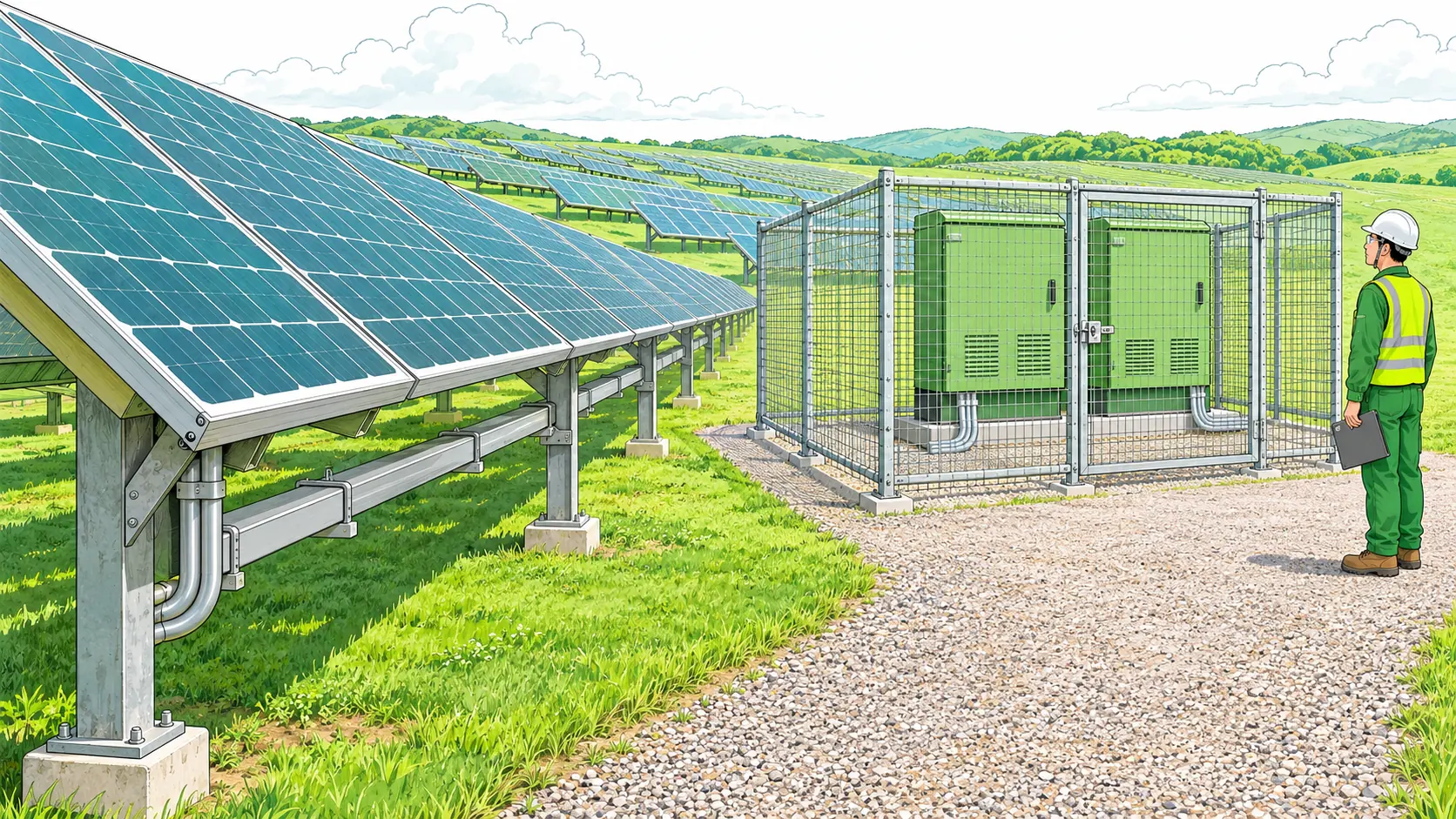
At a ground-mounted photovoltaic (PV) plant, panels are wired together in strings that supply direct current (DC). Inverters convert that power to alternating current (AC). Transformers raise the voltage for collection and delivery to the grid. Finding the inverter on the site’s single-line diagram, a drawing of the main electrical connections, helps the crew identify the sources on each side of the job.
| Location | What can remain energized | What the crew needs to know |
|---|---|---|
| Array rows and combiner boxes | Illuminated modules and wiring still connected to them. A combiner box can receive several strings. | Which strings feed this enclosure? Which conductors remain live on the panel side of the isolation point? |
| Inverter enclosure | DC and AC supplies can enter the same unit. Internal capacitors can retain charge after disconnection. | Which supplies serve this model, including auxiliary power? What discharge time and verification does its manual require? |
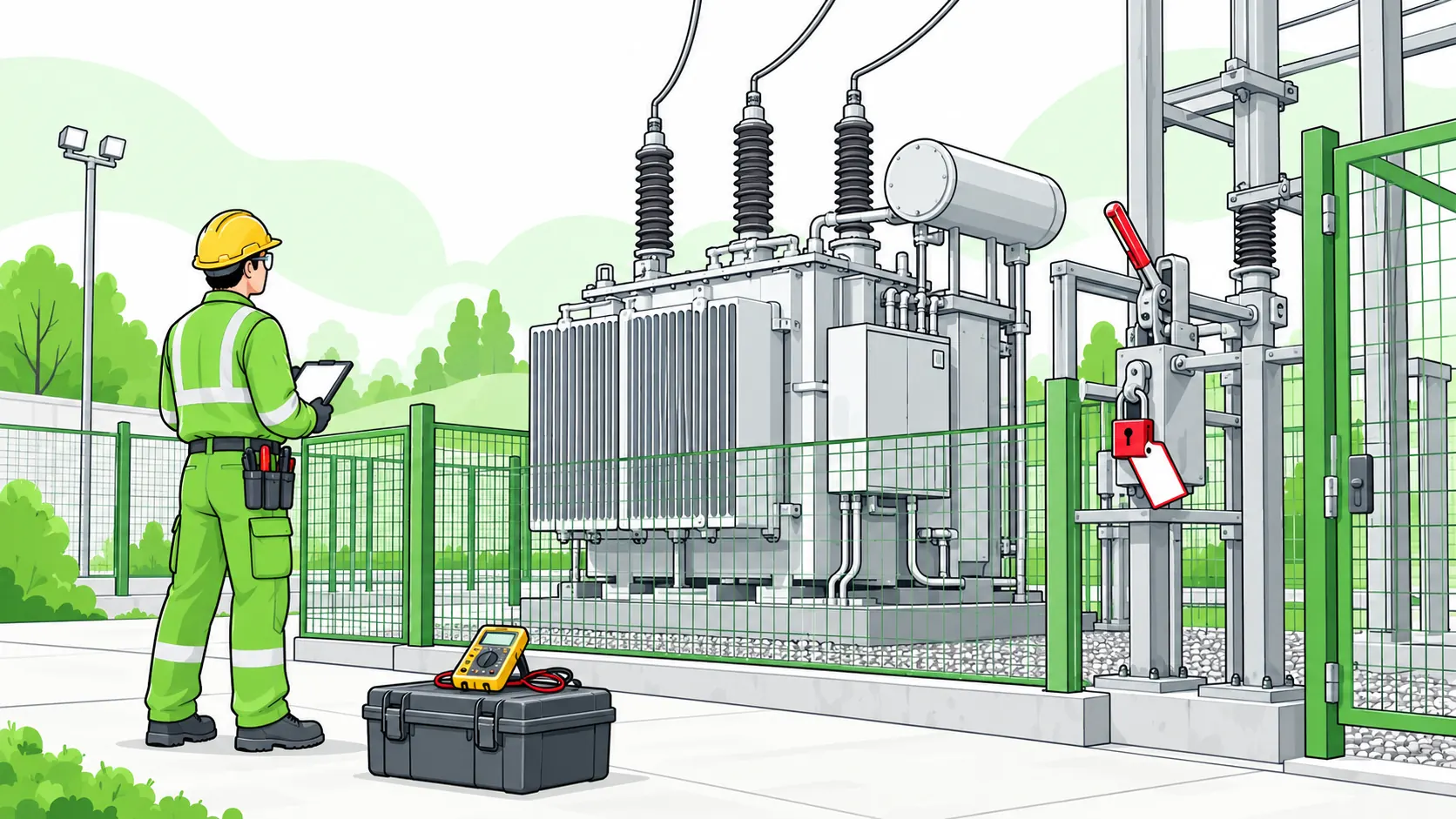
| Transformer and collection switchgear | The grid or another connected feeder can supply this equipment while the local inverter is stopped. | Who controls this feeder? Where does the plant operator’s switching authority end and the utility’s begin? |
| Battery storage, where installed | The batteries hold energy after sunset and after the solar array is disconnected. | Does the battery system connect to the equipment being worked on? Who controls its isolation? |
Use the drawings and instructions for the installed equipment. For example, the Sunny Central maintenance manual, section 2, specifies both a discharge interval and a separate check for voltage. The U.S. Occupational Safety and Health Administration (OSHA) guidance on hazardous energy control also calls for workers to understand the boundary between generation equipment and the transmission or distribution system.
Which faults can injure a crew or start a fire?
A broken cable support can turn routine grounds maintenance into an electrical hazard. A sagging cable can rub against a frame in the wind until the insulation wears through. A worker on the mowing or cleaning crew who sees a cable hanging into the work area should stop, keep others away and report the row from a safe position. Leave the cable where it is. The U.S. Department of Energy’s field guidance on PV string cables shows how failed supports lead to abrasion.
- Electric shock from a ground fault. A ground fault is an unintended connection between a live conductor and ground or grounded metal. Damage can put voltage on metalwork a worker expects to be safe to touch. Report a ground-fault alarm even if it clears before a technician arrives. Qualified staff need the alarm time and affected inverter to investigate an intermittent fault. See the National Renewable Energy Laboratory field guide, section 2.1.
- Heat and arcing at a connector. A poor connection can build up heat and damage the housing. Moisture or incompatible mating parts can make the problem worse. If a connector looks melted, leave it in place. The repair team should check the approved connector pairing and the condition of nearby connections before returning that circuit to service. The PV system owner’s weather guide, vulnerability 26, illustrates these failure modes.
- Arc flash at electrical equipment. An electrical arc can burn someone nearby even without direct contact. At inverters and switchgear, the person planning the work must consider both shock exposure and the heat an arc could deliver. Keep people outside the limits set for the task and secure access to the equipment. The employer’s assessment determines the required arc-rated clothing and other protection under OSHA 29 CFR 1910.269(l)(8) for covered U.S. work.
Flood damage can extend beyond the row that went underwater. The Department of Energy has documented water entering an uphill pull box and traveling through conduit into downhill switchgear or inverters. Tell the electrical team which boxes flooded, even when the equipment pad itself looks dry.
What should the crew verify before work begins?
The person in charge should be able to point out the exact work location, identify who can release it and show everyone where to stop. For covered U.S. power-generation operations, 29 CFR 1910.269(c) and (d) set job-briefing and hazardous-energy-control duties. Paragraph (m) addresses de-energizing transmission and distribution lines and equipment for employee protection. Use the procedure that applies to the equipment and work in question.
- Match the task to the equipment. Use the current diagram and the identifiers at the row, combiner or inverter. Resolve a missing label or a mismatch with the control room before the crew starts. Include any adjacent block being commissioned or returned to service.
- Agree who controls each source. The operator coordinates with the utility and contractors where their responsibilities meet. Identify who may authorize switching, how remote commands are controlled and who must receive the release. A zero-output reading on the control-room screen reports production. It cannot tell a technician whether voltage is present at the work point.
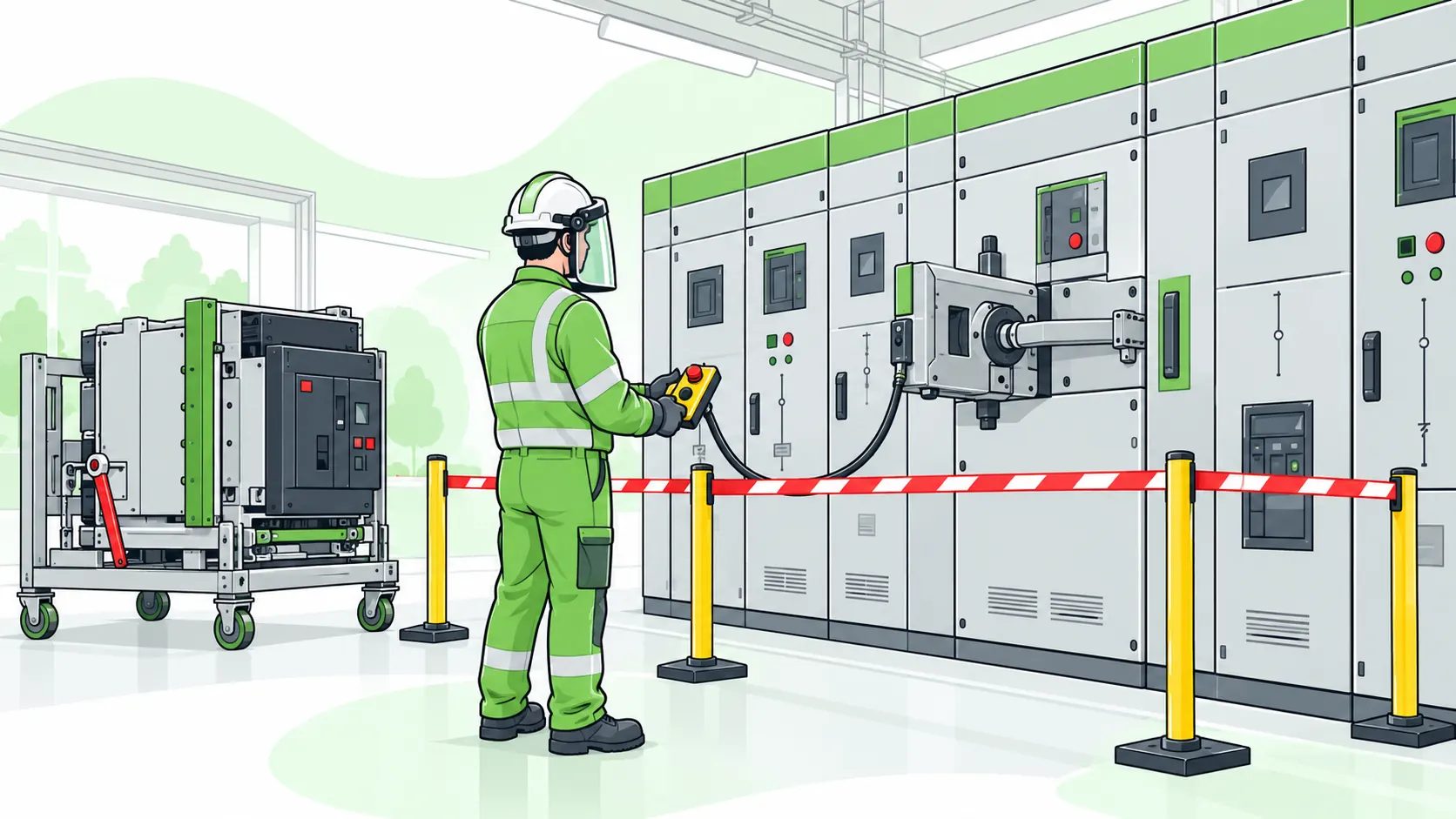
- Verify isolation at the work point. Authorized personnel apply the site’s lockout/tagout procedure, address stored energy and verify de-energization. Where normally live parts will be exposed to contact, OSHA requires a test under 1910.269(d)(6)(vii). If the team cannot establish the required condition, keep the job on hold.
- Brief everyone sharing the area. Show electricians which adjacent parts remain live and explain the access limits to cleaners, vegetation crews and visitors in terms they can recognize on the ground. Brief again if a significant change affects safety. OSHA gives examples in its job briefing guidance.
Authorization is specific to the equipment and task. The International Energy Agency PV maintenance guidelines, section 3.5.2, distinguish array work from tasks that need additional inverter or transformer training. An array technician’s assignment may end at the fence around a substation. The person controlling entry should make the meeting point and permitted route clear to contractors. The same distinction applies to visitors accompanying the crew. See substation access controls and electrical hazards.
What should workers do after damage, smoke or an electric shock?
Report visible damage from outside the affected area. Give the control room the row or equipment identifier, what you observed and whether anyone is hurt. If there is smoke, active arcing, fire or a suspected electric shock, call emergency services immediately from a safe place and alert site operations. In the United States, call 911.
Warning. A casualty who is still in contact with energized equipment can shock a rescuer. Keep clear of the person and equipment until the electrical danger has been made safe. Keep others out of water near damaged electrical equipment. Once the scene is safe, follow the dispatcher’s instructions. Anyone who may have suffered an electric shock needs medical assessment. See the Centers for Disease Control and Prevention’s electrical emergency guidance.
Give arriving responders the correct entrance and a contact who can meet them there. The site operator should identify the affected block, known isolations, equipment still assumed live, and any battery enclosure nearby. A current map with gates, internal roads and equipment identifiers is especially valuable when the incident is far from the main entrance. One solar facility emergency plan filed with New York State, sections 3.2 and 4, shows how to organize that information before an incident.
Keep the area restricted while qualified staff assess the damage and complete the necessary repairs and tests. The authorized operator then confirms which equipment can return to service. Record the equipment returned to service and any rows that remain restricted so the next shift can act on the same information. The Department of Energy’s post-damage recovery guidance covers securing the site through inspection, repair and recommissioning.
Frequently Asked Questions
Night work, groundskeeping and shift changes each raise a practical question about who can release equipment or an area for use.
Is it safe to work on a solar inverter after dark?
Darkness removes sunlight as a source of generation. The grid, auxiliary supplies, stored charge or a connected battery can still present a hazard. The authorized team must identify the sources for that inverter and verify the condition of the parts involved before releasing it for work.
Can a grounds crew keep mowing in another part of the solar farm after finding a damaged cable?
Stop in the affected area and report the damage. The site operator can identify a separate route and work area after assessing the fault and the crew’s access. Keep machinery out of the restricted area and leave the cable and any affected metalwork for the electrical team.
What should the incoming shift know about an unfinished electrical repair?
Identify the exact equipment, the isolation still in force, adjacent live parts, remaining restrictions and the person coordinating the work. Use the site’s shift-transfer procedure to keep each worker protected through the changeover. For covered U.S. generation work, OSHA addresses continuity of protection in 29 CFR 1910.269(d)(8)(iii).