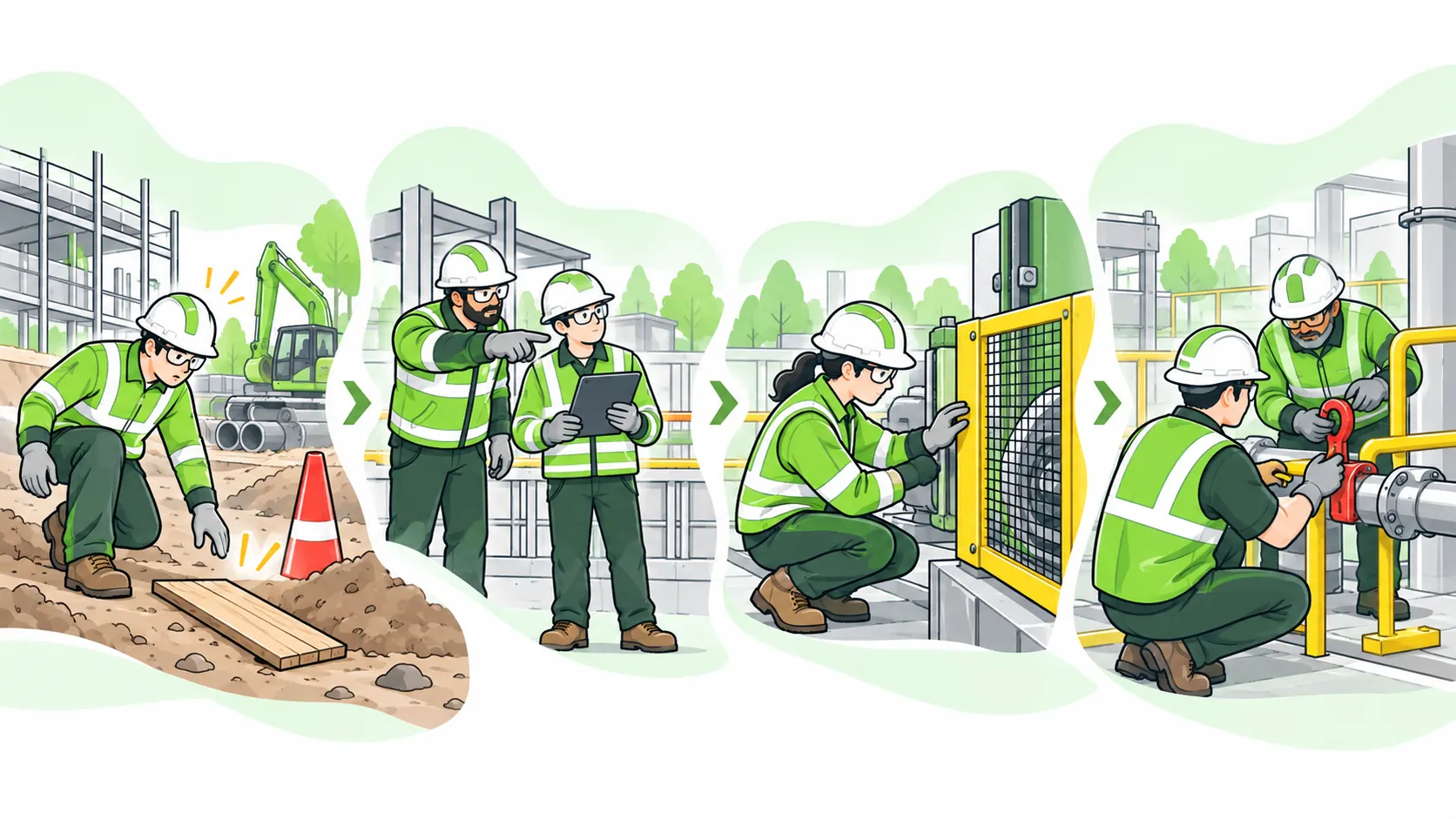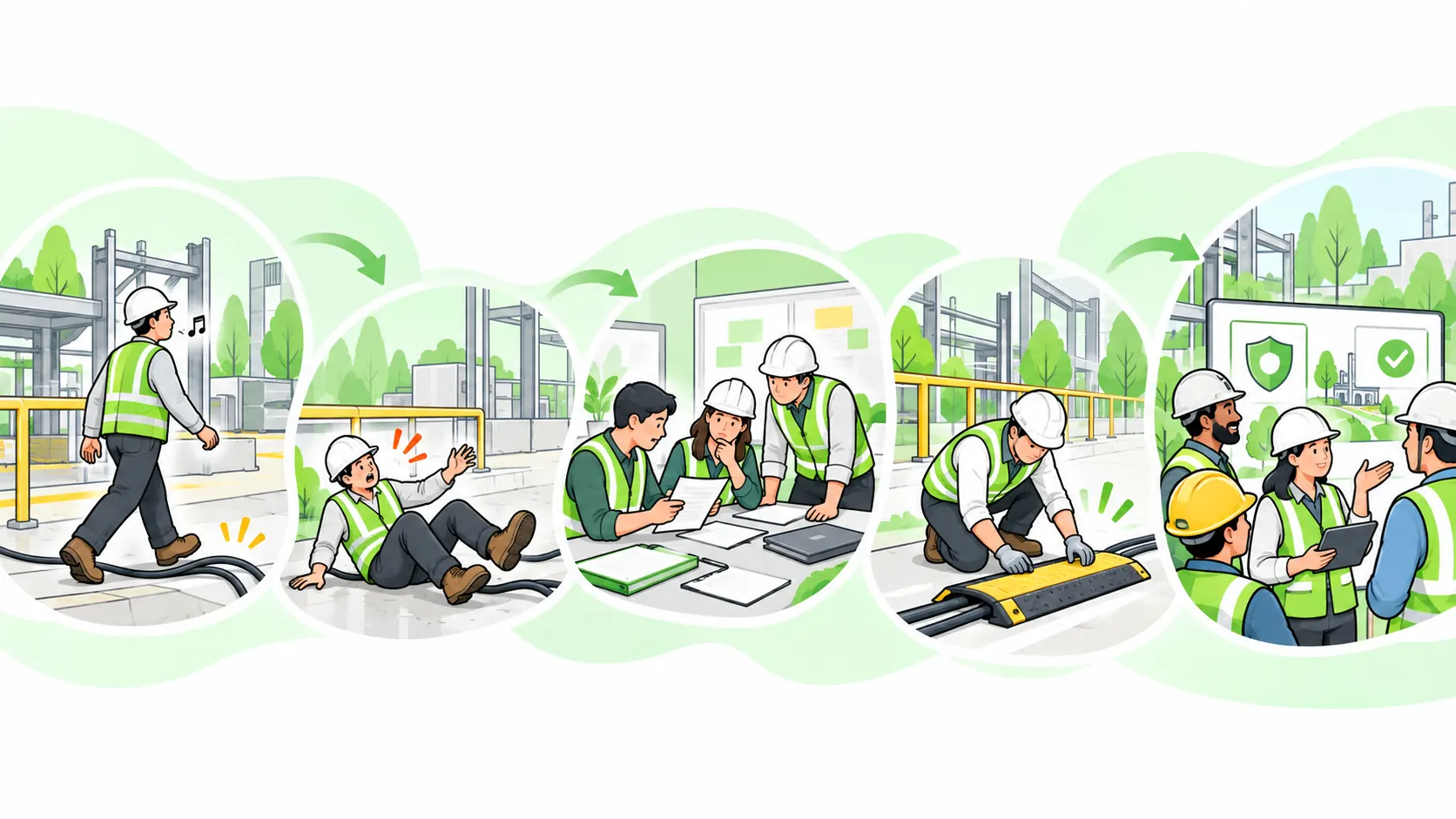
Safety coaching helps a worker understand a risk, explain what makes the task difficult, and agree on a safer way to complete it. Effective feedback starts with a specific observation. It identifies what to repeat when something worked, or what needs to change and who will check it.
A worker can agree with every word a supervisor says and still return to an unsafe task. The missing piece may be equipment, a workable instruction or permission to change the schedule. A useful conversation uncovers that constraint.
My work in safety culture and incident learning includes examining workload, supervision and the gap between procedures and work as performed. For coaching, I recommend keeping those conditions in view alongside the worker's knowledge and actions.
The essentials:
- Deal with immediate danger before starting a coaching discussion.
- Describe what happened, then listen before deciding why.
- Choose an action that addresses the actual problem.
- Close the action only when there is evidence it works.
These six safety coaching steps draw on US and UK guidance. Apply them alongside the local requirements, site procedures and risk assessment for the task.
What safety coaching can—and cannot—do
Feedback gives someone information about an action or condition. Coaching uses questions, explanation and discussion to help them apply that information. It can reveal misunderstanding, encourage useful decisions and bring practical obstacles to management's attention.
OSHA's Better Safety Conversations distinguishes appreciation, coaching and constructive feedback. Its emphasis on listening and avoiding personal criticism is a useful starting point. Be clear whether you are recognising a helpful action, exploring a difficulty or correcting a specific problem.
Coaching cannot provide missing competence, repair defective equipment or authorise a departure from a safe system of work. A conversation that identifies one of these needs should trigger the appropriate action.
A practical test: After this conversation, will the person have both a clearer understanding and the conditions needed to work safely?
What changed on the paint line at TitanX
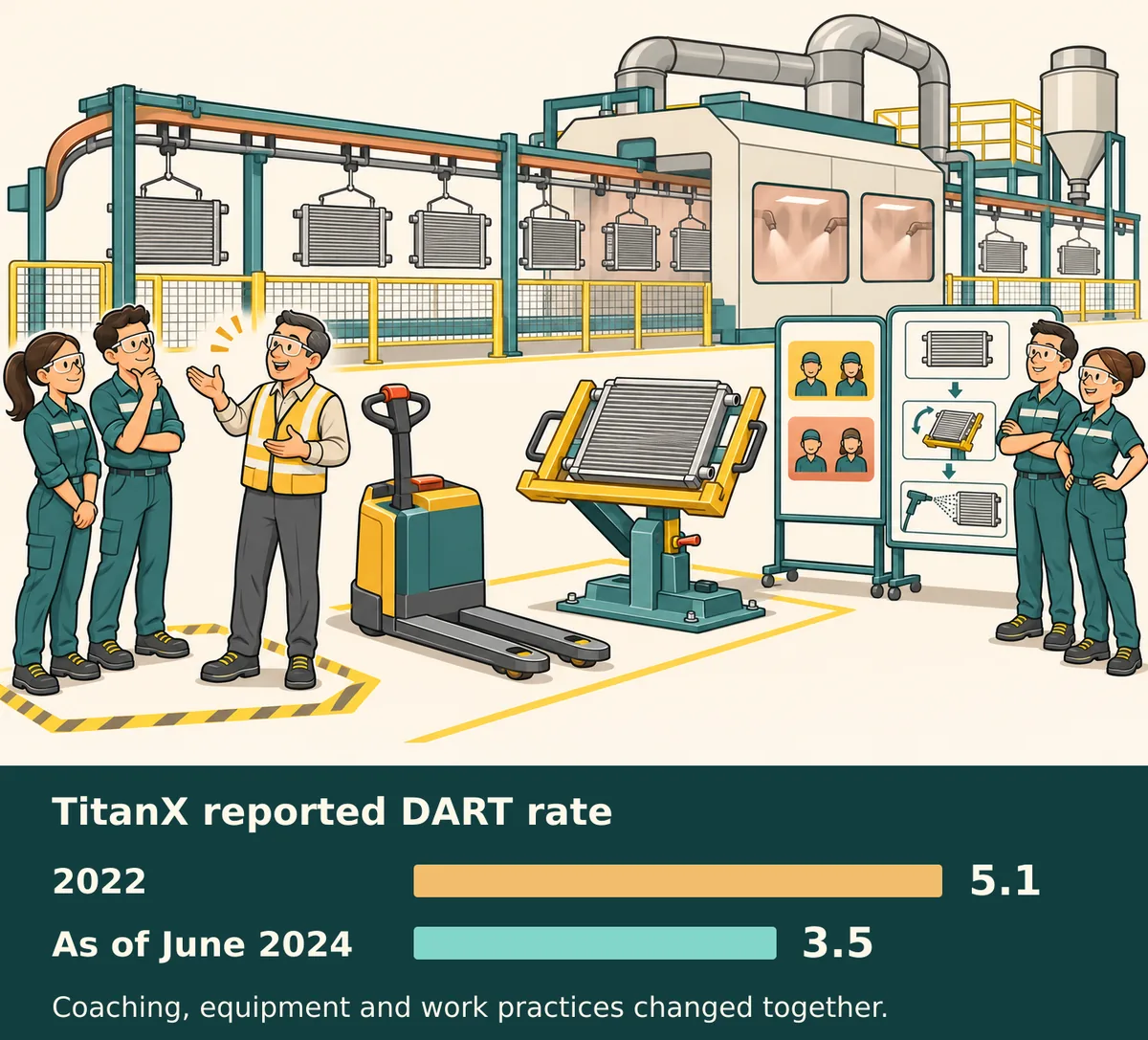
An OSHA case report from TitanX Engine Cooling's EHS manager describes employees handling heavy parts between carts and a paint-line conveyor. Supervisors received training to observe handling and coach their teams. The company also added inspection questions, purchased an electric pallet jack and a second tilter, adjusted staffing, and revised its instructions.
The company reported that its rate of cases involving days away, restricted work or job transfer fell from 5.1 in 2022 to 3.5 as of June 2024. Several measures changed together, so the report cannot tell us how much of that change was due to coaching alone.
For a supervisor, the useful lesson is what to check after speaking with a worker: will the next person doing this job have different equipment, staffing or instructions available? The answer tells you more about prevention than the number of conversations recorded.
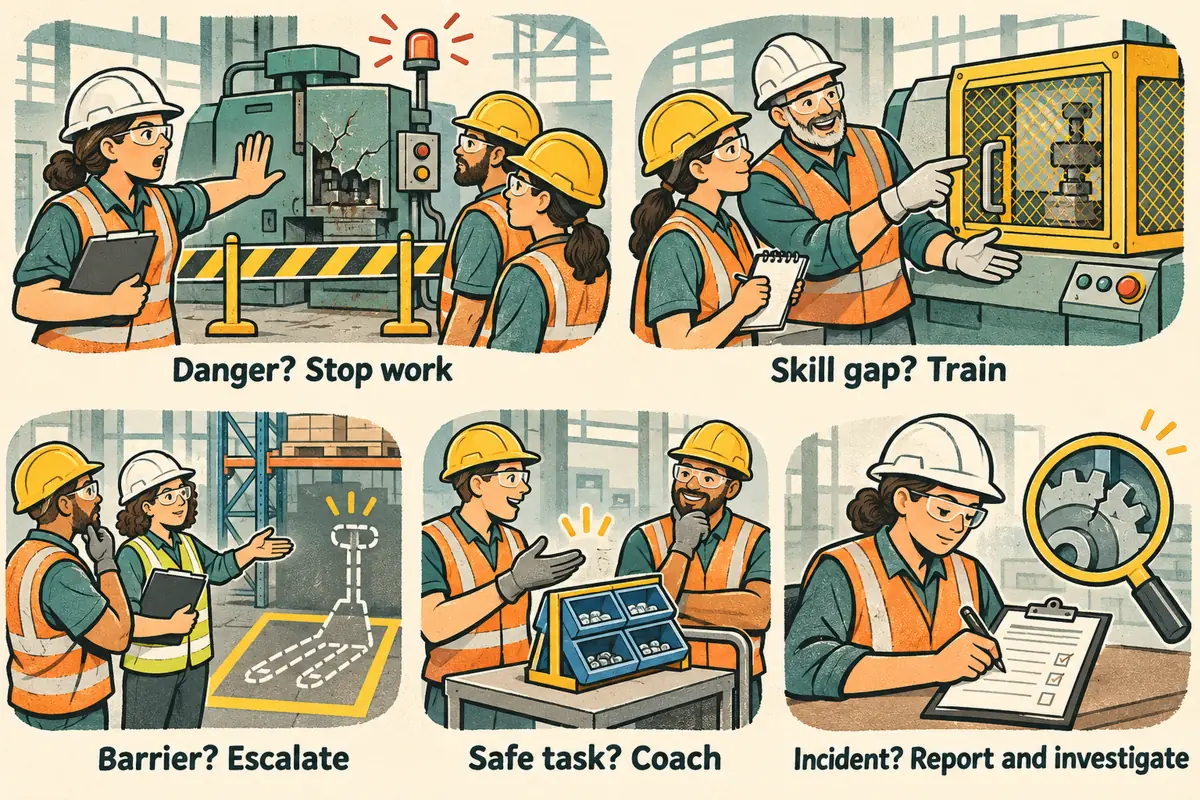
Choose the right response before you start talking
Match the response to the risk. If someone is in immediate danger, use the site's stop-work or emergency arrangements from a safe position. Do not enter the danger area or distract an operator during a critical movement to begin a discussion.
| What you find | What needs to happen |
|---|---|
| An essential control is missing | Protect people and establish safe conditions through the authorised site process. Discuss causes and learning afterwards. |
| The person does not know the required method | Arrange suitable instruction, training or supervision. Check competence before assigning the task. |
| The method is understood but cannot be followed | Identify the equipment, planning or resource constraint and involve someone who can resolve it. |
| The task is safe, but there is an opportunity to improve | Choose a suitable pause, explore the idea and assess any proposed change before adoption. |
| An incident or near miss has occurred | Follow response, reporting and investigation arrangements. Coaching may support the resulting actions. |
OSHA's worker participation guidance recommends empowering workers to request or initiate a temporary suspension of work they believe is unsafe. A coaching conversation does not itself authorise a restart; the required checks and permissions still apply.
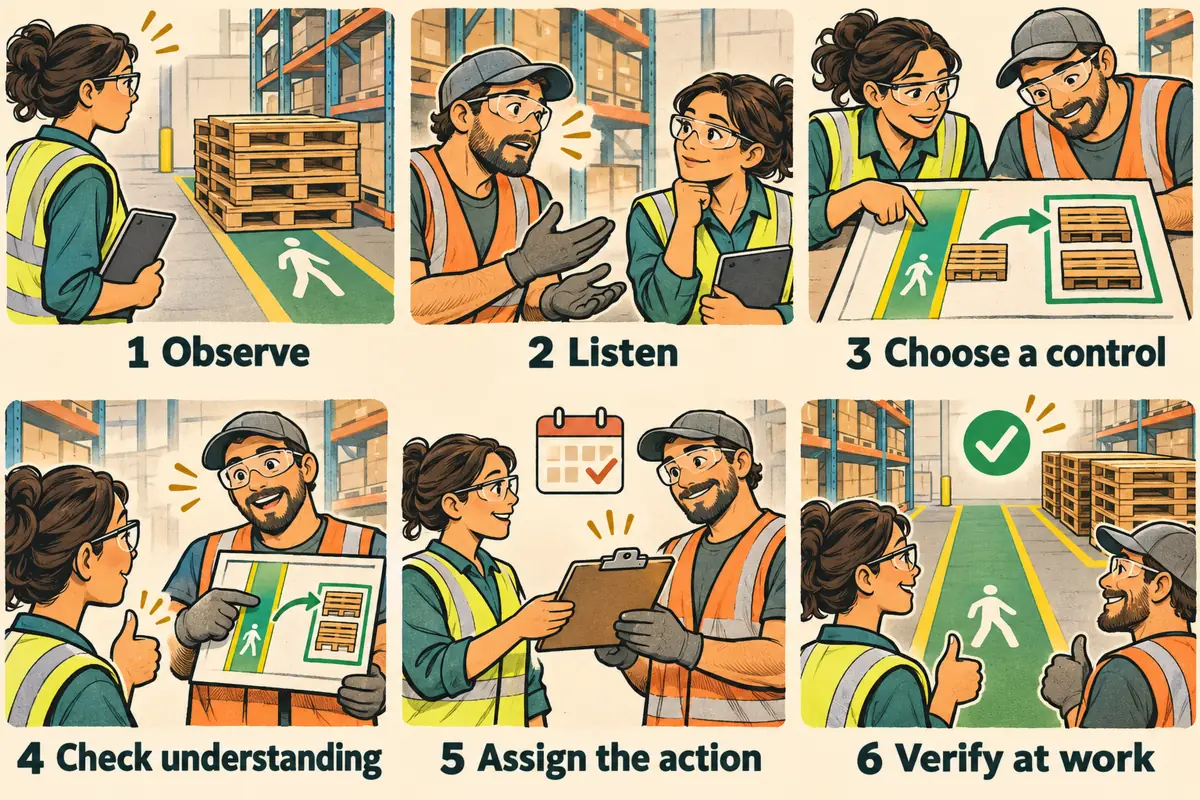
How to give effective safety feedback in six steps
I recommend the following sequence to keep a conversation focused. It is a practical discussion structure, not a prescribed regulatory procedure. The wording should sound natural to the people involved.
1. Describe the observation and the possible harm
Start with a fact that can be checked: the task, location and action or condition. Then explain why it matters. “You are careless” describes your judgement of a person; it does not identify a control they can apply.
Wording to adapt:
“These pallets are covering the marked pedestrian route. People need a safe way past this area. Let's make the area safe under our traffic arrangements, then establish why the pallets are here.”
If you did not witness the situation, say who reported it or that it was reported, as appropriate, and check the account. For a clearer record, describe the task, location and condition you observed.
2. Let the worker explain the task
Ask one open question and allow an answer. Check the sequence before suggesting a cause. These prompts explore different parts of the work:
- Change: “What is different from the way this task was planned?”
- Resources: “Which equipment, information or assistance is missing?”
- Pressure: “What happens to the schedule when you follow the agreed method?”
- Previous action: “Has this difficulty been raised before, and what happened next?”
HSE's human factors guidance considers the job, the individual and the organisation together. Use that perspective to examine task design, workload and supervision alongside competence. Several workers describing the same difficulty is a reason to examine shared conditions.
Briefly reflect back what you heard and invite correction. For example: “The aid is available on the day shift but moved elsewhere before your task starts—is that the problem?” A precise account makes the next action easier to assign.
3. Identify what must change
Separate a knowledge gap from a resource or control problem. “Remind the worker” is a poor response when the required equipment is unavailable. Ask what would make the assessed method workable, then have the appropriate competent people evaluate the proposal.
The NIOSH hierarchy of controls prioritises elimination, substitution and engineering controls over measures that rely more heavily on continuing human action. Use coaching to help identify and support controls; do not let it become the replacement for them.
Check for transferred risk. Clearing a walkway by moving stock into an emergency exit solves neither problem. Changing a material, tool or work sequence may require reassessment before anyone tries it.
4. Check understanding without creating another hazard
Ask the worker to explain what needs to be in place, the next safe step and the point at which they would seek help. Avoid relying on “Do you understand?” followed by a nod.
A useful prompt: “Talk me through the conditions we need before this task can continue. What would make you pause it again?”
Where a practical assessment is necessary, arrange safe conditions and competent supervision. Never recreate a dangerous event to test someone's reaction.
HSE's guidance on safety-critical communication highlights timing, suitable language and appropriate communication methods. Provide language or accessibility support where needed, and back up important spoken instructions with a suitable written or visual reference.
5. Make the action specific and assign it properly
Each action should identify what will change, who can make it happen, when it is needed and how completion will be checked. Do not assign a purchasing decision to a worker who has no purchasing authority.
Separate the immediate protection from the permanent improvement. A due date next week is not justification for exposing people today. If no effective interim arrangement has been established, keep the affected work paused.
HSE's consultation guidance recommends agreed response arrangements and explanations of decisions. If a suggestion is rejected, explain the reason and the alternative. Name the person who will give the next update.
6. Verify the change during the relevant work
Check that the action addresses the original difficulty under actual operating conditions. Ask affected workers whether it remains usable when the workload changes or another shift takes over.
I recommend distinguishing three entries in an action record:
- Discussed: the concern and the worker's account are understood.
- Implemented: the agreed change is in place.
- Verified: someone has checked that it works for the intended task.
These are suggested internal tracking stages, not a mandated classification. They help prevent a completed conversation from being mistaken for a completed risk-control action.
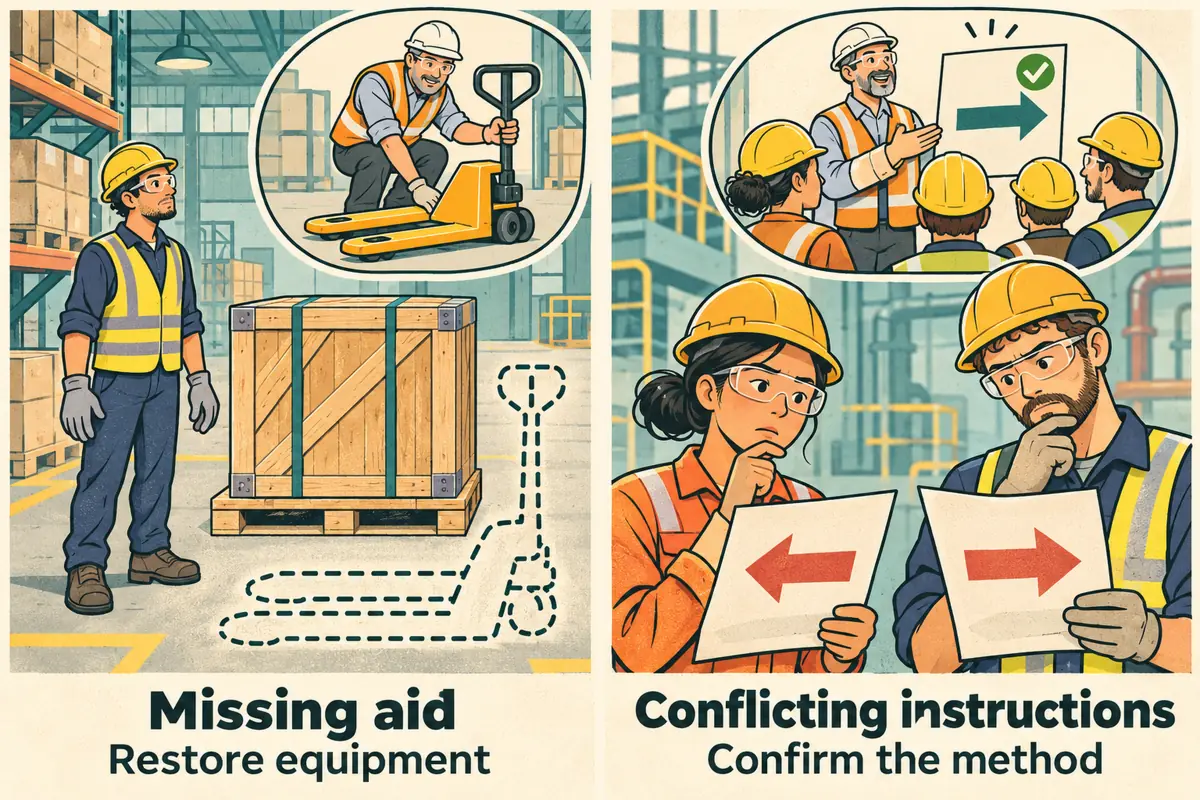
Two workplace problems that need different coaching responses
A missing handling aid calls for an equipment decision. Conflicting instructions call for a decision from the people who own the work method. In both cases, the supervisor can help the worker identify who has the authority to resolve the problem.
The handling aid is missing
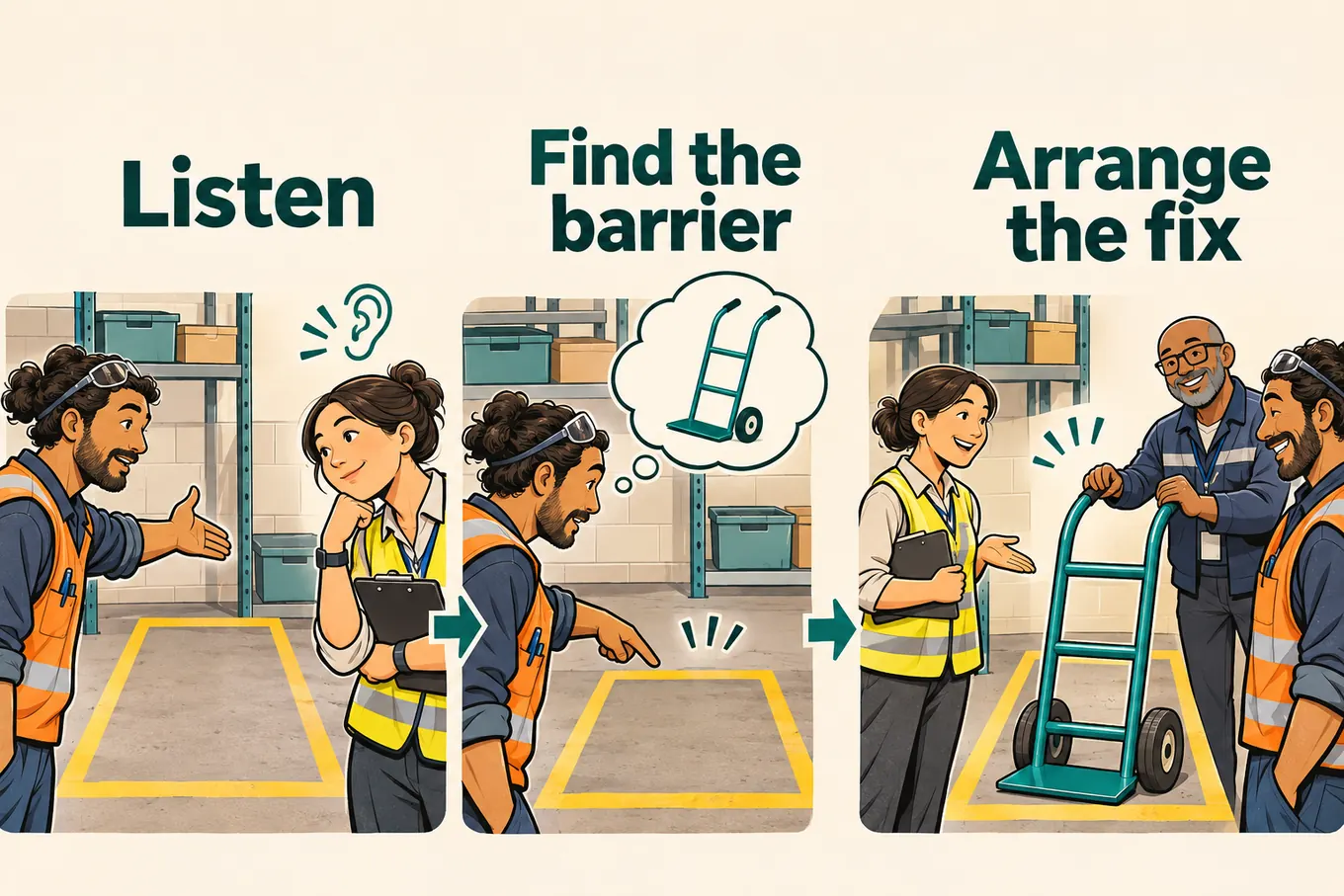
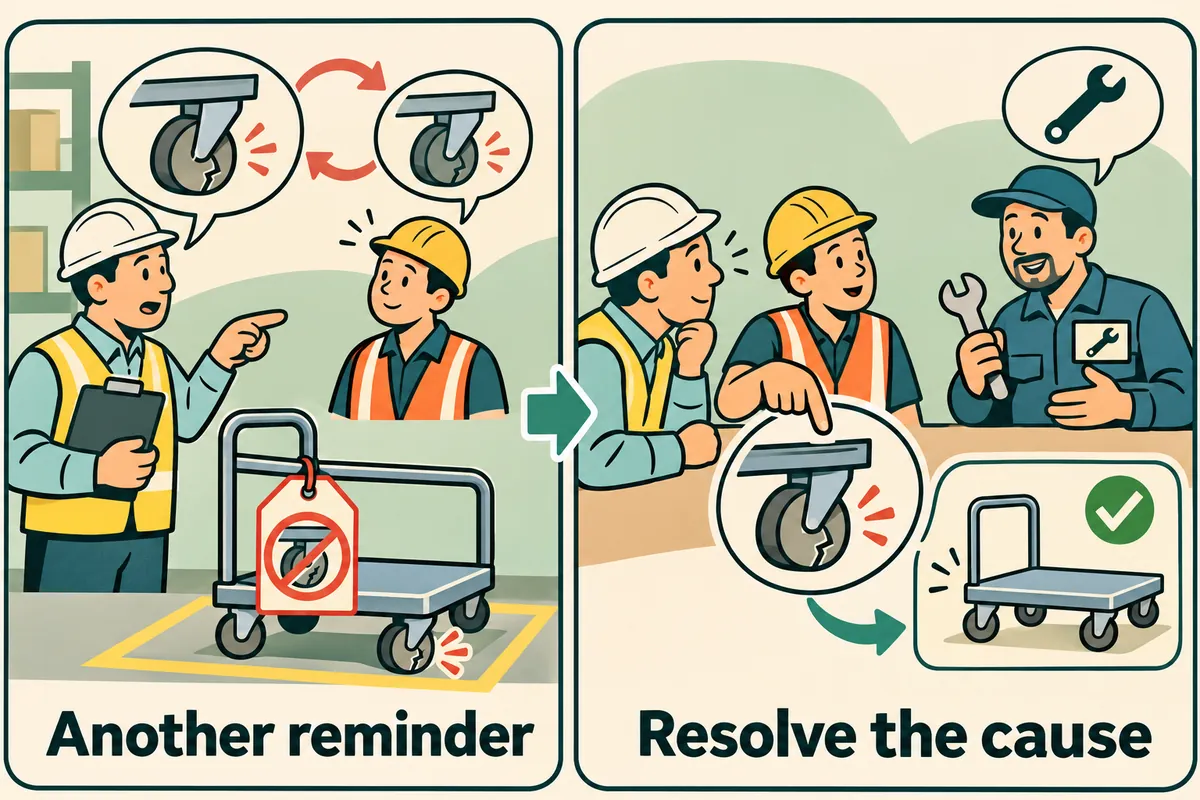
If a task requires a particular handling aid and it is unavailable, asking the worker to “remember to use it” adds nothing. Establish whether it is defective, booked by another team, unsuitable for the load or absent from the work plan.
My recommendation is to resolve that constraint before discussing motivation. A supervisor should not endorse an improvised manual lift simply to maintain output. Any alternative needs the appropriate competent assessment; otherwise, the affected task remains paused.
A stronger action record would identify the equipment or planning change, the responsible manager and the check needed before work resumes. The follow-up should examine availability at the time of use, not merely whether the equipment exists somewhere on site.
The instructions disagree
If a contractor's task sheet and the site's instruction give conflicting methods, repeating one instruction more firmly does not establish which is authorised. Pause the affected task and bring the responsible people together to resolve the discrepancy.
Ask which documents the team received, which versions they are using and who briefed the change. Have the authorised process establish the current method, deal with conflicting copies and identify everyone who needs the corrected information.
Here, the coaching conversation can reveal a document-control or coordination problem. Closing the action requires more than the first worker repeating the corrected instruction: check that other affected workers and shifts have received and understood it too.
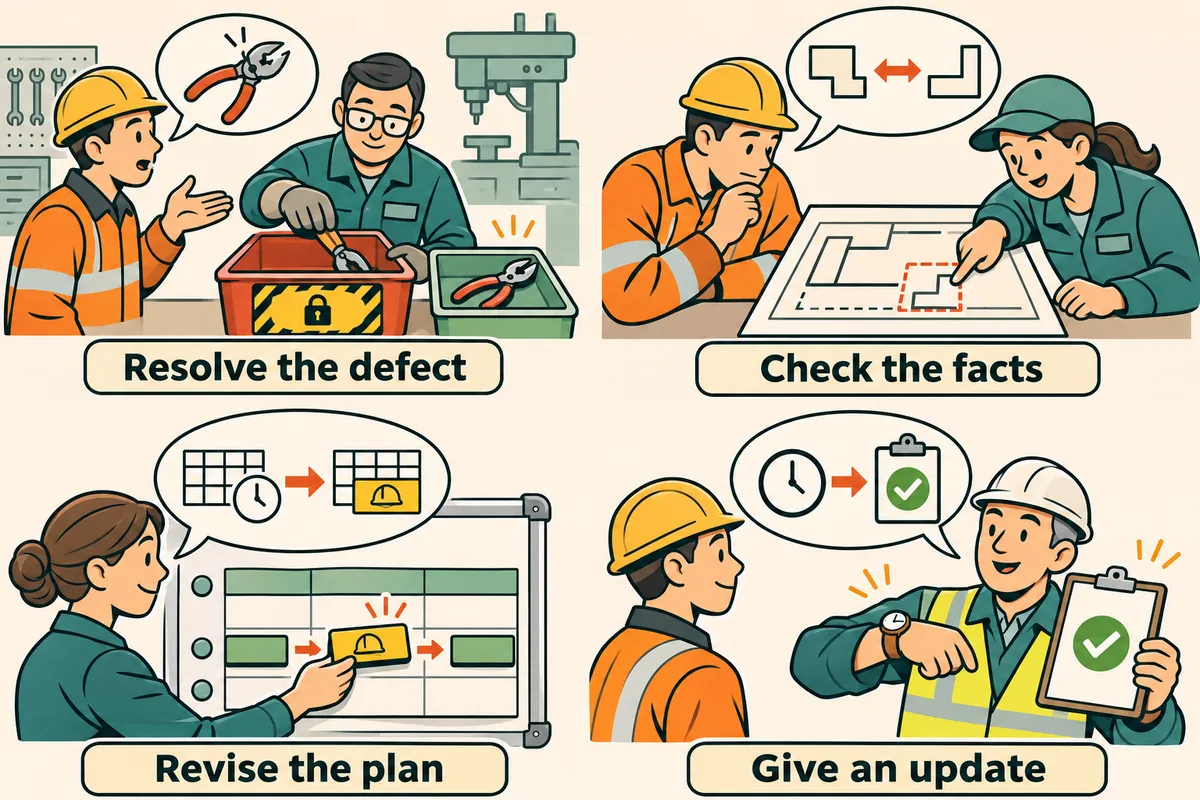
Useful feedback phrases—and what must follow them
These scripts are starting points to adapt to established facts. Keep the message specific and make the next action visible.
| Purpose and suggested wording | Follow-through |
|---|---|
| Recognise a useful report: “You identified the damage before use. Let's confirm the replacement and how the defective item will be controlled.” | Check the defect procedure and equipment availability; acknowledgement alone does not resolve the defect. |
| Explore disagreement: “Which part of my observation do you see differently? Let's check it against the task and the required control.” | Resolve the facts without allowing uncertain or unsafe work to continue. |
| Challenge a target: “This plan leaves out the time needed for the control. Who can revise the sequence or resources?” | Obtain a workable decision from the person who owns the plan. |
| Respond to an unresolved report: “You raised this earlier and have not had an answer. I'll establish who owns it and agree when you will hear back.” | Give that update, including any continuing restrictions or unresolved decision. |
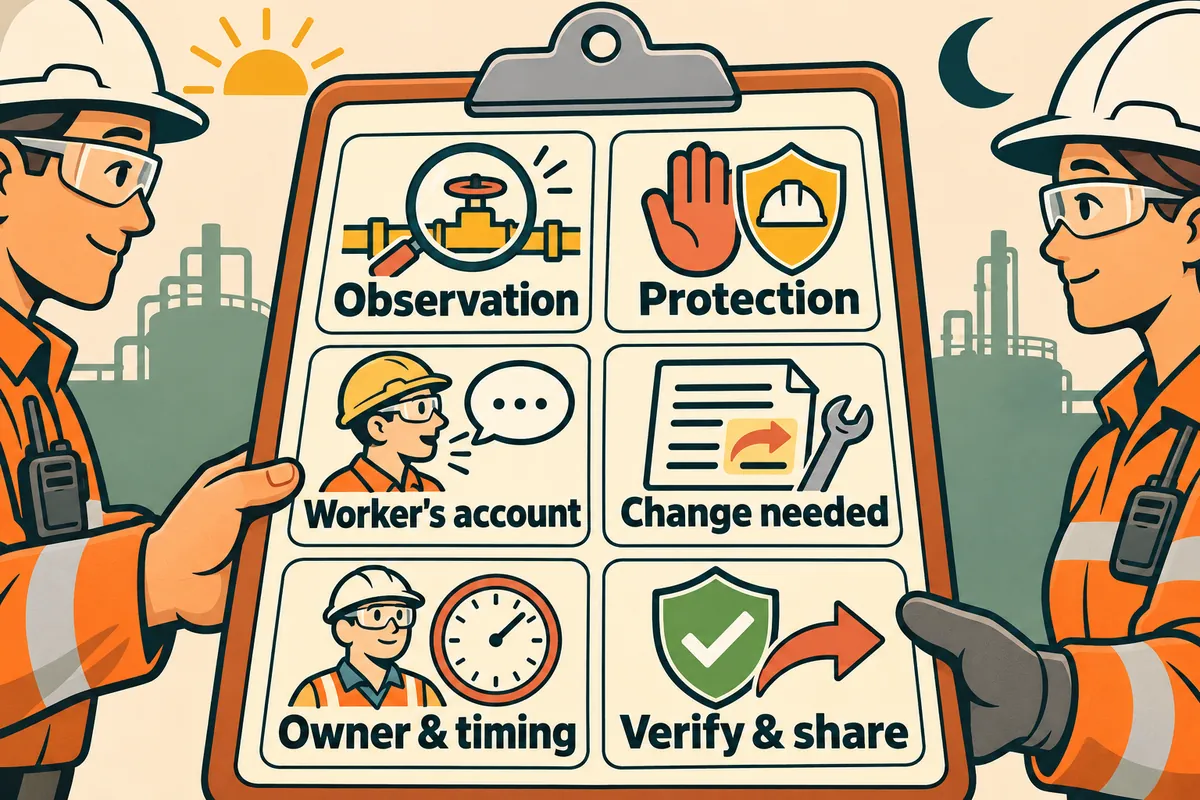
A short safety coaching record you can use
Use a record that helps someone act on the concern. Capture relevant facts without speculation about personality or unnecessary personal information. Follow your organisation's confidentiality, access and retention arrangements.
- Task and observation: What was seen or reported? What remains unconfirmed?
- Immediate protection: What was paused or controlled, and which site process applies?
- Worker's account: What explains the difficulty? Record disagreement fairly.
- Required change: What must be different for the task to be safe?
- Owner and timing: Who has authority to deliver it? When is it required?
- Verification: Who will check effectiveness, during which task and against what evidence?
- Communication: Who needs the outcome, including contractors and other shifts?
Record quality check: Could another supervisor pick up this entry tomorrow and understand both the outstanding risk and the next action? If the entry only says “spoke to employee”, it is unlikely to help.
For the conflicting-instructions example, a usable handover entry could read:
“Affected task paused. The contractor's work card and the site instruction differ. The site lead and contractor supervisor will obtain the authorised method and brief both shifts before restart. The incoming lead will check the version at the work point and confirm the briefing with the crew.”
Common mistakes that weaken safety coaching
A respectful tone matters, but the process can still fail if the conversation ends without a workable decision. Look for these weaknesses when reviewing coaching records.
- Deciding the cause before listening. Check the worker's account and the conditions of the task before concluding that a reminder is enough.
- Giving instructions beyond your competence. Escalate technical uncertainty to someone qualified to resolve it.
- Using coaching to avoid a resource decision. If a control requires equipment, staffing or maintenance, assign that decision explicitly.
- Making promises outside your authority. Commit to obtaining and communicating a decision rather than guaranteeing an unapproved purchase.
- Reopening the same concern without examining why it returned. Reassess the earlier action, its implementation and its suitability for the work.
HSE's supervision guidance stresses clear responsibilities, knowledge of local hazards and adequate support for supervisors. A coaching programme needs those foundations; conversation skills alone do not supply them.
Measure useful changes, not just conversation totals
Conversation counts describe activity. To assess usefulness, examine the response to concerns, the quality of corrective actions and the workers' experience of what happens afterwards. OSHA's programme evaluation guidance supports using both leading and lagging indicators and involving workers in evaluation.
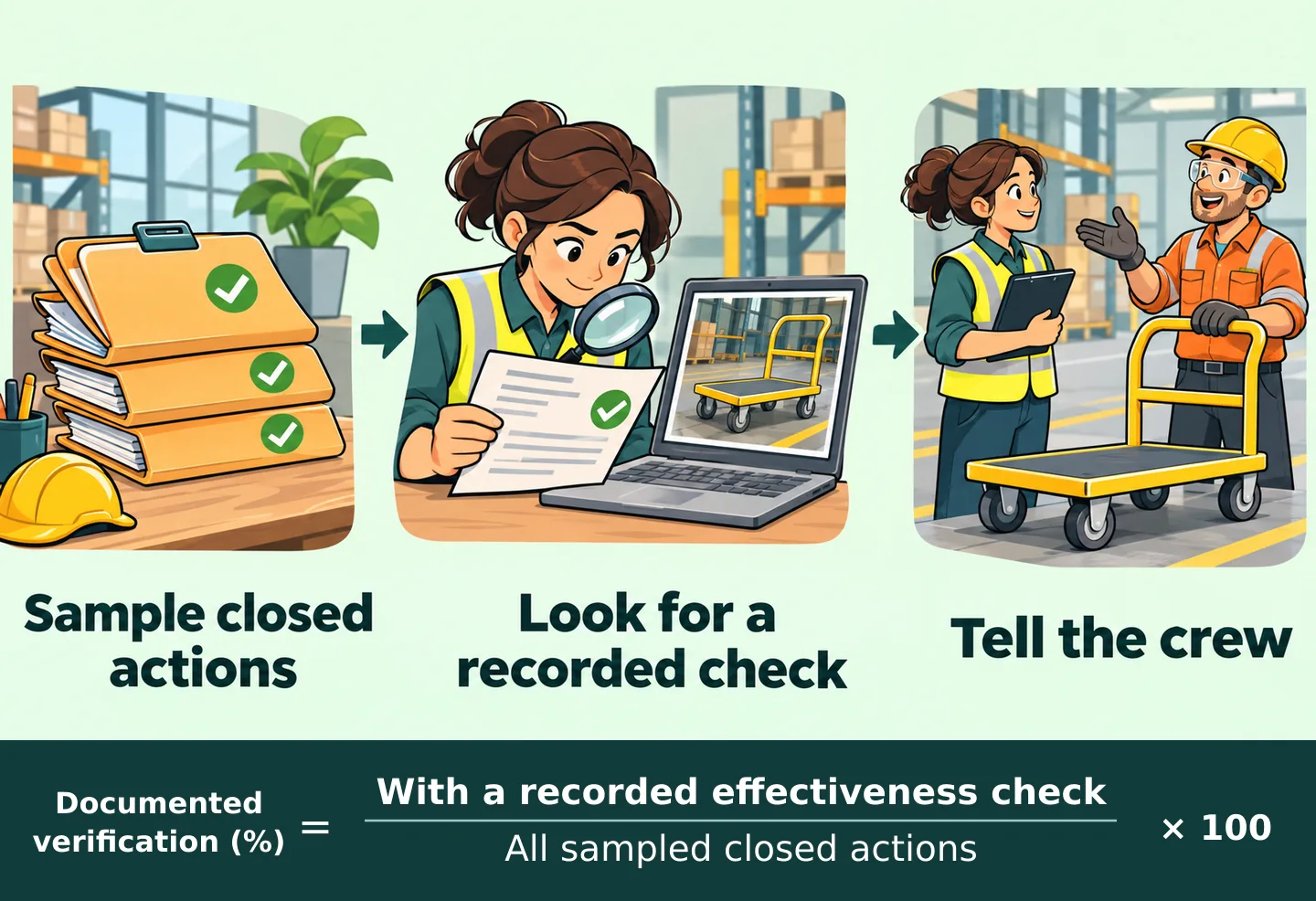
For an internal quality check, select closed actions across relevant risks, shifts and teams. Ask whether the agreed control was checked and whether the people affected received the outcome.
One simple measure: verified actions in the sample ÷ all closed actions in that sample × 100.
Record how many closed actions have evidence of an effectiveness check and how many you sampled. The percentage measures how often the team documented verification. To assess whether exposure fell, examine the control and the evidence for each action. Follow up on missing checks. A small sample cannot support ranking individual workers. With no sampled actions, record the measure as not applicable.
Interpret reporting trends with care. A decline may reflect fewer problems or reduced willingness to speak up. Examine barriers to near-miss reporting alongside other indicators of safety culture.
Keep management accountable for the conditions of work
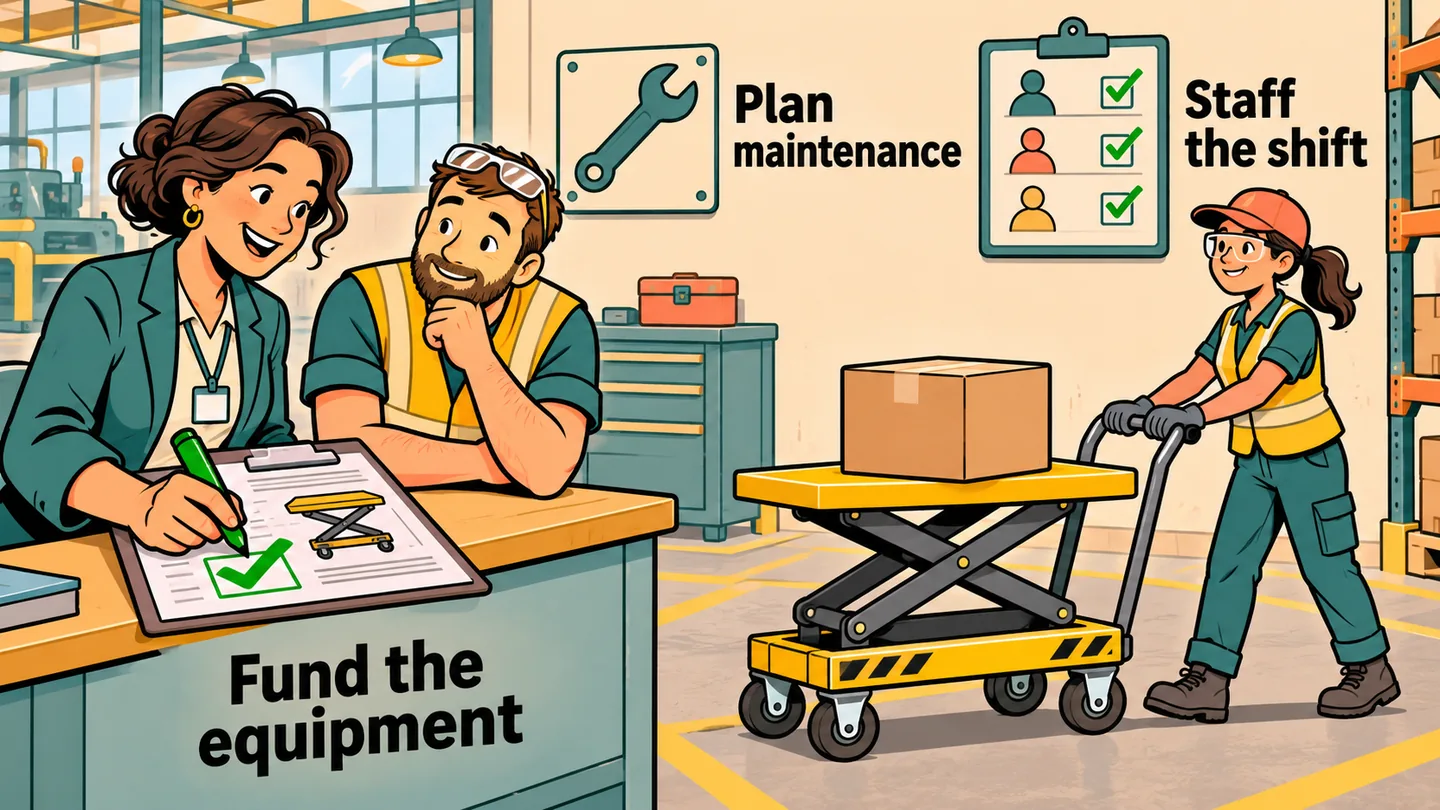
Safety coaching should examine decisions about procurement, maintenance, staffing and production targets as well as frontline actions. OSHA's management leadership guidance places responsibility on management to provide resources, define responsibilities and demonstrate commitment through its own actions.
HSE also warns that behavioural safety approaches can overlook organisational conditions and major hazards when attention is concentrated on workers. Include important controls that a casual observation may not reveal, such as overdue safety-critical maintenance.
After an incident, use the proper investigation process. OSHA's incident investigation guidance recommends examining underlying causes rather than stopping at carelessness or failure to follow instructions. Coaching may help implement findings; it does not replace evidence gathering and analysis.
Frequently Asked Questions
These answers cover practical decisions about using coaching within normal supervision.
How often should supervisors give safety feedback?
Use meaningful opportunities: a changed task, a reported concern, a useful preventive action or a follow-up check. Plan conversations around risk and operational needs. A numerical quota is unhelpful if it encourages repeated discussions without action.
Should corrective feedback be given privately?
Act immediately to protect people when danger is present. Once the situation is safe, choose a suitable setting for a detailed individual discussion. Share necessary task information with everyone affected while avoiding public criticism and unnecessary disclosure of personal details.
What if a worker already knows the rule?
Establish what prevents its application. Knowledge does not prove that equipment, time, instructions and supervision are adequate. If the method is workable but a conduct concern remains, examine it through the appropriate fair process.
Does coaching mean there are no consequences?
No. Keep responsibilities and expectations clear. Separate the investigation of a conduct concern from the act of reporting a hazard or injury. OSHA's worker participation guidance expressly addresses protection from retaliation for raising safety concerns.
When is a coaching action ready to close?
When the agreed action is implemented, the required effectiveness check is complete and the outcome has reached the people who need it. Use the site's formal closure requirements where applicable. Escalate unresolved risk rather than closing an entry because the conversation is over.
For your next conversation: prepare one factual observation, one open question and a way to record the next action. Leave room for the worker's answer to change your understanding of the problem.