Contractor Safety Induction: Checklist & Best Practices
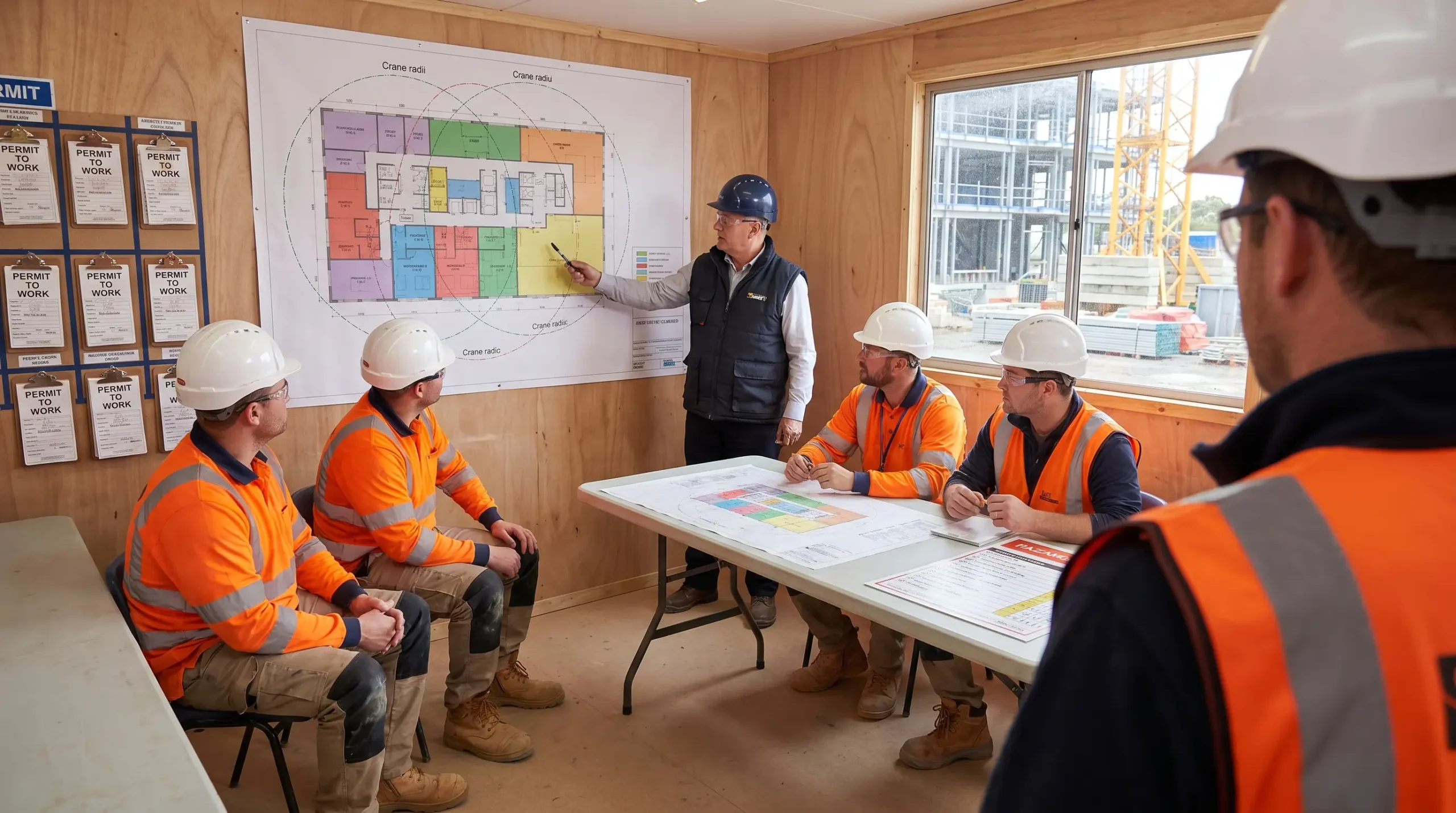
Construction workers in hard hats and safety vests gather in a site office around a table reviewing blueprints while a supervisor points to a floor plan diagram on the wall.

TL;DR A contractor safety induction is a structured pre-work process that introduces contractors, subcontractors, and their workers to site-specific hazards, emergency procedures, permit systems, and reporting protocols. Required under OSHA’s multi-employer doctrine, CDM 2015 Regulation 15, and ISO 45001 Clause 8.1.4.2, it functions as both a legal compliance gateway and the first active layer of … Read more
How to Deliver an Effective Safety Induction: Practitioner Guide

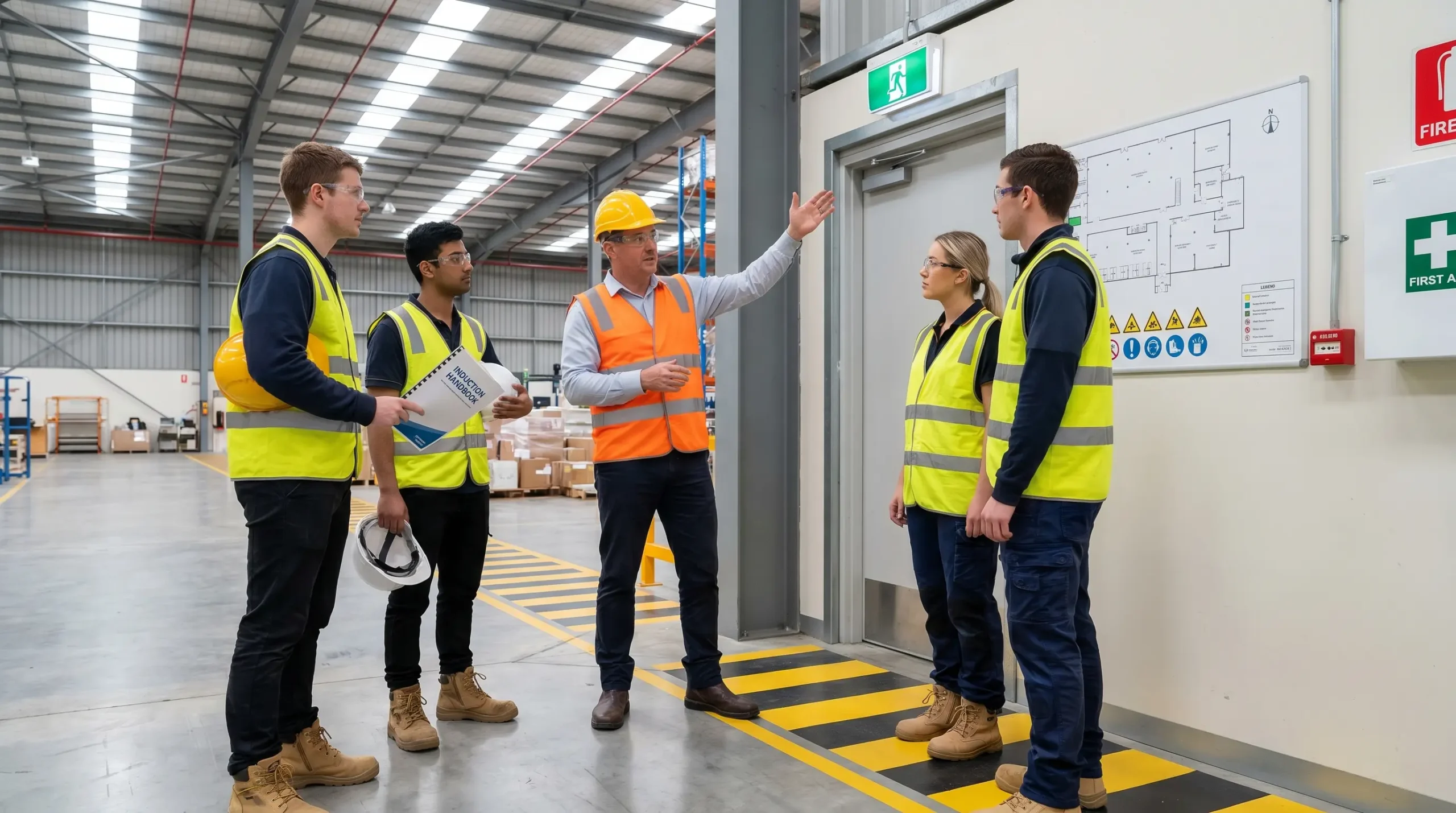
A supervisor in an orange safety vest and hard hat briefs four workers wearing yellow high-visibility vests in an industrial warehouse, pointing to a floor plan on the wall near safety signage.

TL;DR A safety induction is the structured first-contact training given to new employees, contractors, and visitors before they begin work. Effective delivery requires content tailored to the specific workplace’s hazards, sequencing that prioritises context and site familiarisation over policy documents, verification of understanding through scenario-based assessment, and measurable follow-up during the first 30 to 90 … Read more

Site Safety Induction: Key Topics, Legal Duties & Checklist

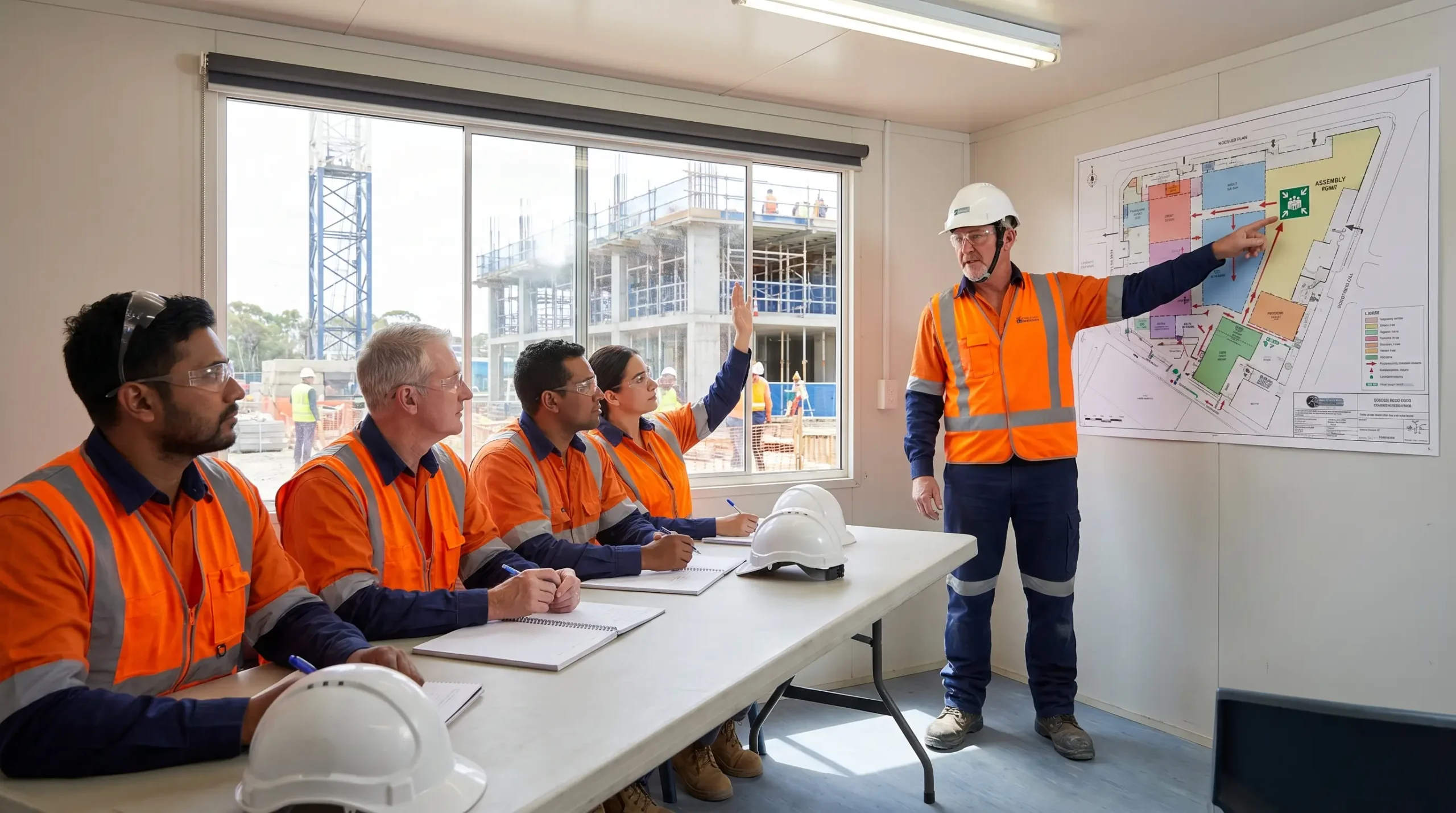
Construction supervisor in white hard hat and orange safety vest points to building site plan while conducting safety briefing with four workers at table in site office overlooking active construction project.

TL;DR A site safety induction is a structured briefing given to every worker, contractor, and visitor before they begin work on a site. It covers site-specific hazards, emergency procedures, PPE requirements, site rules, and individual responsibilities. Required by law in most jurisdictions, its purpose is to ensure everyone entering the site can recognise hazards and … Read more

Visitor Safety Management: Risk Tiers & Controls

Two construction workers wearing safety vests and hard hats review a site plan together in an industrial facility, with one pointing at a detailed blueprint on the wall while holding a clipboard.

TL;DR Visitor safety management is the systematic process of identifying, assessing, and controlling health and safety risks to non-employees on a workplace — including clients, contractors, delivery drivers, inspectors, and members of the public. It encompasses risk assessment, induction, emergency accountability, PPE, escort protocols, and visitor data protection, and arises from the employer’s legal duty … Read more

Silica Dust Exposure: Hazards, Limits & Controls Guide

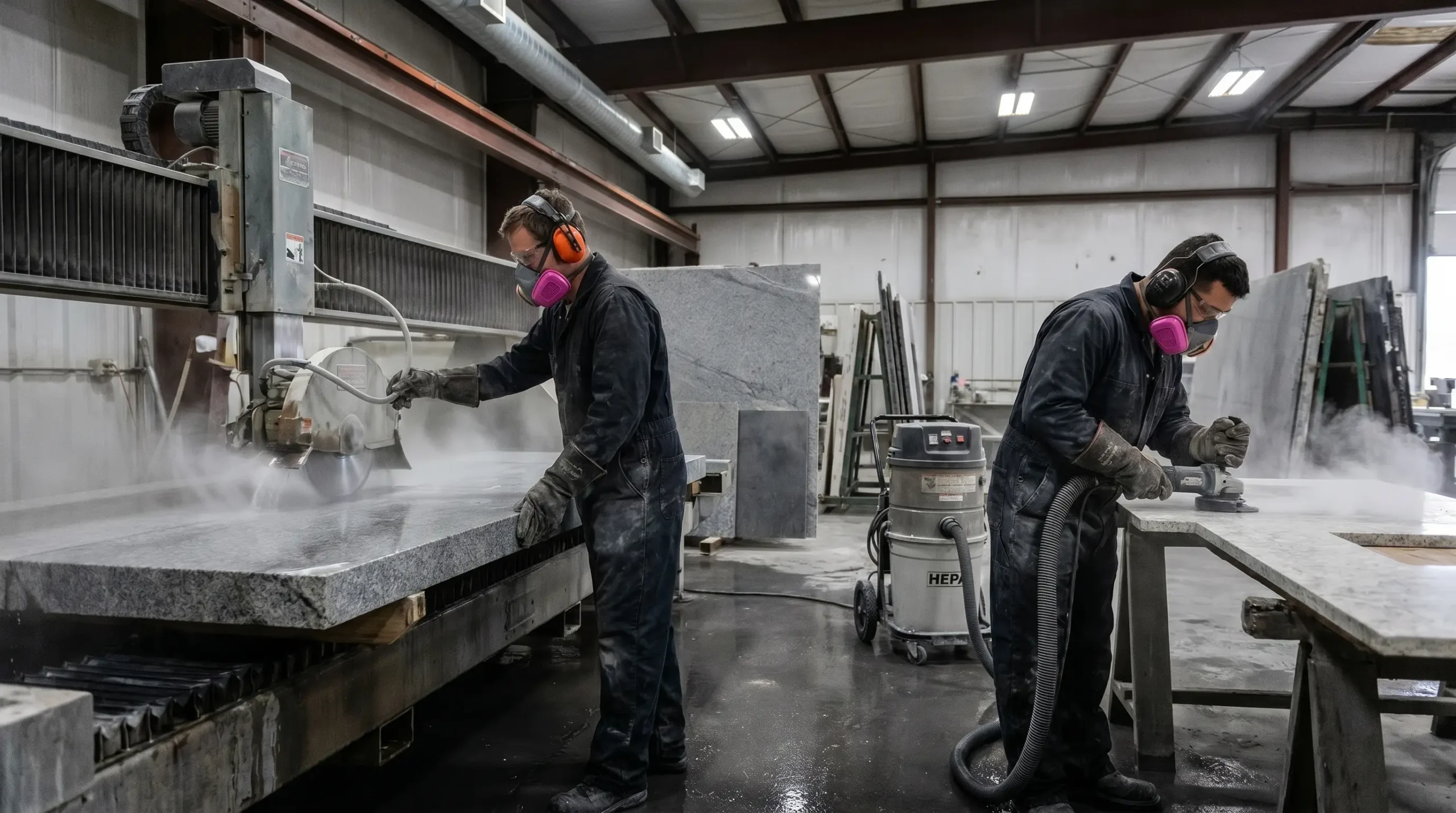
Two workers in safety gear use water jet cutting equipment to process large stone slabs in an industrial warehouse facility.

TL;DR — Key Numbers Silica dust exposure occurs when workers cut, drill, grind, or crush materials containing crystalline silica, generating respirable particles that cause irreversible lung disease including silicosis, lung cancer, and COPD. Occupational exposure limits range from 25 µg/m³ (ACGIH TLV) to 100 µg/m³ (UK WEL), with OSHA setting its PEL at 50 µg/m³. … Read more

Hierarchy of Controls for Workplace Contaminants | HSE Guide

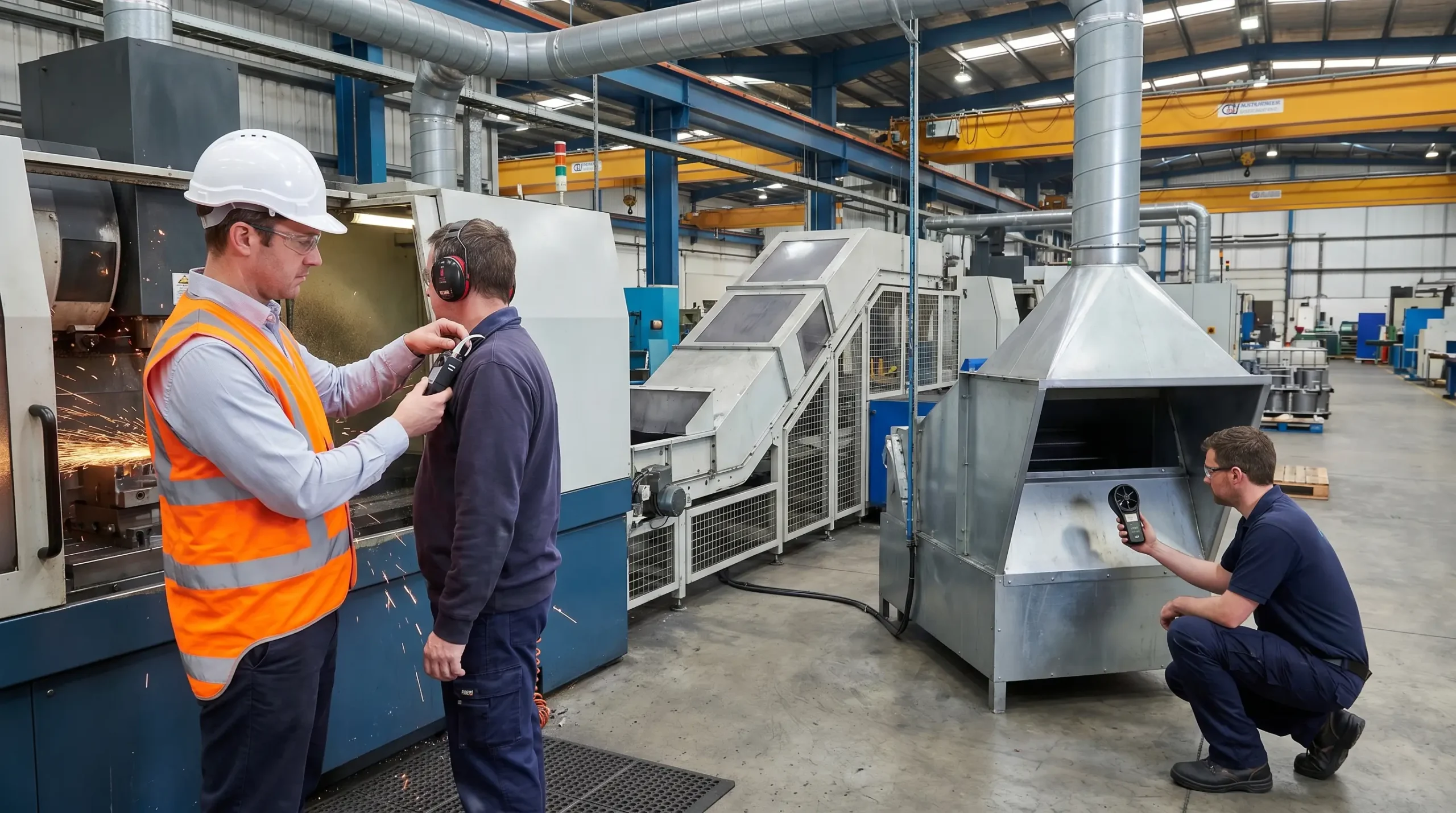
Industrial factory workers conducting equipment inspections and safety measurements on manufacturing machinery, including CNC machines and metal fabrication equipment in a modern production facility.

TL;DR The hierarchy of controls for workplace contaminants is a five-level framework that prioritises control measures from most to least effective: elimination, substitution, engineering controls, administrative controls, and personal protective equipment. Controls at the top of the hierarchy are preferred because they reduce exposure at the source and do not depend on worker behaviour to … Read more

Biological Monitoring: Definition, When It’s Needed & How It Works

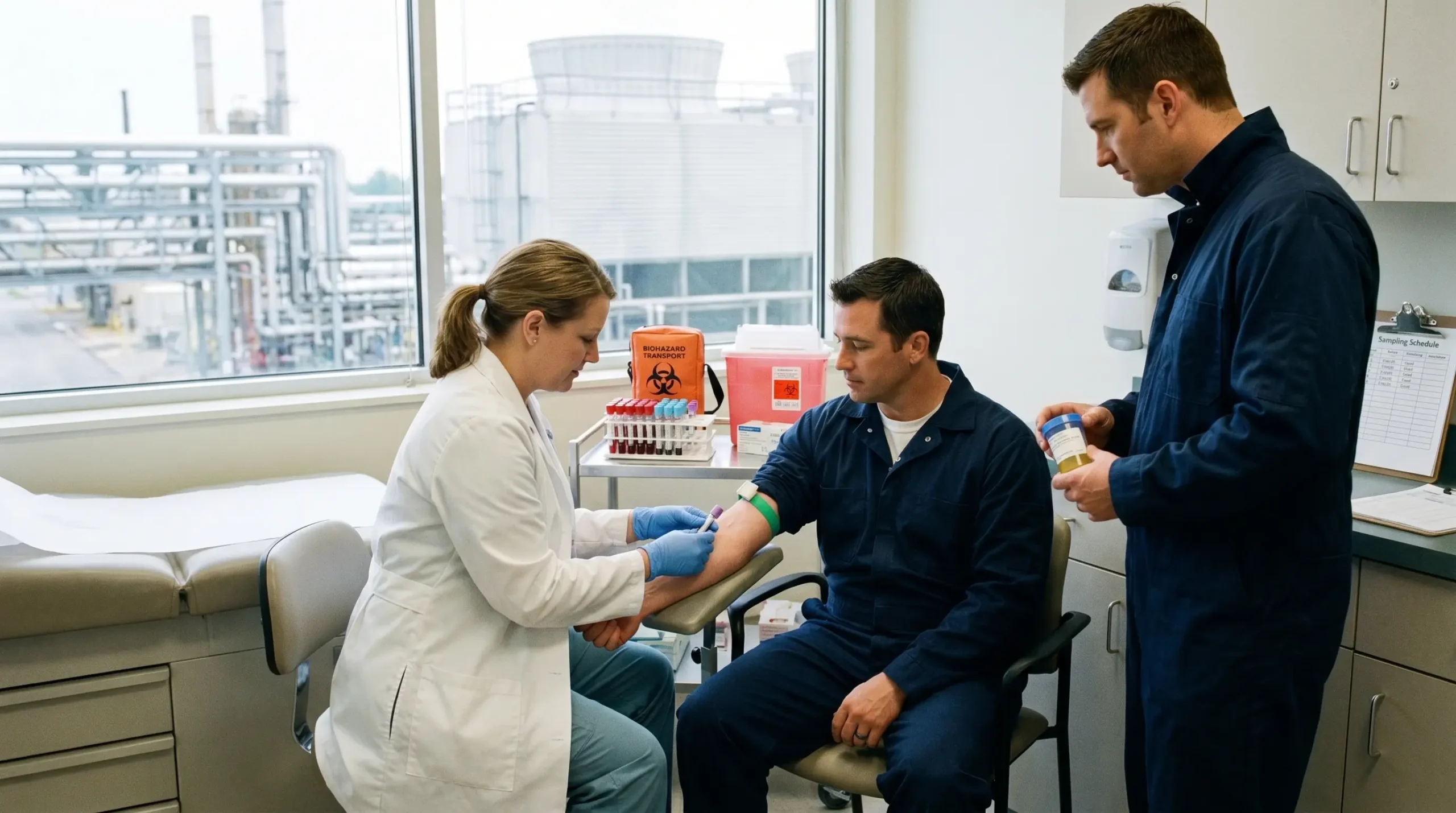
TL;DR Biological monitoring is the measurement of a chemical substance, its metabolites, or its biological effects in a worker’s body fluids — typically blood, urine, or exhaled breath — to assess how much of a workplace chemical has actually been absorbed. It is needed when air monitoring alone cannot reliably capture total exposure, particularly for … Read more

Workplace Air Quality Monitoring: Standards & Implementation

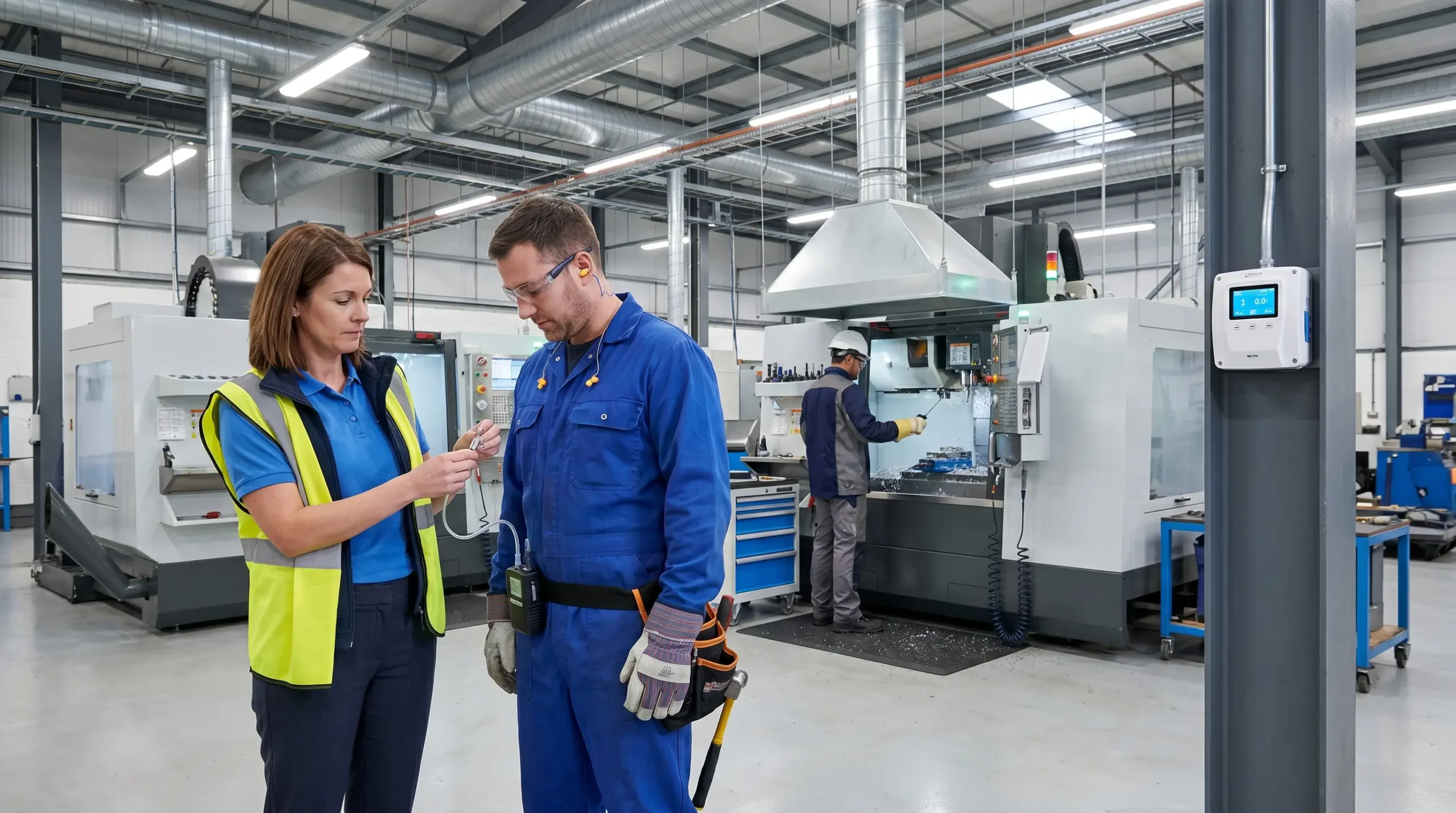
Two factory workers in safety gear discuss work details in a modern manufacturing facility with CNC machines and industrial equipment visible in the background.

TL;DR Workplace air quality monitoring is the systematic measurement of airborne contaminants and environmental conditions in work environments to protect worker health and ensure regulatory compliance. It encompasses both occupational exposure monitoring — measuring personal exposure to hazardous substances against legal limits such as OSHA PELs (US) or HSE WELs (GB) — and indoor environmental … Read more

Workplace Exposure Monitoring: Equipment, Techniques & Best Practices

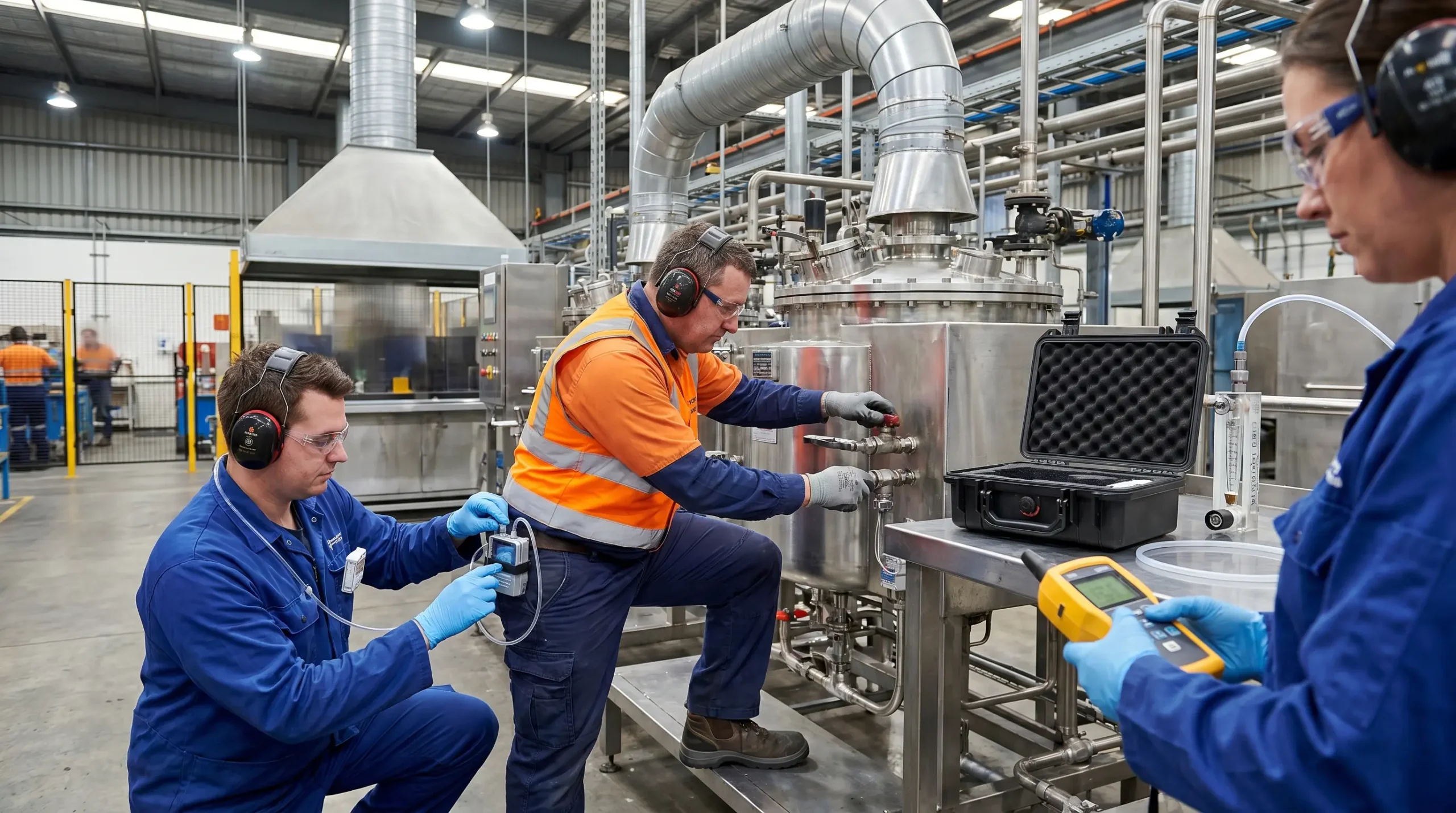
Industrial workers in safety gear conduct equipment testing and maintenance on large stainless steel machinery in a factory facility, using diagnostic instruments and monitoring devices.

TL;DR Workplace exposure monitoring is the systematic measurement of worker exposure to chemical, physical, and biological hazards using calibrated sampling equipment and validated analytical techniques. It serves three purposes: verifying regulatory compliance against occupational exposure limits (OELs), confirming that engineering controls are performing as designed, and characterizing baseline health risk. Equipment ranges from personal air … Read more

Random Drug Testing: Legal Requirements & Procedures Guide

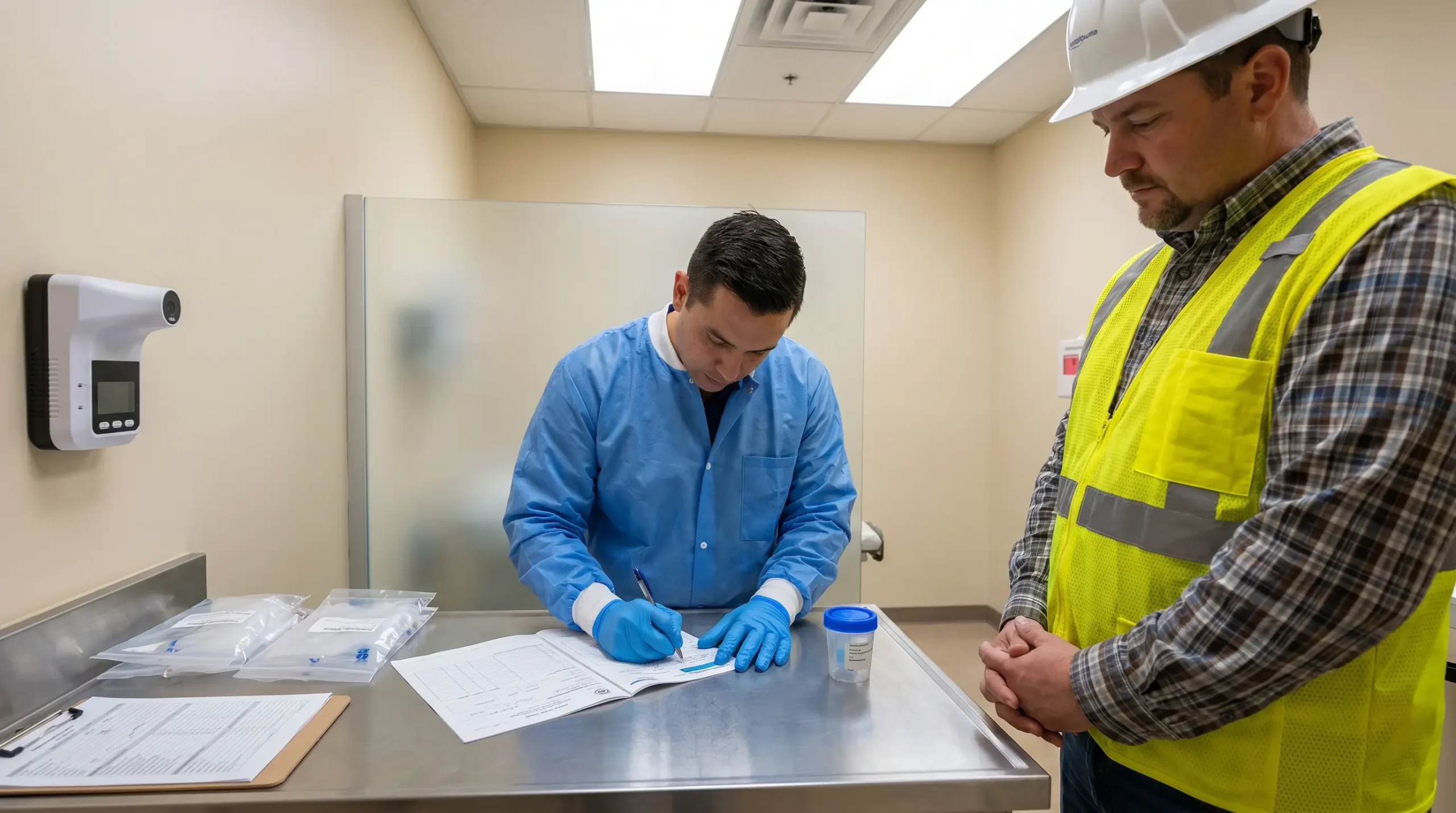
A laboratory technician in blue protective clothing writes on documentation while two construction workers in safety vests and hard hats observe at a stainless steel counter in a clinical setting.

TL;DR Random drug testing is a workplace testing method where current employees are selected through a statistically valid, non-discriminatory process — typically a computer-based random number generator — and required to undergo unannounced drug screening. In the US, DOT-regulated employers must test safety-sensitive employees at federally mandated annual rates (25–50% depending on the agency), while … Read more