
TL;DR — Myth vs Reality
- Myth: The smell warns you in time. Reality: Hydrogen sulfide deadens the sense of smell at high concentrations, so the odor often disappears just as the gas turns lethal.
- Myth: The real danger is dirt and germs. Reality: The fastest killer is the air itself — toxic or oxygen-deficient atmospheres in manholes and tanks cause most sewage-work fatalities.
- Myth: Pulling out a collapsed colleague is the right instinct. Reality: More than 60% of confined-space deaths are would-be rescuers who entered the same bad air (NIOSH, Publication 86-110).
- Myth: Biological hazards are only a minor, long-term worry. Reality: A single splash carrying Leptospira can cause Weil’s disease — flu-like at first, then potentially kidney and liver failure.
Direct answer: Sewage worker safety means managing two hazard classes at once: biological agents such as Leptospira, hepatitis A and enteric bacteria that enter through cuts, mucous membranes and hand-to-mouth contact, and chemical or atmospheric hazards such as hydrogen sulfide, methane and oxygen deficiency that can kill within minutes in confined spaces. Control depends on atmospheric testing, ventilation, hygiene and health surveillance.
On 11 August 2025, three workers repairing sewer lines inside a manhole in Mobile, Alabama were overcome by sewer gas. One regained consciousness and climbed out; the other two did not survive. Investigators later found the employer had no confined-space entry program, no atmospheric testing procedure and no rescue plan, and OSHA proposed penalties of $257,707 across sixteen serious violations (US Department of Labor, February 2026).
That pattern — competent people entering an invisible atmosphere no one measured — sits at the center of sewage worker safety. This article walks through the biological and chemical hazards that sewage and wastewater workers face, how each one causes harm, and the controls that separate a routine shift from a fatality.
Why Sewage Work Demands a Split Safety Strategy
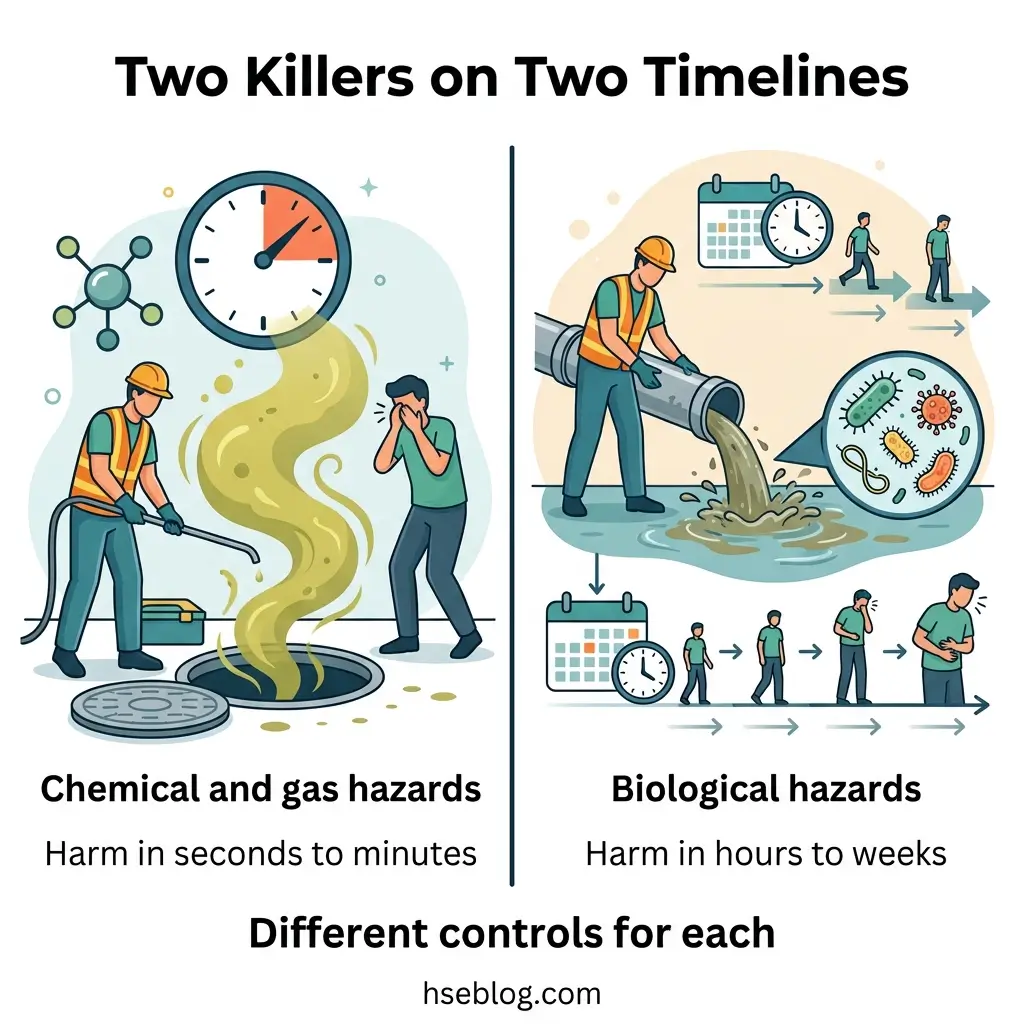
Sewage exposes workers to two fundamentally different kinds of harm, and they fail in opposite ways. One is immediate; the other is insidious.
- Chemical and atmospheric hazards act in seconds to minutes. A single lungful of hydrogen sulfide or oxygen-poor air can drop a worker before they can call for help.
- Biological hazards act over hours to weeks. An infection incubates quietly, so the danger is under-felt at the moment of exposure and easy to under-manage.
A single control mindset does not cover both. Gas hazards demand engineering, testing and rescue capability before entry, while biological hazards demand hygiene discipline and health surveillance that continue long after the job is done.
Biological Hazards: The Pathogens in Wastewater and How They Reach You
Raw sewage is a live suspension of bacteria, viruses, protozoa and fungi, and the illnesses it carries range from a few days of gastroenteritis to organ failure. What decides the outcome is often the route of entry, not the pathogen alone.
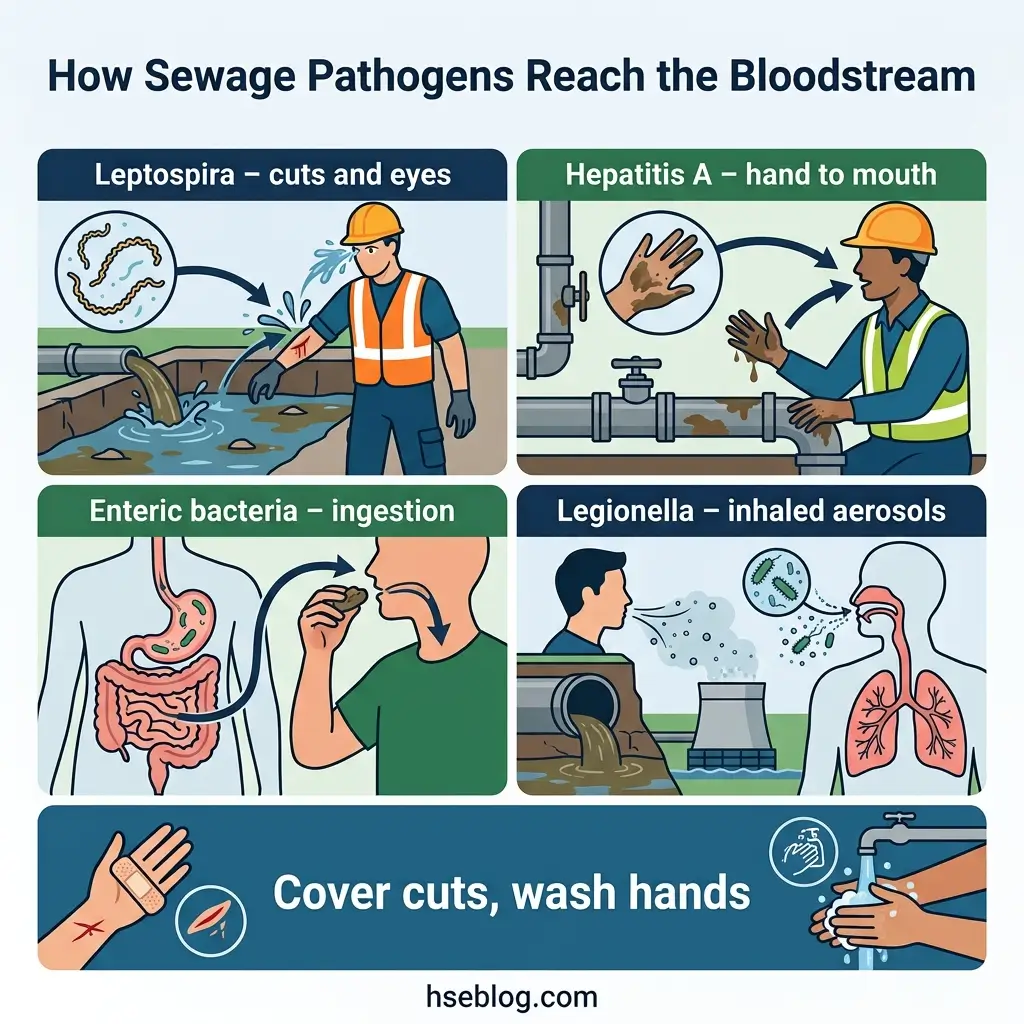
The UK Health and Safety Executive notes the most common route is hand-to-mouth — eating, drinking or smoking with contaminated hands, or wiping the face with a soiled glove — alongside ingress through cuts and the lining of the eyes, nose and mouth (HSE, “Working with sewage,” INDG198).
| Agent | Illness | Main route of entry |
|---|---|---|
| Leptospira (Weil’s disease) | Flu-like illness that can progress to kidney/liver failure and meningitis; occasionally fatal | Rat urine via cuts, eyes and mouth |
| Hepatitis A virus | Liver inflammation, jaundice, fatigue | Fecal–oral / hand-to-mouth |
| Enteric bacteria (E. coli, Salmonella, Shigella, Campylobacter) | Gastroenteritis: diarrhea, fever, cramps | Ingestion |
| Legionella | Legionnaires’ disease, Pontiac fever | Inhaling contaminated aerosols |
| Bioaerosols / endotoxin | Occupational asthma, allergic alveolitis, airway inflammation | Inhalation |
The most dangerous of these is routinely underestimated because it opens as “just the flu.” Leptospirosis symptoms usually appear within about two weeks of exposure and mimic influenza, which is exactly why the diagnosis gets missed — and why sewer workers in the UK are often issued a contact card telling clinicians to test for it. There is no human vaccine for leptospirosis (UK Health Security Agency).
This is not only a wealthy-world problem with clean edges. The 2019 joint assessment by the WHO, ILO, World Bank and WaterAid found that millions of sanitation workers handle sewage with no protective equipment or legal rights, describing the workforce as “invisible, unquantified, and ostracized.”
Chemical and Atmospheric Hazards: Hydrogen Sulfide and the Air in the Space
Hydrogen sulfide is the gas that kills sewage workers most often, and it does so with almost no margin for error. The gap between mild irritation and collapse is smaller than most people expect.
Hydrogen sulfide — the knockdown gas
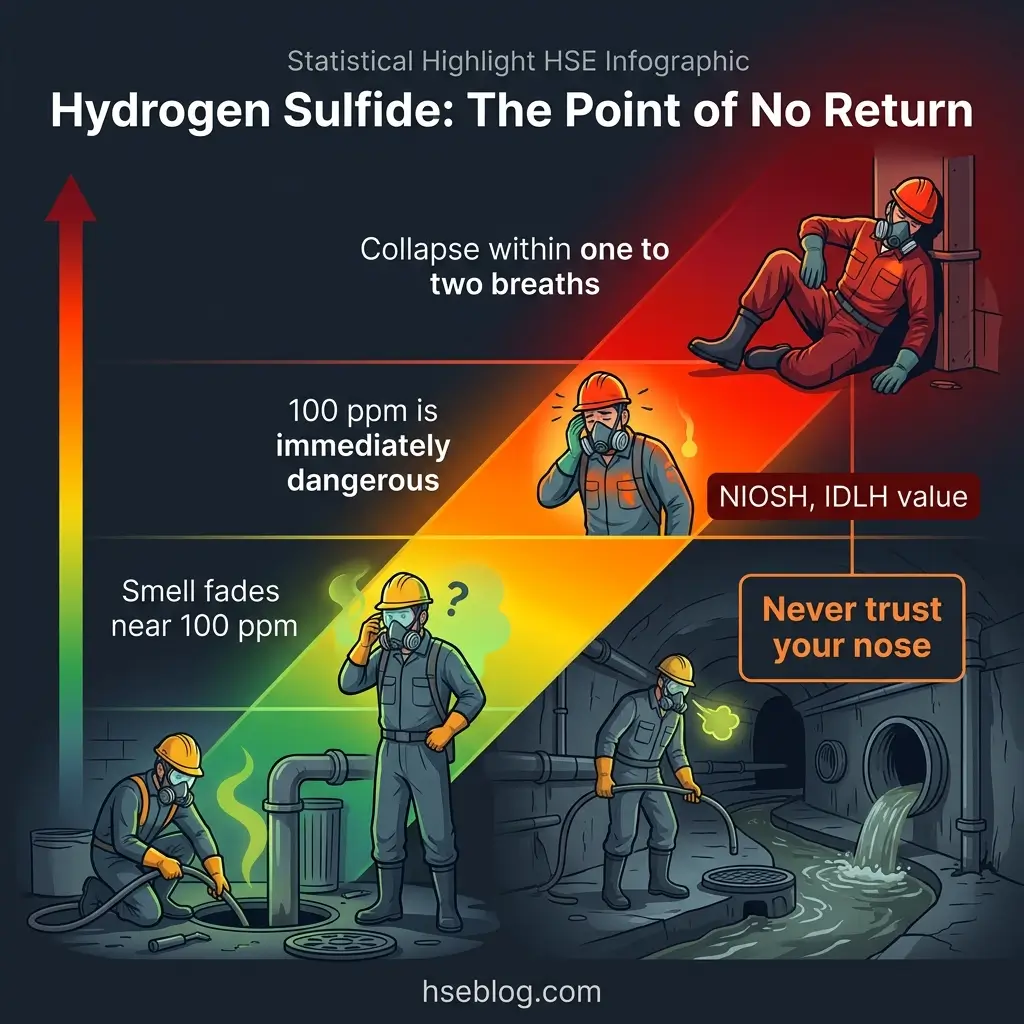
H2S is heavier than air and pools in the low points of sewers, wet wells and tanks (OSHA). At very high concentrations OSHA warns of collapse within one or two breaths and death within minutes, and above roughly 100 ppm the gas paralyzes the sense of smell — removing the only natural warning a worker has.
| Benchmark | Level | Body |
|---|---|---|
| Ceiling limit, general industry | 20 ppm | US OSHA, 29 CFR 1910.1000 |
| Recommended ceiling (10-minute) | 10 ppm | NIOSH |
| Immediately Dangerous to Life or Health (IDLH) | 100 ppm | NIOSH |
Where OSHA and NIOSH differ, the lower NIOSH ceiling of 10 ppm is the more protective benchmark; UK workplaces work to COSHH workplace exposure limits instead. Full details on evaluating and controlling this gas are set out in OSHA’s hydrogen sulfide guidance.
Methane, carbon monoxide and oxygen deficiency
- Methane is flammable and explosive across roughly 5–15% in air, and it is also an asphyxiant that displaces oxygen.
- Carbon monoxide and carbon dioxide arise from decomposition and from engines running nearby; both are toxic and can displace breathable air.
- Oxygen deficiency develops as biological decay consumes oxygen — below 19.5% the atmosphere is oxygen-deficient, against an OSHA acceptable range of 19.5–23.5%.
Treatment chemicals
Chlorine, ammonia and sulfur dioxide used in wastewater treatment are corrosive and toxic in their own right, and trade waste discharged upstream can introduce solvents, acids and heavy metals that no one at the plant selected or expected.
Why Would-Be Rescuers Keep Dying in Sewer Confined Spaces
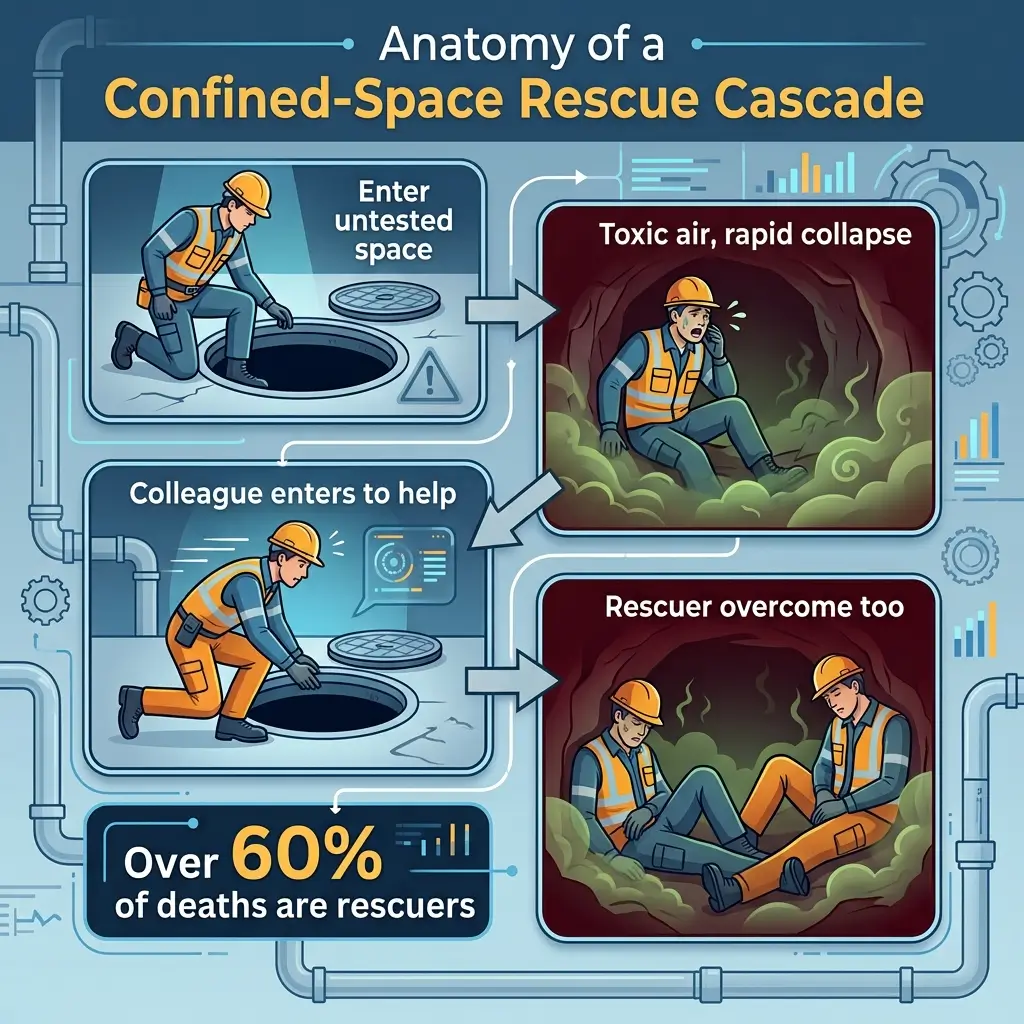
The deadliest moment in sewage work is usually not the first collapse — it is the rescue. NIOSH has reported that more than 60% of confined-space fatalities are would-be rescuers (Publication 86-110).
The cascade runs the same way almost every time:
- A worker enters a space whose atmosphere was never tested.
- Toxic or oxygen-poor air incapacitates them within seconds.
- A colleague sees them down and enters to help — into identical air.
- The rescuer collapses too, often before anyone above the ground understands what is happening.
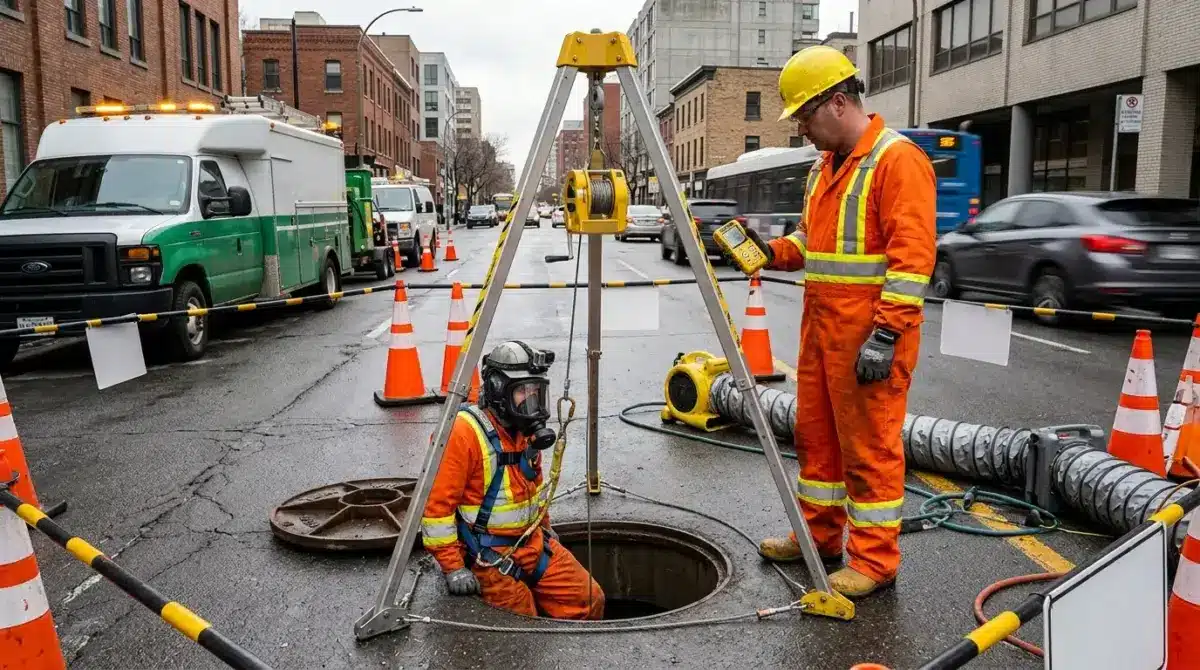
The Alabama incident followed exactly this shape, and so have earlier cases such as landfill lift-station deaths in which four workers were overcome one after another. The fix is procedural rather than heroic: under permit-required confined-space rules (US OSHA, 29 CFR 1910.146), that means atmospheric testing before entry, continuous monitoring, mechanical ventilation, an attendant who never enters, and non-entry rescue — a retrieval line and winch that lets you extract a casualty without sending a second body down after the first.
This article provides general HSE knowledge. Life-critical work such as confined-space entry into sewers or tanks must be planned and supervised by a competent person with relevant training, jurisdiction-specific authorization, and a site-specific risk assessment. The information here does not replace that.
Building a Control Program That Covers Both Hazard Classes
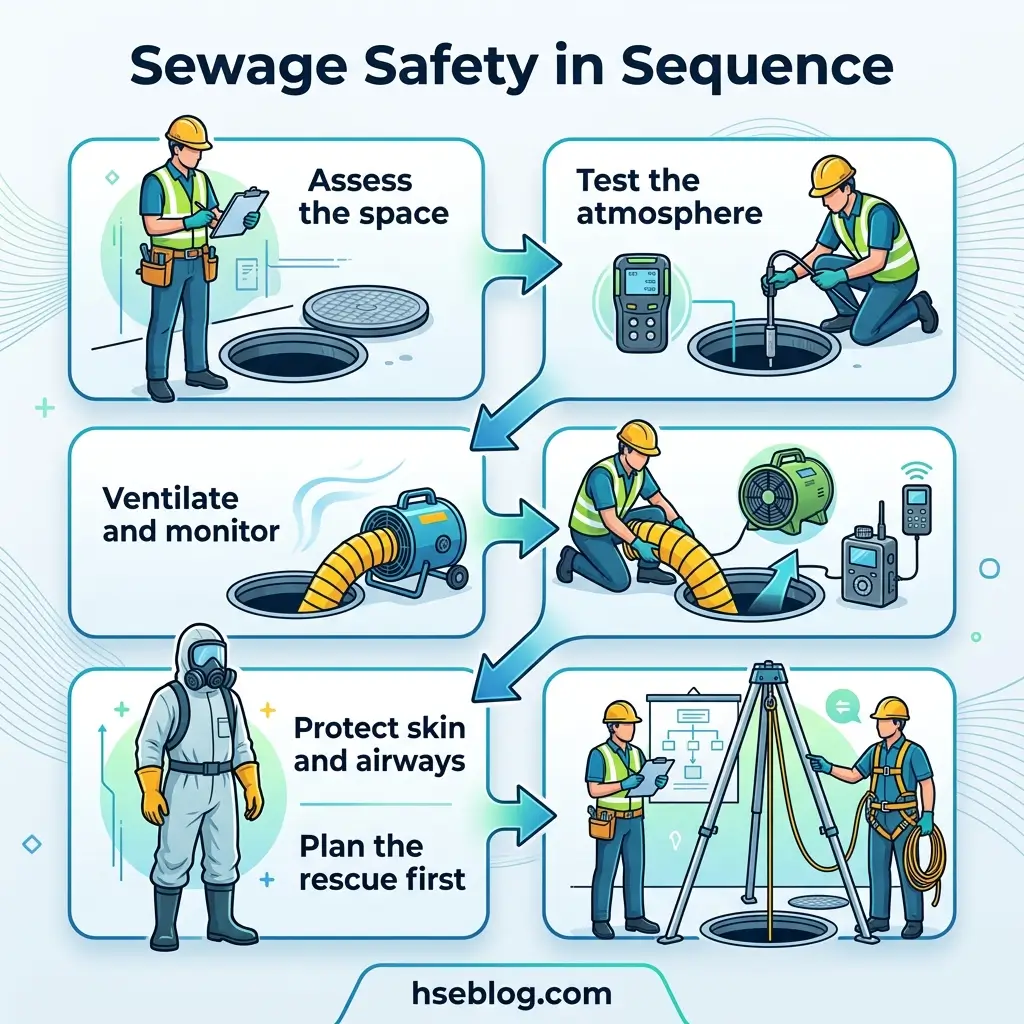
The controls that actually work are the ones settled before anyone lifts a cover. Because the two hazard classes behave differently, the program has to run on two tracks at once.
For the atmosphere — the immediate killers
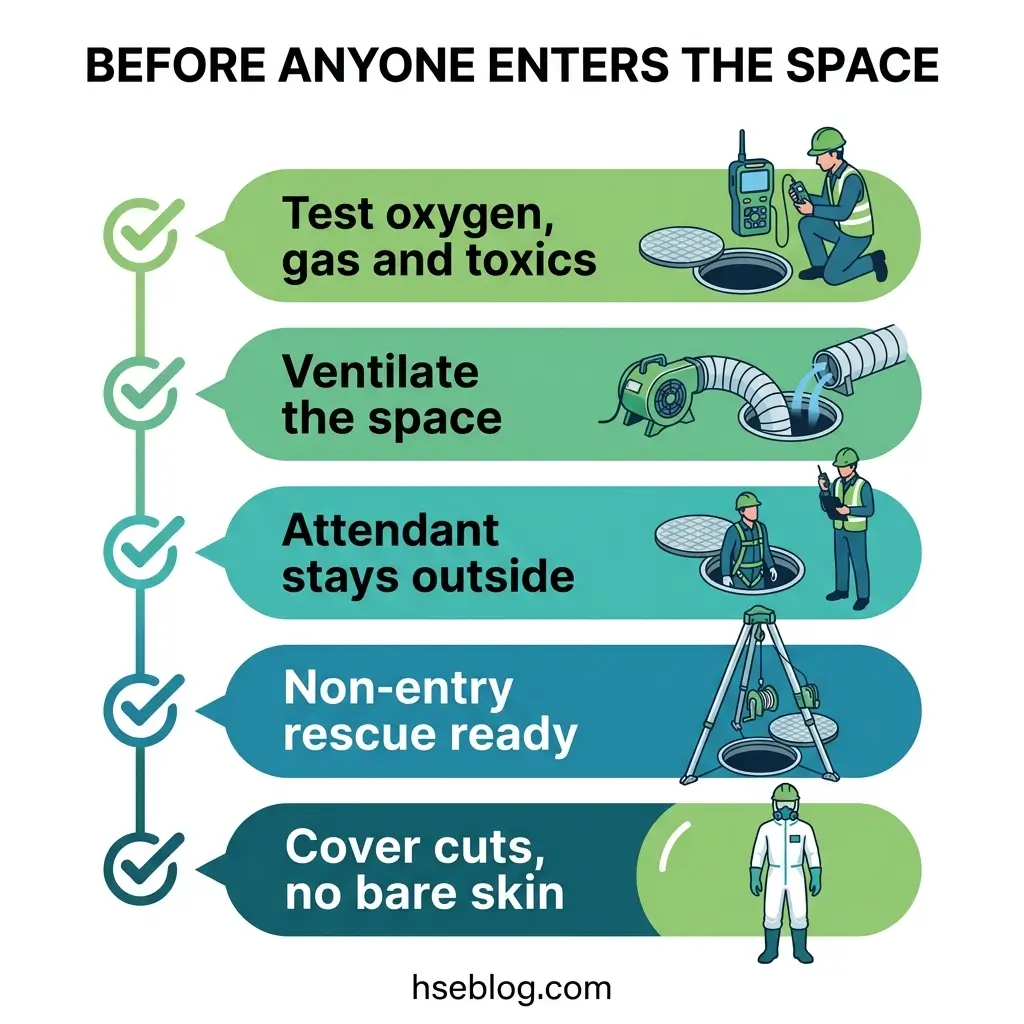
- Test, then keep testing. Measure oxygen, flammability (LEL) and toxics such as H2S and CO before entry and continuously during the work, at more than one depth.
- Ventilate mechanically. Force clean air through the space and never assume it has cleared on its own.
- Match respiratory protection to the hazard. Air-purifying respirators are only acceptable below IDLH; at or above 100 ppm H2S, use a full-face SCBA or supplied air (OSHA).
- Plan non-entry rescue. A retrieval harness, line and winch, with a trained standby ready, is what stops a single casualty becoming several.
For biological agents — the slow killers
- Hygiene is the primary control. No eating, drinking or smoking in work areas, and wash thoroughly before doing any of them (HSE, INDG198).
- Cover every break in the skin with a waterproof dressing under gloves before starting.
- Use barrier PPE — gloves, eye protection, and respiratory protection wherever aerosols are generated.
- Immunize and monitor. An occupational-health assessment may offer hepatitis A/B vaccination depending on jurisdiction; with no leptospirosis vaccine available, awareness and prompt testing carry more weight.
Content covering health surveillance, immunization and exposure is for HSE practitioner reference. It is not medical advice. Workers with specific symptoms or exposure concerns should consult an occupational physician or qualified medical professional.
Sewage Worker Safety Duties and Health Surveillance Across Jurisdictions
The legal duties depend on where the work happens, but the underlying logic converges on the same controls.
| Jurisdiction | Key instrument | Core duty |
|---|---|---|
| United States | OSHA Permit-Required Confined Spaces, 29 CFR 1910.146; H2S limit in 29 CFR 1910.1000 | Test the atmosphere, issue permits, post an attendant, arrange rescue; the General Duty Clause and PPE/respiratory standards cover chemical and biological exposure |
| United Kingdom | Confined Spaces Regulations 1997; COSHH 2002; HSE guidance INDG198 | Avoid entry where reasonably practicable, use a safe system of work, and control exposure to biological and chemical agents |
| International | WHO Guidelines on Sanitation and Health; WHO–ILO–World Bank–WaterAid assessment (2019) | Protect sanitation workers from occupational exposure; formalize and safeguard the workforce |
Two points are worth holding onto. Health surveillance is not paperwork — for slow-onset hazards like leptospirosis and occupational asthma, it is often the only way the harm gets caught early. And recognized training pathways such as NEBOSH, IOSH, OSHA outreach and dedicated confined-space courses, or their regional equivalents, exist precisely because this work punishes improvisation.
Regulatory content here reflects general HSE understanding as of 2026 and is not legal advice. Specific compliance questions, enforcement situations or prosecution risk should be directed to qualified legal counsel in the applicable jurisdiction.
Frequently Asked Questions
Conclusion
The mistake the industry makes most often is treating sewage as a single hazard when it is really two. Gas kills in minutes and gets the attention; infection kills slowly and gets overlooked — and programs that pour effort into one while neglecting the other keep producing the same funerals.
If a crew changes one thing, it should be this: measure the air and have a non-entry rescue ready before anyone goes in, and treat biological exposure as a managed health risk rather than bad luck. The Alabama manhole, the landfill lift station and every case like them share a single root cause — someone entered an atmosphere no one had tested, and someone else went in after them. Get those two habits right, and sewage worker safety stops depending on the atmosphere being kind that day.