1,380 articles · Page 4 of 46

Latest Articles – Page 4

More of the latest guidance from HSE Blog. Back to articles

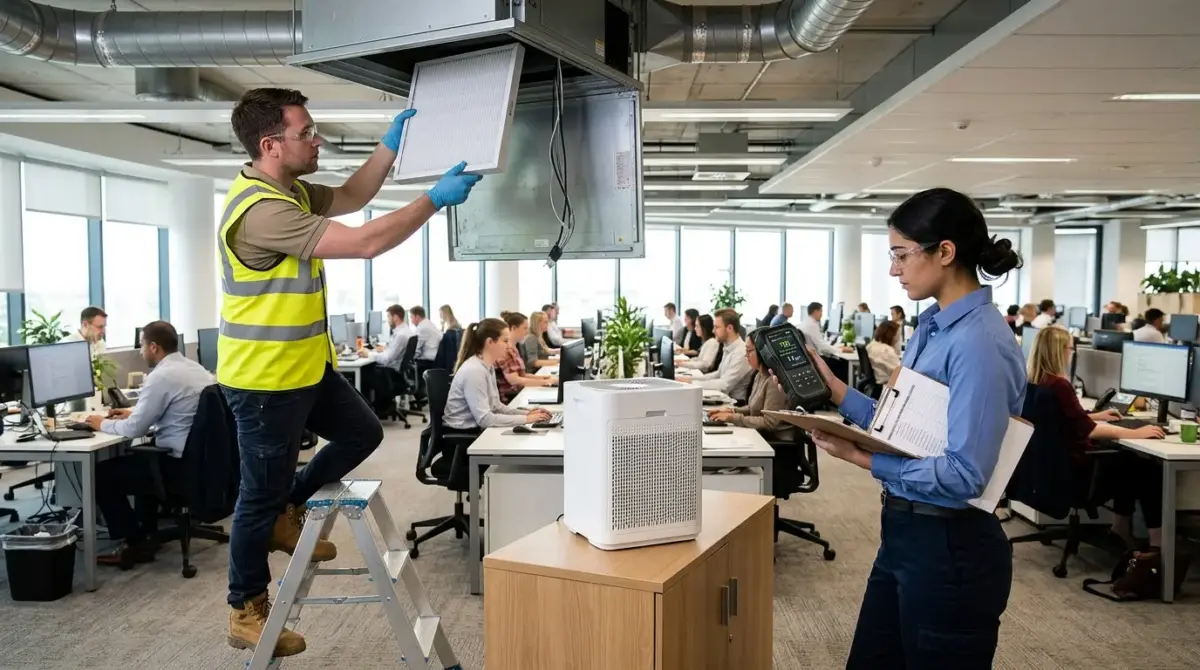
HVAC technician in safety vest inspects ceiling air filter while female colleague records measurements in busy open office with employees working at desks.
Safety At Work

Respiratory Infections at Work: Prevention & Controls

TL;DR Design around transmission route, not the pathogen — controls that dilute and filter shared air work against influenza, COVID-19, and RSV alike. Put engineering controls before masks — ventilation, filtration, and clean-air targets cut exposure for everyone in the…

Syed Mubashir

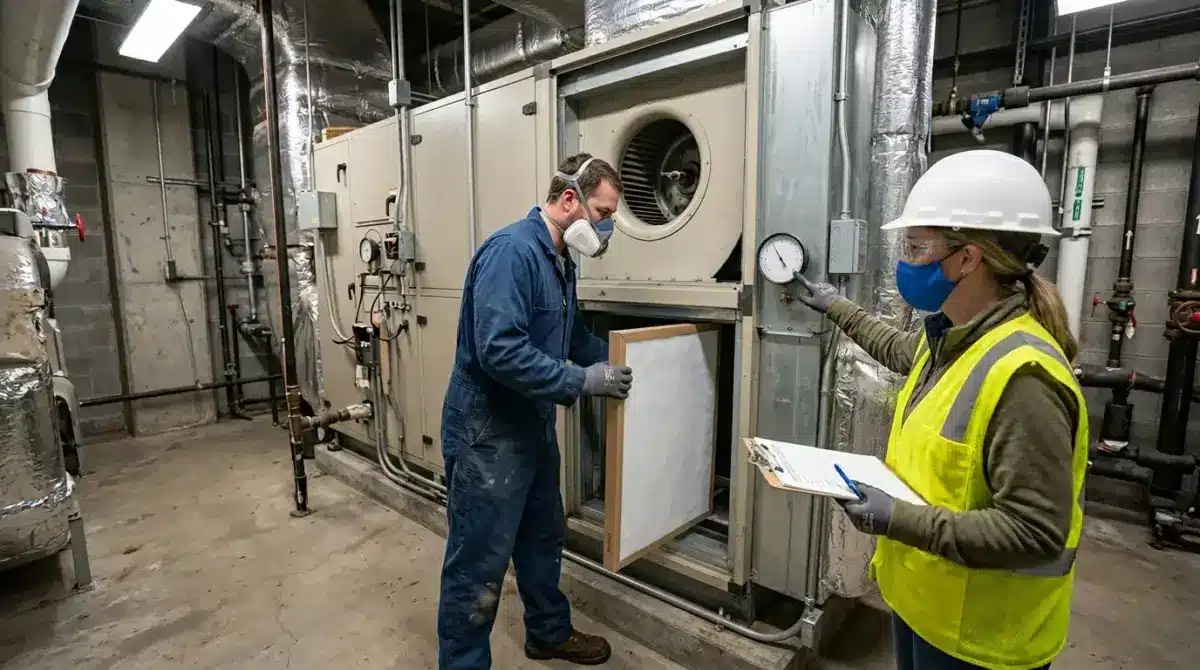
Two workers in safety gear inspect HVAC equipment in an industrial mechanical room, with one holding a clipboard while examining a large beige air handling unit.
Public

Workplace Pandemic Preparedness: COVID-19 Lessons for Employers

TL;DR Build the team before the outbreak — Name EHS, HR, operations, IT, comms, and continuity leads with written decision triggers, not improvised roles mid-crisis. Assess exposure task by task — Classify every role from lower to very high risk;…

Usman Malik

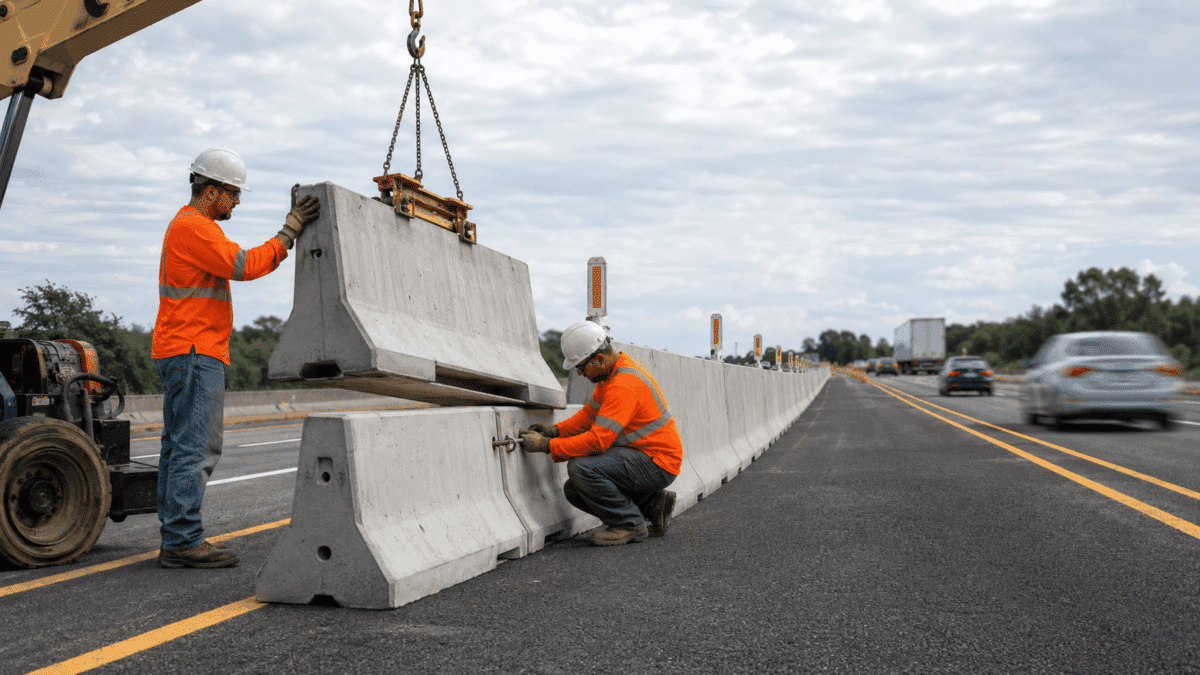
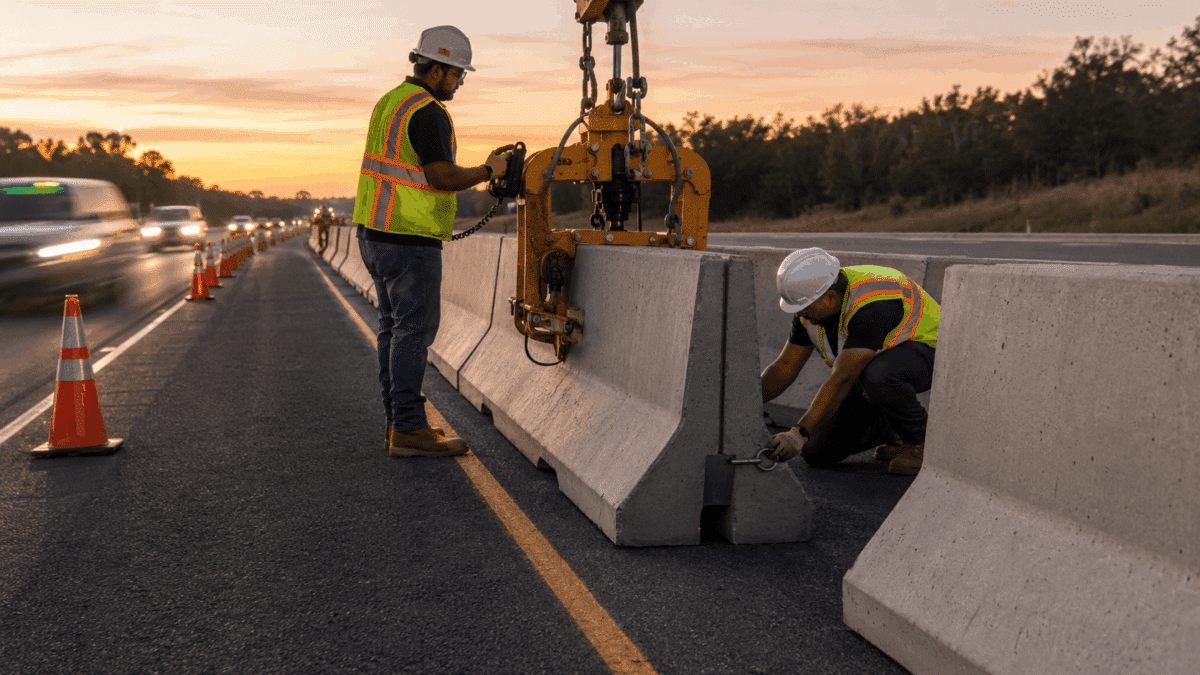
Two construction workers in orange safety vests install concrete barrier blocks along a highway using a crane, with traffic and barrier barriers visible in the background.
Safety At Work

Concrete vs Plastic Jersey Barriers: Which Is Safer?

TL;DR Myth: "Concrete is safe, plastic is not." Reality: safety depends on whether the unit is a crash-tested positive barrier — not on the material it is made from. Myth: "A water-filled jersey barrier stops cars." Reality: most plastic units…

John Mathew

Two construction workers in safety vests install concrete barriers on a highway at sunset while traffic passes by, with traffic cones marking the work zone.
Safety At Work

Jersey Barrier vs K-Rail vs F-Shape: Key Differences

TL;DR — Myth vs Reality Myth: "K-rail" is a third barrier shape. Reality: it's California's term for a temporary concrete barrier, almost always Jersey-profiled — a naming convention, not a distinct geometry. Myth: Jersey and F-shape are unrelated designs. Reality:…

Bilal Qureshi

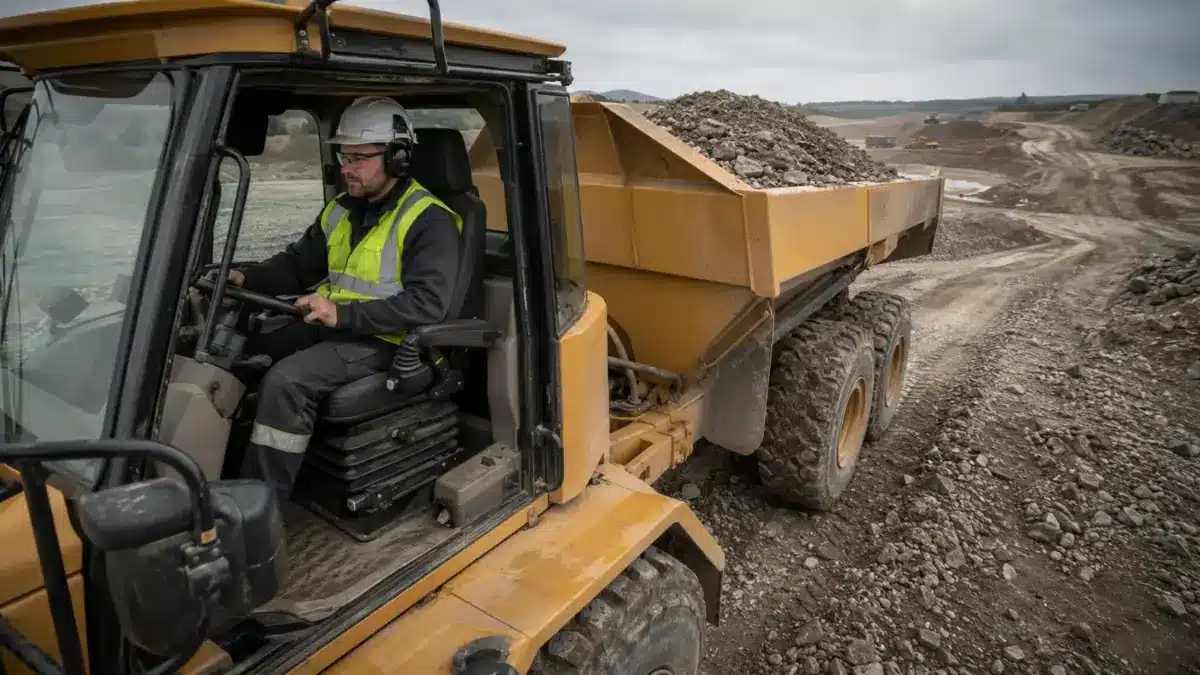
Construction worker in safety gear operating a yellow dump truck loaded with gravel at an active quarry site with equipment and rocky terrain in the background.
Safety At Work

Whole Body Vibration: Causes, Effects, and Controls

TL;DR — The Numbers That Govern Whole Body Vibration 0.5 m/s² A(8) — the UK/EU Exposure Action Value. Reach this daily average and the employer must act to assess and reduce exposure (Control of Vibration at Work Regulations 2005). 1.15…

Babar Mughal

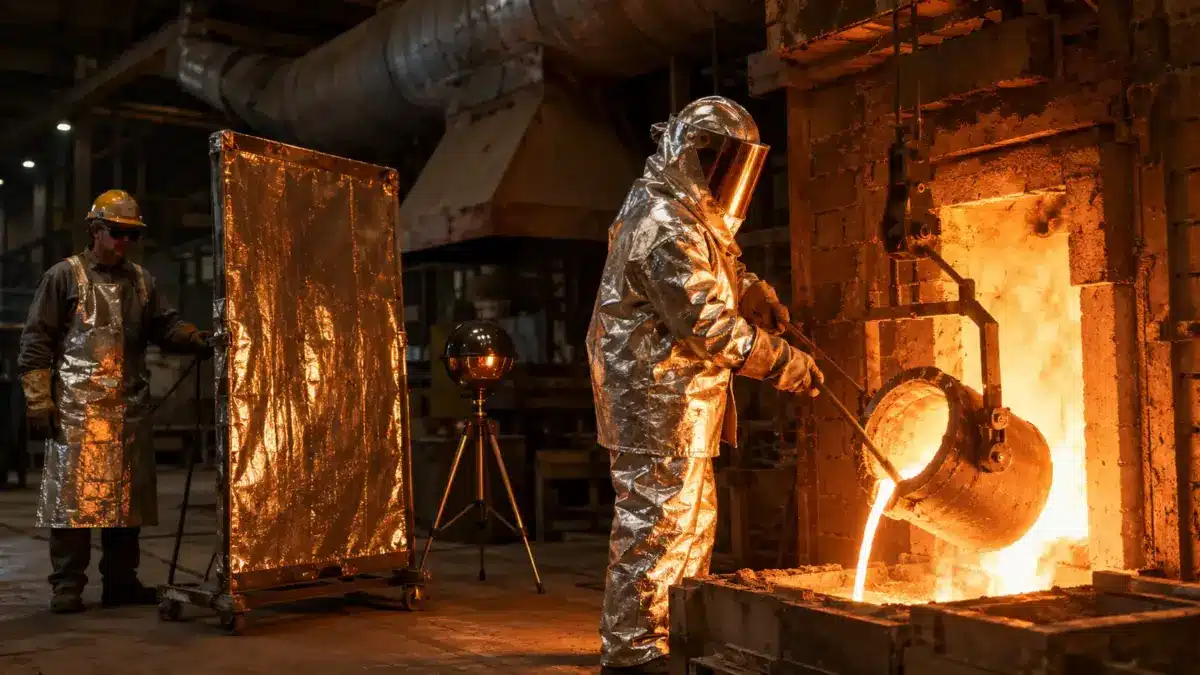
A steelworker in heat-protective gear operates near a glowing furnace in an industrial foundry, with welding shields and equipment visible in the high-temperature metalworking environment.
Safety At Work

Radiant Heat Exposure: Industries at Risk & Controls

TL;DR — What Most Heat Programs Get Wrong Myth: A normal air-temperature reading means heat risk is handled. Reality: air temperature ignores radiant load. A worker beside a furnace door can overheat while the air around them reads moderate. Myth:…

Adeel Rashid

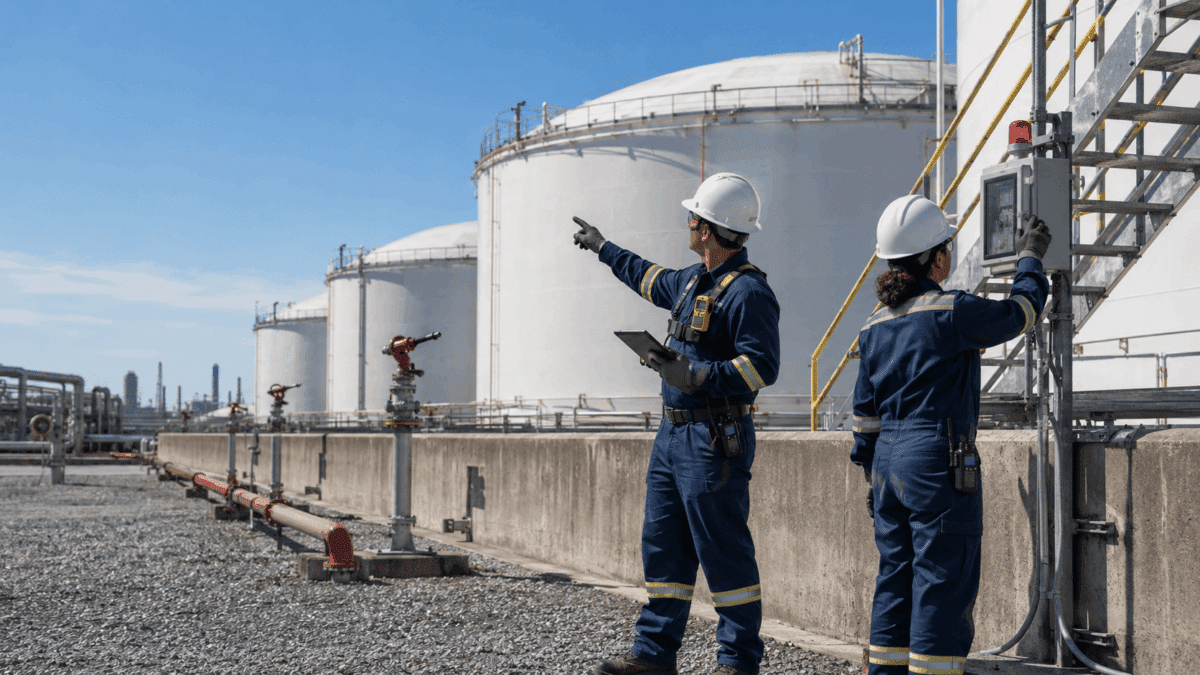
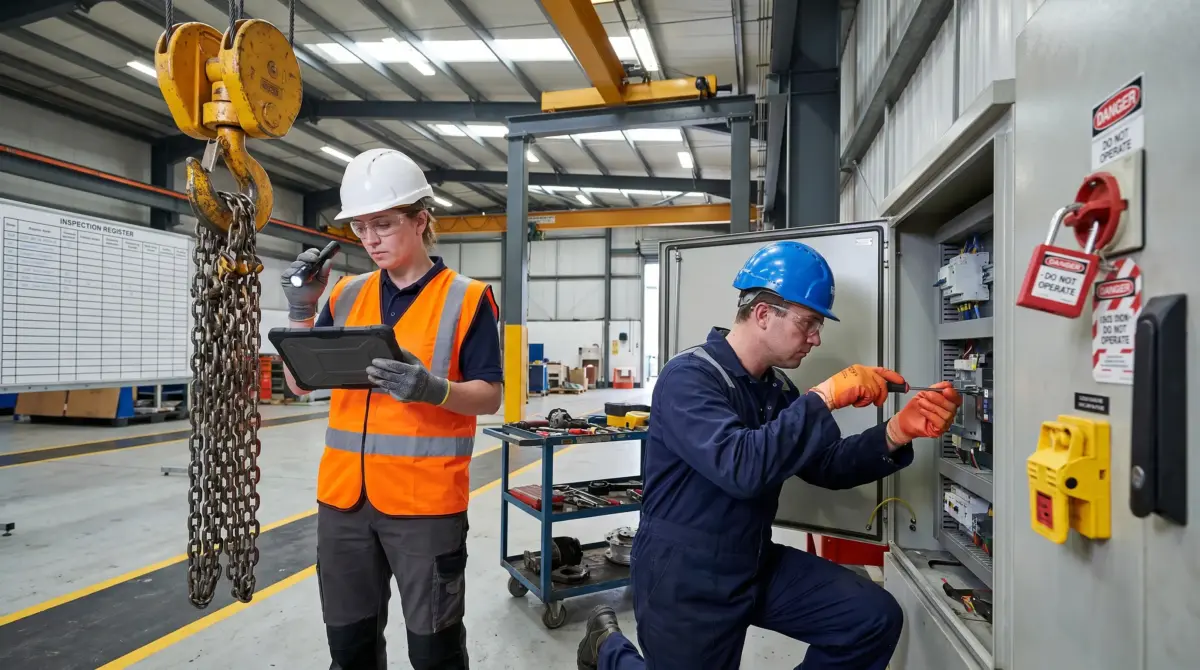
Two workers in safety gear inspect industrial equipment in a warehouse, with one holding a tablet near a chain hoist while the other examines an electrical panel.
Safety At Work

Maintenance vs Inspection: Key Differences & Legal Duties

TL;DR What's the actual difference? Inspection finds the problem; maintenance fixes it. One produces information about condition, the other changes the physical state of the equipment. Are they the same legal duty? No. Most regimes enforce them as separate obligations…

Abdul Qadeer

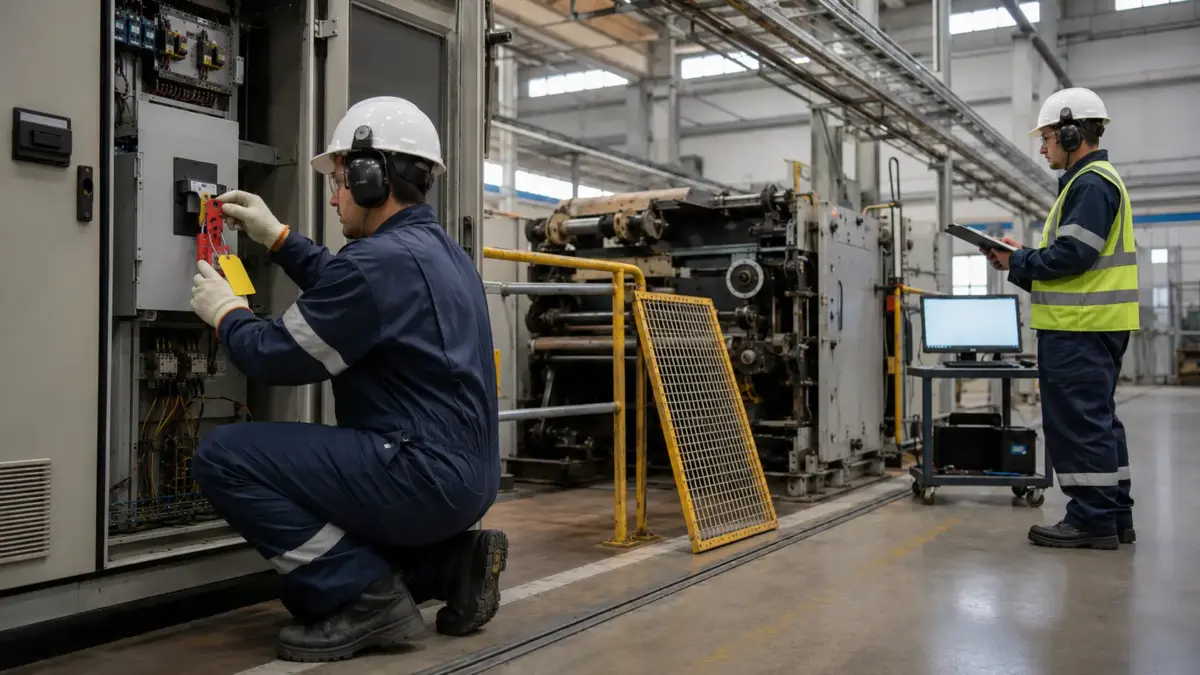
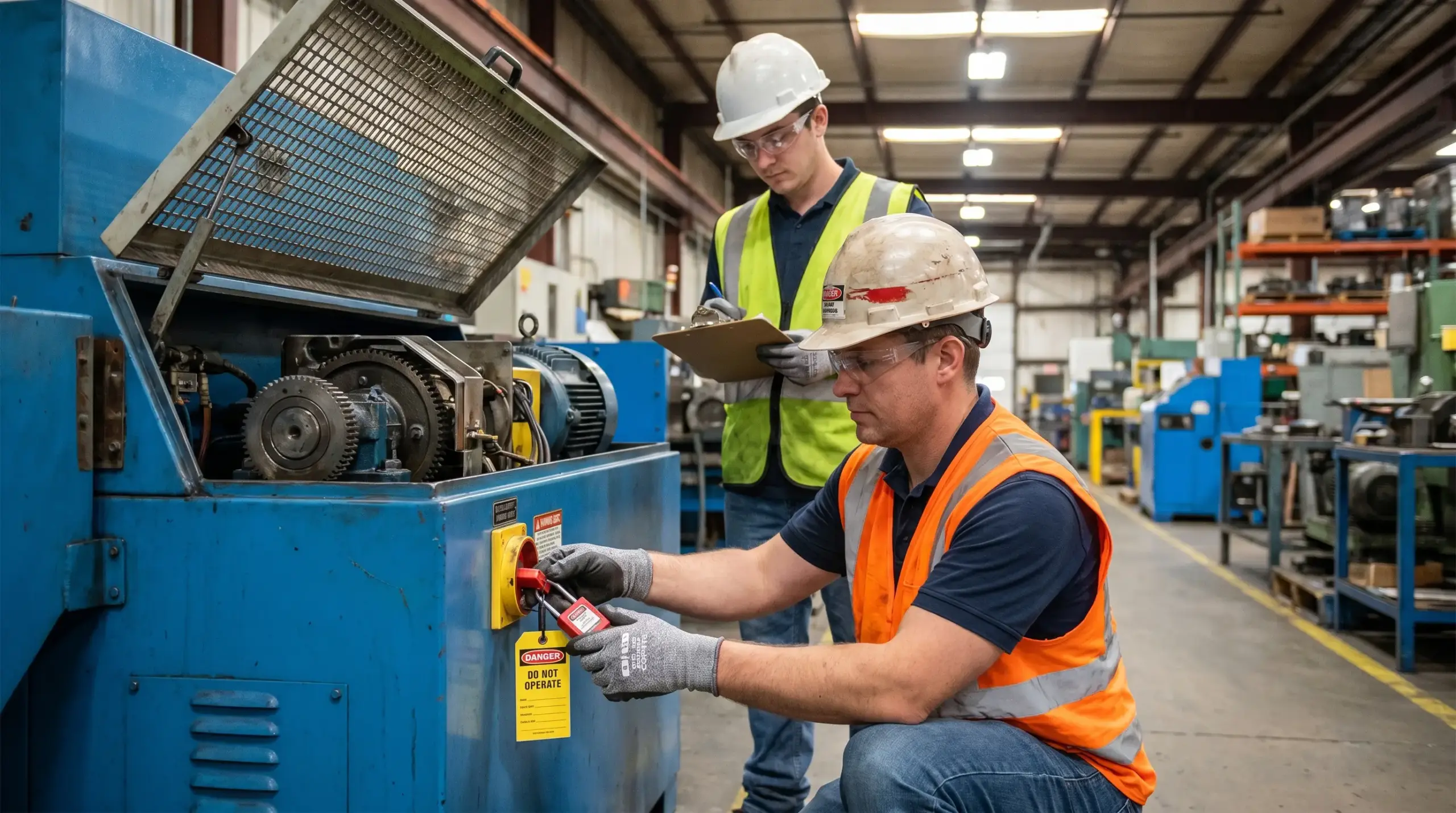
Two workers in safety gear inspect industrial machinery in a factory warehouse, with one applying a lockout tag to equipment while the other observes and takes notes.
Safety At Work

Defective Equipment at Work: Reporting & Procedures

TL;DR Stop using it first, report second. Reporting a hazard that's still live is the most common sequencing error — isolate before you notify anyone. Tag and segregate, don't just tag. An out-of-service tag is a warning, not isolation. Move…

Nasir Ali

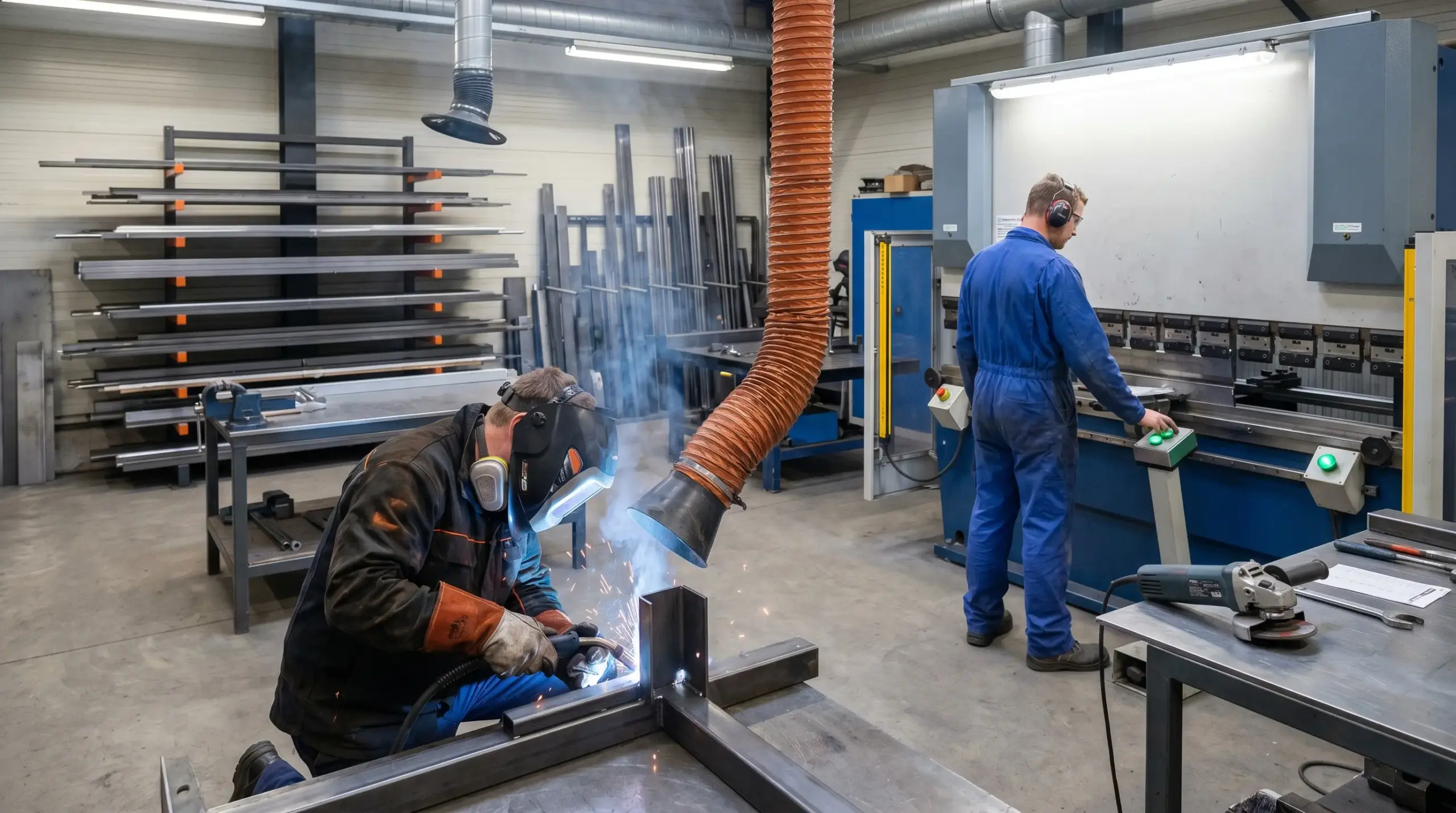
Industrial metalworking workshop with two workers in blue uniforms operating machinery; one welds metal components while another operates equipment, with organized metal sheets and fabrication tools visible throughout the facility.
Safety At Work

Metal Fabrication Safety: Hazards & Controls by Hierarchy

TL;DR Guard the point of operation, then verify lockout/tagout: Most fabrication amputations happen when a compliant guard is defeated for a jam clear while stored energy stays live. Control welding fume at the source: Local exhaust ventilation comes before respirators…

Abdul Rauf

Two warehouse workers in safety vests and hard hats monitor temperature and humidity levels while managing inventory of packaged boxes on pallets in an industrial storage facility.
Safety At Work

Workplace Temperature Laws: Min & Max Limits (2026)

TL;DR If your workplace is in the US → no federal OSHA temperature standard exists, but the General Duty Clause and the updated 2026 National Emphasis Program are active enforcement tools — "no standard" does not mean "no obligation." If…

Asad Hussain

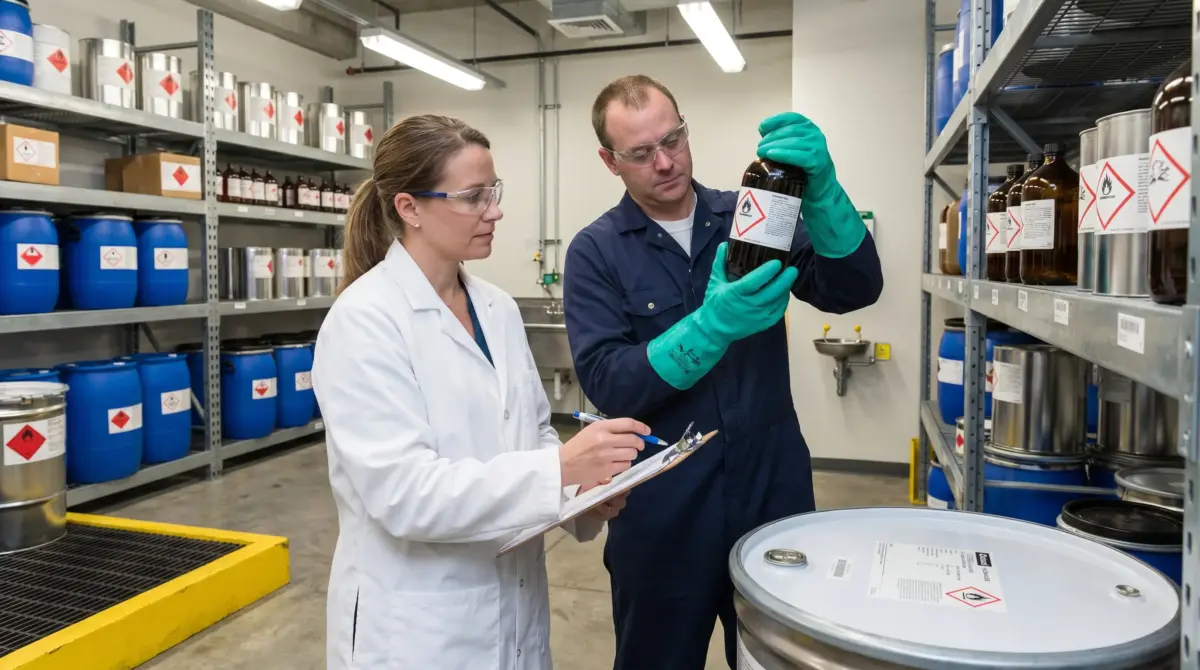
Two laboratory professionals in a chemical storage facility reviewing inventory on a clipboard while examining hazardous material bottles with warning labels on metal shelving with a yellow spill containment tray.
Chemical

CLP Hazard Pictograms: All 9 GHS Symbols Explained (2026)

TL;DR Nine pictograms, one system — CLP assigns nine standardised red-diamond symbols (GHS01–GHS09) to communicate physical, health, and environmental hazards on chemical labels across the EU. Precedence rules reduce clutter — CLP Article 26 removes redundant pictograms when multiple hazards…

Badar Javed

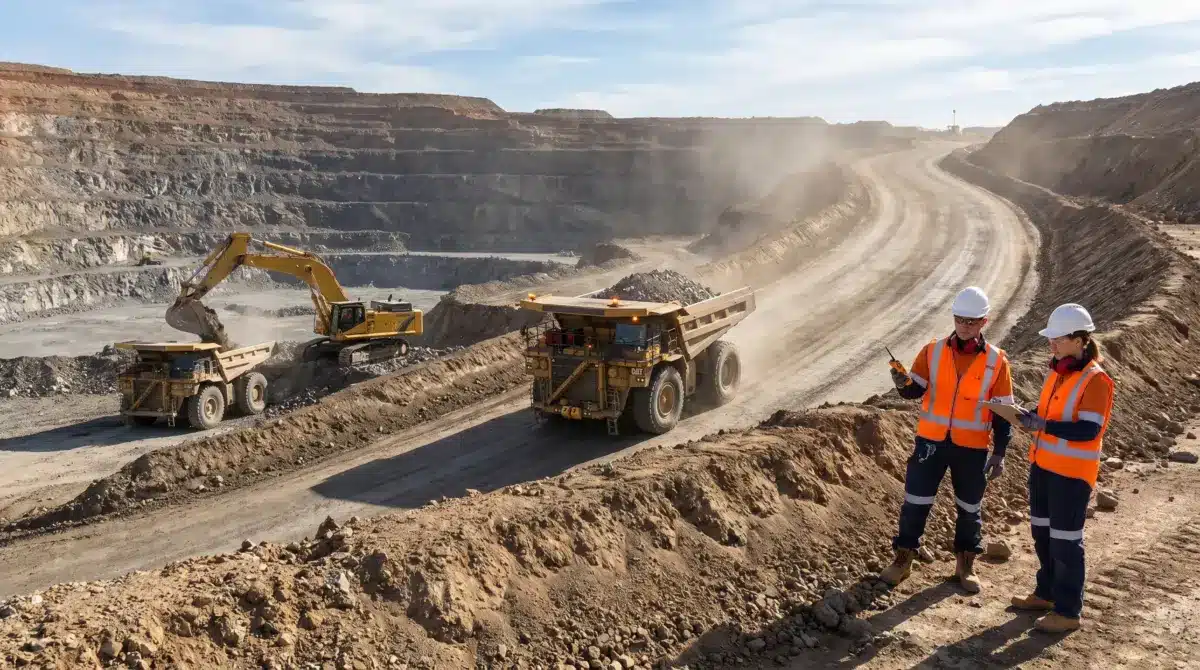
Two workers in orange safety vests and hard hats oversee a large open-pit mine operation with excavators, dump trucks, and terraced earthen walls under a dusty sky.
Safety At Work

Surface Mining Safety: Risks, MSHA Rules & Best Practices

TL;DR Powered haulage kills more surface miners than any other hazard — 13 of 33 US mining fatalities in 2025 were powered haulage incidents (MSHA, 2026), and the root causes repeat: absent traffic management plans, seatbelt non-use, and unmitigated blind…

Waheed Riaz

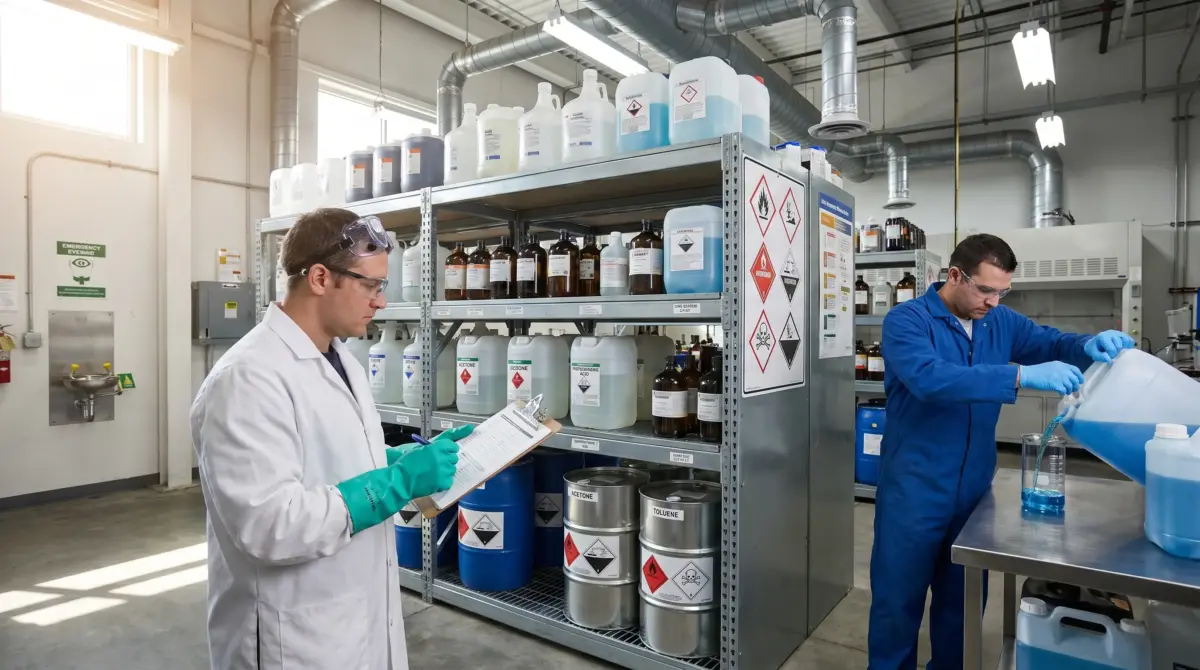
Two scientists in protective gear conduct a chemical inventory inspection in a laboratory storage facility lined with hazardous material containers and warning labels.
Chemical

What Is CLP Regulation? Classification & Labelling Guide

TL;DR If your company places a chemical substance on the EU market → you must classify its hazards, label the container with standardised pictograms and hazard statements, and notify the Classification and Labelling Inventory before or within one month of…

Badar Javed

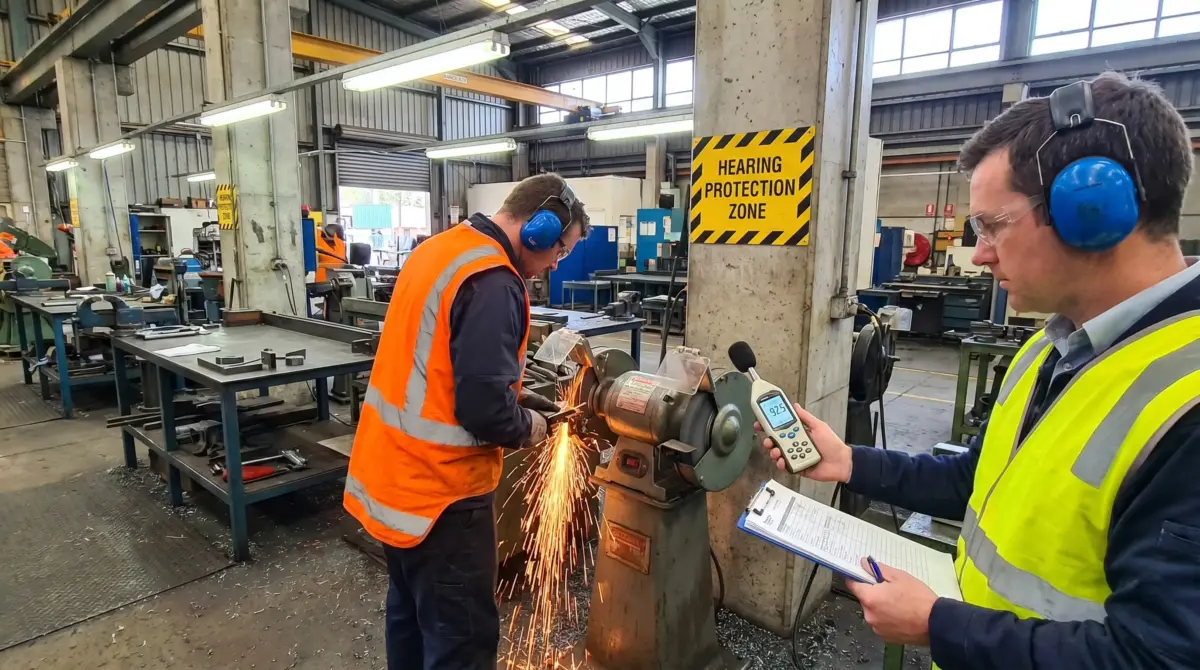
Two workers in safety gear measure noise levels with a sound meter in a designated hearing protection zone of an industrial manufacturing facility during equipment operation.
Noise

Noise Action Levels: LEP,d 80, 85, and 87 dB Explained

TL;DR If daily noise exposure reaches 80 dB(A): The employer must assess the risk, inform workers, and make hearing protection available on request — but cannot yet mandate its use. If daily noise exposure reaches 85 dB(A): Hearing protection becomes…

Hassaan Bin Tahir

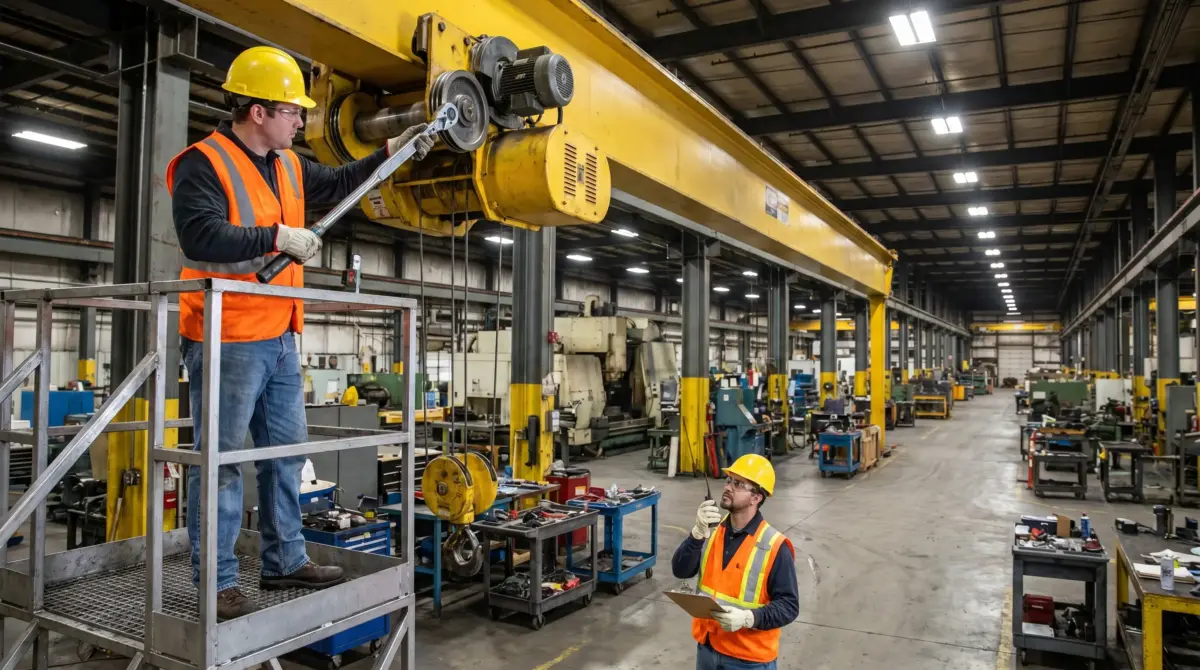
Worker in safety vest and hard hat adjusts overhead crane hoist mechanism in industrial factory floor with machinery and equipment visible throughout the warehouse.
Safety At Work

Work Equipment Inspection: What, When, and How | HSE Guide

TL;DR If your equipment could deteriorate in a way that creates danger, PUWER Regulation 6 (UK) requires inspection after installation, at suitable intervals, and after any exceptional circumstance — with results recorded by a competent person. If you operate powered…

Badar Javed

Prefer To Browse By Topic?

Every safety category is listed in the A–Z directory.